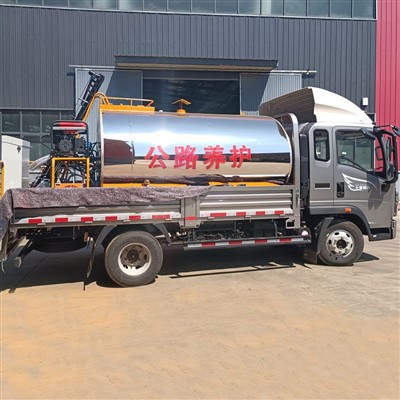
Hey there! As a supplier of Asphalt Melting Machines, I often get asked about the heat transfer efficiency of these machines. It's a crucial factor that can significantly impact the performance and cost - effectiveness of asphalt melting operations. So, let's dive right in and explore what heat transfer efficiency in an asphalt melting machine really means.
Understanding Heat Transfer in Asphalt Melting Machines
First off, heat transfer is all about moving thermal energy from one place to another. In an asphalt melting machine, the goal is to transfer heat from a heat source (like a burner) to the solid or semi - solid asphalt to turn it into a usable liquid state. There are three main types of heat transfer that come into play here: conduction, convection, and radiation.
Conduction is the transfer of heat through a solid material. In an asphalt melting machine, the heat from the heating element is conducted through the walls of the melting chamber to the asphalt. The rate of conduction depends on the thermal conductivity of the materials involved. For example, metals with high thermal conductivity are often used in the construction of the melting chamber to facilitate efficient heat transfer.
Convection is the transfer of heat through the movement of fluids. As the asphalt near the heating surface gets heated, it becomes less dense and rises, while the cooler asphalt sinks. This creates a convection current that helps distribute the heat throughout the asphalt mass. Good design of the melting chamber can enhance these convection currents, improving the overall heat transfer efficiency.
Radiation is the transfer of heat through electromagnetic waves. The heating element in the asphalt melting machine emits thermal radiation, which is absorbed by the asphalt. This type of heat transfer can be especially important in the initial stages of melting when the asphalt is still in a solid or semi - solid state.
Factors Affecting Heat Transfer Efficiency
Now, let's talk about the factors that can affect the heat transfer efficiency of an asphalt melting machine.
1. Design of the Melting Chamber
The shape and size of the melting chamber play a big role. A well - designed chamber will have a large surface area in contact with the asphalt, allowing for more efficient heat transfer. For example, some asphalt melting machines have a spiral - shaped melting chamber that increases the contact area between the heating surface and the asphalt, improving conduction.
2. Insulation
Proper insulation is essential to prevent heat loss. If the heat escapes from the melting chamber, it not only reduces the efficiency of the machine but also increases the energy consumption. High - quality insulation materials can help keep the heat inside the chamber, ensuring that most of the energy is used for melting the asphalt.
3. Heat Source
The type and quality of the heat source matter a lot. A powerful and efficient burner can provide a consistent and high - intensity heat, which is crucial for fast and efficient melting. For instance, some modern asphalt melting machines use gas burners that offer better control over the heat output compared to traditional oil burners.
4. Asphalt Properties
The properties of the asphalt itself, such as its viscosity and density, can affect heat transfer. Asphalts with higher viscosities may require more heat and time to melt. Also, the presence of impurities in the asphalt can interfere with the heat transfer process.


Measuring Heat Transfer Efficiency
Measuring the heat transfer efficiency of an asphalt melting machine is not always straightforward. One common way is to calculate the ratio of the heat actually used to melt the asphalt to the total heat input from the heat source. This can be done by measuring the mass of the asphalt melted, the change in its temperature, and the energy consumed by the heat source.
Another approach is to use thermal imaging cameras to visualize the temperature distribution inside the melting chamber. This can help identify areas where heat transfer is inefficient, such as cold spots or areas with excessive heat loss.
The Importance of High Heat Transfer Efficiency
High heat transfer efficiency in an asphalt melting machine has several benefits. Firstly, it reduces energy consumption. Since energy costs are a significant part of the operating expenses of an asphalt melting operation, a more efficient machine can save a lot of money in the long run.
Secondly, it increases the productivity of the machine. A machine with high heat transfer efficiency can melt asphalt faster, allowing for more production in a given time period. This is especially important for large - scale asphalt applications, such as road construction.
Finally, it can improve the quality of the melted asphalt. When the asphalt is heated evenly and efficiently, it is less likely to experience over - heating or under - heating, which can affect its properties and performance.
Our Asphalt Melting Machines and Heat Transfer Efficiency
At our company, we take heat transfer efficiency very seriously. Our Asphalt Melting Machines are designed with the latest technology to ensure optimal heat transfer. We use high - quality materials with excellent thermal conductivity in the construction of the melting chamber. Our machines also feature advanced insulation to minimize heat loss.
We offer a range of Asphalt Melting Plants that are suitable for different applications, from small - scale projects to large - scale industrial operations. Our Bitumen Melting Equipment is engineered to provide consistent and efficient heat transfer, resulting in high - quality melted asphalt.
Contact Us for Your Asphalt Melting Needs
If you're in the market for an asphalt melting machine, we'd love to hear from you. Whether you have questions about heat transfer efficiency, need help choosing the right machine for your project, or are ready to make a purchase, our team of experts is here to assist you. Contact us today to start a conversation about how our asphalt melting solutions can meet your requirements.
References
- Incropera, F. P., & DeWitt, D. P. (2002). Fundamentals of Heat and Mass Transfer. Wiley.
- Holman, J. P. (2010). Heat Transfer. McGraw - Hill.