As a seasoned supplier of modified bitumen plants, I've witnessed firsthand the pivotal role that agitators play in these facilities. Modified bitumen is a crucial material in the construction industry, particularly in road paving and waterproofing applications. It offers enhanced performance characteristics compared to traditional bitumen, such as improved elasticity, durability, and resistance to temperature variations. The agitator, a seemingly simple component, is actually a linchpin in the production process of high - quality modified bitumen.
Mixing and Homogenization
One of the primary functions of an agitator in a modified bitumen plant is to ensure thorough mixing and homogenization of the bitumen and the modifiers. Modified bitumen is typically created by blending bitumen with polymers or other additives. These modifiers can significantly alter the properties of the bitumen, but only if they are evenly distributed throughout the mixture.
The agitator works by creating a turbulent flow within the mixing vessel. This turbulence breaks down any clumps or agglomerates of the modifiers and disperses them uniformly in the bitumen. For example, when adding styrene - butadiene - styrene (SBS) polymers to bitumen, the agitator ensures that the SBS is fully dissolved and integrated into the bitumen matrix. Without proper mixing, the resulting modified bitumen may have inconsistent properties, leading to sub - standard performance in the field.
The design of the agitator is crucial for effective mixing. Different types of agitators, such as paddle agitators, propeller agitators, and turbine agitators, have different flow patterns and mixing capabilities. Paddle agitators are often used for low - viscosity mixtures, while turbine agitators are more suitable for high - viscosity fluids like bitumen. The choice of agitator depends on factors such as the viscosity of the bitumen, the type and amount of modifiers, and the desired mixing time.
Heat Transfer
In a modified bitumen plant, maintaining the right temperature is essential for the successful incorporation of modifiers. Bitumen needs to be heated to a specific temperature range to make it more fluid and receptive to the modifiers. The agitator plays a significant role in heat transfer within the mixing vessel.


As the agitator rotates, it promotes the circulation of the bitumen within the vessel. This circulation helps to distribute the heat evenly throughout the mixture. Without proper agitation, there may be hot spots and cold spots within the vessel. Hot spots can cause the bitumen to over - heat, leading to thermal degradation and a loss of desirable properties. Cold spots, on the other hand, can prevent the modifiers from fully dissolving and integrating into the bitumen.
The agitator also helps to transfer heat from the heating elements (such as heating coils) to the bitumen. By continuously moving the bitumen over the heating surfaces, the agitator enhances the heat transfer rate. This ensures that the bitumen reaches and maintains the optimal temperature for the modification process in a timely and efficient manner.
Preventing Settling
Another important role of the agitator is to prevent the settling of modifiers in the bitumen. Many modifiers, especially those in solid or semi - solid form, have a tendency to settle at the bottom of the mixing vessel due to gravity. If this happens, the concentration of modifiers will be uneven, and the resulting modified bitumen will not have the desired properties.
The agitator keeps the modifiers in suspension by creating an upward and downward flow within the vessel. This constant movement counteracts the force of gravity and ensures that the modifiers remain uniformly distributed throughout the bitumen. For instance, when using ground rubber powder as a modifier, the agitator prevents the rubber particles from sinking to the bottom of the vessel, allowing for a homogeneous mixture.
Enhancing Reaction Kinetics
In some cases, the modification of bitumen involves chemical reactions between the bitumen and the modifiers. The agitator can enhance the reaction kinetics by increasing the contact between the reactants. When two substances react, they need to come into contact with each other at a molecular level. The agitator promotes this contact by increasing the surface area of interaction between the bitumen and the modifiers.
For example, in the case of some chemical additives that react with bitumen to improve its aging resistance, the agitator ensures that the additive molecules are evenly distributed and have maximum contact with the bitumen molecules. This increases the likelihood of successful chemical reactions, leading to a more effective modification of the bitumen.
Quality Control and Consistency
In a commercial modified bitumen plant, maintaining consistent product quality is of utmost importance. The agitator is a key factor in achieving this goal. By ensuring thorough mixing, proper heat transfer, and preventing settling, the agitator helps to produce modified bitumen with consistent properties batch after batch.
Consistent quality is essential for meeting industry standards and customer requirements. For road paving applications, for example, the performance of the modified bitumen can directly impact the durability and safety of the road. A well - functioning agitator helps to minimize variations in the product, reducing the risk of quality - related issues in the field.
Impact on Production Efficiency
The agitator also has a significant impact on the production efficiency of a modified bitumen plant. A well - designed and properly functioning agitator can reduce the mixing time required to achieve a homogeneous mixture. This means that more batches of modified bitumen can be produced in a given time period, increasing the overall production capacity of the plant.
In addition, the agitator can help to reduce energy consumption. By promoting efficient heat transfer and mixing, the agitator can ensure that the modification process is carried out at the optimal temperature and with the minimum amount of energy input. This not only reduces operating costs but also makes the production process more environmentally friendly.
Our Offerings
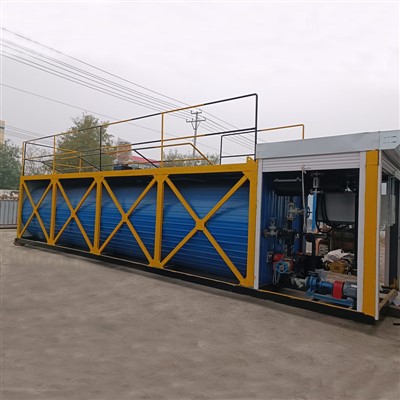
At our company, we understand the critical role of agitators in a modified bitumen plant. That's why we offer a wide range of high - quality agitators as part of our Polymer Modified Asphalt Plant and Polymer Modified Bitumen Plant solutions. Our agitators are designed with the latest technology and engineering principles to ensure efficient mixing, heat transfer, and product quality.
We also provide comprehensive Asphalt Modified Equipment that is integrated with our agitators to create a seamless and high - performance modified bitumen production system. Our team of experts can work with you to select the right agitator and equipment based on your specific production requirements.
If you are in the market for a modified bitumen plant or looking to upgrade your existing equipment, we encourage you to contact us. Our sales team is ready to discuss your needs and provide you with a customized solution that meets your production goals and budget.
References
- Asphalt Institute. (20XX). "Manual of Practice for Polymer - Modified Asphalt".
- European Asphalt Pavement Association. (20XX). "Guidelines for the Use of Modified Bitumen in Road Construction".
- ASTM International. (20XX). "Standard Specifications for Modified Bituminous Materials".