

Many operators of Asphalt Storage Tanks pay close attention to asphalt stratification. In practical working scenarios, stratification primarily depends on storage duration, ambient conditions and feeding frequency, rather than defects within the storage tank itself. Under standard construction workflows where asphalt is stored and circulated periodically, significant stratification, caking or component separation will not develop. The material maintains good uniformity and stable performance suitable for construction applications.
Short-term storage and frequent turnover are key to avoiding stratification. During regular construction, continuous inflow and outflow keep asphalt circulating and agitated, allowing all components to blend evenly without sedimentation and separation. Even after several days of static storage under stable temperatures and ventilation, asphalt remains homogeneous without noticeable stratification, meeting material requirements for most construction projects. Most users engaged in routine engineering material reserves hardly encounter asphalt stratification issues.
Minor stratification only appears after ultra-prolonged static storage. When asphalt fills the tank and remains untouched for dozens of days or longer without discharging, stirring or turnover, fully static conditions enable slow sedimentation of components with slight density differences. This creates a state where upper asphalt is relatively dilute while asphalt near the tank bottom grows denser, accompanied by component accumulation at the base. This stratification arises from asphalt' s inherent physical characteristics, not storage conditions or tank structure. All closed containers used for asphalt storage will exhibit similar phenomena after extended static storage.
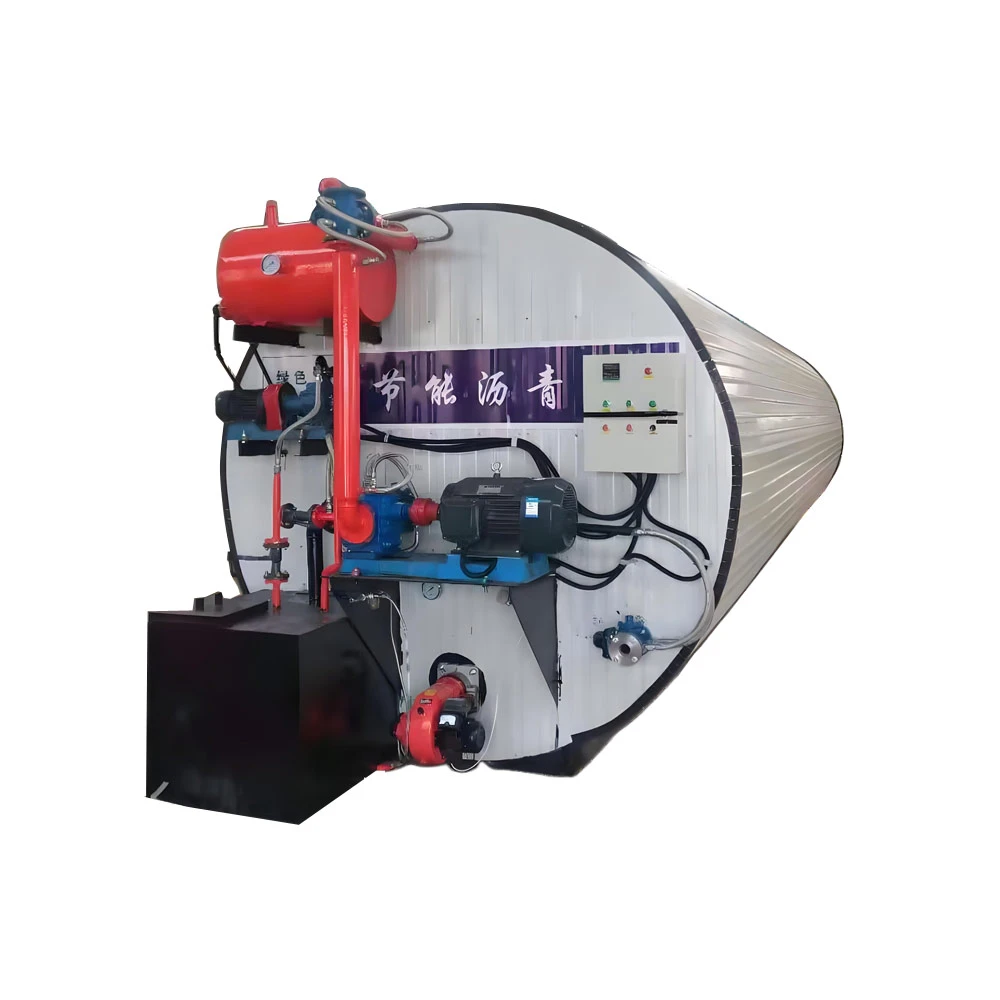
Beyond prolonged static placement, extreme temperature fluctuations and mixed storage of different asphalt grades worsen stratification. Sharp diurnal temperature variations repeatedly alter asphalt fluidity and weaken blending stability of components, accelerating mild stratification. Storing different grades or batches of asphalt consecutively without thorough mixing also leads to temporary unevenness. Importantly, stratification is merely a physical state variation instead of material degradation or failure, and does not compromise asphalt' s core application performance.
Resolving stratification requires only simple operations. Operators simply need to stir and homogenize asphalt before the next discharge task. The layered state formed by static storage dissipates quickly, and asphalt regains uniform consistency suitable for pavement construction and other engineering applications with no adverse impacts. In general, users can avoid obvious asphalt stratification by preventing ultra-long static stockpiling and maintaining regular material turnover. Asphalt Storage Tanks can continuously preserve materials in a uniform, stable state.


