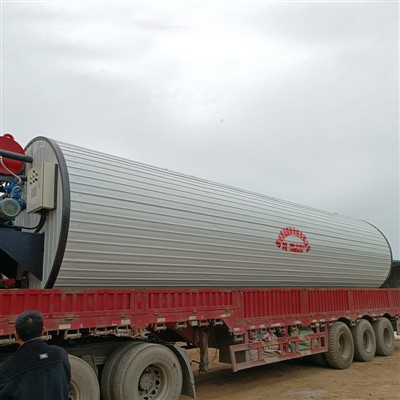
With the growing demand for road construction and maintenance, asphalt spreaders are key equipment, and their technological innovation is crucial to improving construction efficiency and quality. This article will share some major technological innovations of asphalt spreaders from the perspective of manufacturers.
1. Intelligent control system
Traditional asphalt spreaders mainly rely on manual operation, which not only requires operators to have high professional skills, but is also easily affected by human factors, resulting in unstable construction quality. Modern asphalt spreaders have introduced intelligent control systems that can achieve automated and precise asphalt spreading. This system can monitor the state of the road surface in real time through advanced sensors and algorithms, and automatically adjust the spreading speed and asphalt amount to ensure uniform construction quality.
2. Efficient and energy-saving power system
Traditional asphalt spreaders usually use diesel engines as power sources, which not only have high fuel consumption, but also cause environmental pollution due to exhaust gas emissions. To this end, some manufacturers have begun to develop asphalt spreaders using new energy technologies, such as electric or hybrid models. These models use advanced battery technology and energy recovery systems, which can significantly reduce fuel consumption and emissions while ensuring construction efficiency, and achieve green construction.
3. Modular design
In order to facilitate users to customize and upgrade according to actual needs, modern asphalt spreaders have begun to adopt modular design. This means that users can choose different functional modules according to their needs, such as different spreading heads, control systems, etc., to meet different construction needs. At the same time, modular design also makes maintenance and maintenance simpler and more convenient, reducing operating costs.
4. Remote monitoring and fault diagnosis
By introducing Internet of Things technology, modern asphalt spreaders can achieve remote monitoring and fault diagnosis. Manufacturers can understand the operating status, construction quality and maintenance of the vehicle in real time through the network platform, and promptly discover and deal with potential problems. This not only improves construction efficiency, but also reduces maintenance costs, bringing greater convenience to users.
In summary, asphalt spreaders have made significant innovative progress in technology. With the continuous advancement of science and technology, we have reason to believe that future asphalt spreaders will be more intelligent, efficient, and environmentally friendly, bringing greater value to road construction and maintenance.