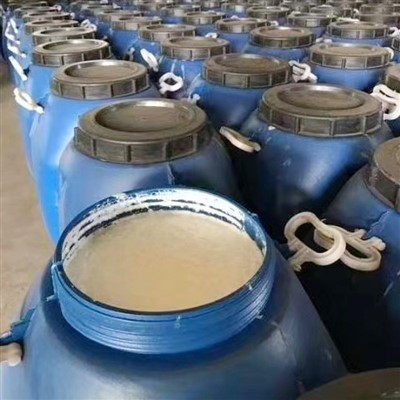
In the realm of emulsifiers, cationic emulsifiers stand out for their unique properties and wide - ranging applications. As a dedicated supplier of Cationic Emulsifier, I have witnessed firsthand the remarkable emulsification efficiency of these substances and their impact on various industries.
Understanding Emulsification and Cationic Emulsifiers
Emulsification is the process of dispersing one immiscible liquid (the dispersed phase) into another liquid (the continuous phase) to form a stable emulsion. This is crucial in many industries such as food, cosmetics, pharmaceuticals, and road construction. Emulsifiers play a pivotal role in this process by reducing the surface tension between the two immiscible liquids, preventing coalescence, and maintaining the stability of the emulsion over time.
Cationic emulsifiers are a specific type of emulsifier that carry a positive charge in solution. This positive charge gives them distinct advantages over other types of emulsifiers, such as Anionic Emulsifier which carry a negative charge. The positive charge of cationic emulsifiers allows them to interact differently with the surfaces of droplets in the emulsion, leading to unique emulsification behaviors.
Factors Affecting the Emulsification Efficiency of Cationic Emulsifiers
Chemical Structure
The chemical structure of cationic emulsifiers significantly influences their emulsification efficiency. Different functional groups, chain lengths, and degrees of branching can affect the solubility, surface activity, and interaction with the dispersed and continuous phases. For example, emulsifiers with longer hydrocarbon chains tend to have better affinity for non - polar substances, while those with specific functional groups can form stronger bonds with the surfaces of droplets, enhancing the stability of the emulsion.
Concentration
The concentration of the cationic emulsifier in the system is another critical factor. At low concentrations, the emulsifier may not be sufficient to cover the surfaces of all the droplets in the dispersed phase, leading to coalescence and instability. On the other hand, excessively high concentrations may cause problems such as increased viscosity and potentially adverse effects on the properties of the final product. Therefore, finding the optimal concentration is essential for achieving high emulsification efficiency.
pH of the System
The pH of the solution affects the ionization state of the cationic emulsifier. Cationic emulsifiers are typically more effective in acidic to neutral pH ranges because they maintain their positive charge in these conditions. In alkaline environments, the cationic emulsifier may undergo changes in its chemical structure, leading to a loss of its positive charge and a decrease in emulsification efficiency.
Temperature
Temperature can influence the properties of both the emulsifier and the liquids involved in the emulsion. Higher temperatures generally reduce the viscosity of the liquids, making it easier for the emulsifier to disperse and form an emulsion. However, extremely high temperatures may cause the degradation of the emulsifier or the evaporation of volatile components in the system, negatively affecting the emulsification efficiency.
Applications and the Role of Emulsification Efficiency
Road Construction
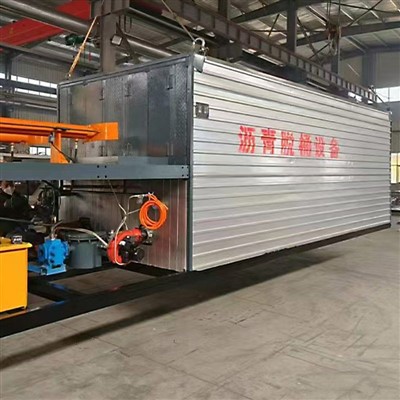
In road construction, Cationic Emulsion is widely used. Cationic emulsifiers are mixed with bitumen and water to create a stable emulsion that can be easily applied to road surfaces. The high emulsification efficiency of cationic emulsifiers ensures that the bitumen droplets are evenly dispersed in the water phase, resulting in a smooth and consistent coating on the road. This not only improves the workability of the bitumen but also enhances its adhesion to the aggregate, leading to longer - lasting and more durable roads.
Cosmetics and Personal Care Products
Cationic emulsifiers are also commonly used in cosmetics and personal care products such as creams, lotions, and hair conditioners. In these applications, the emulsification efficiency is crucial for creating a stable and aesthetically pleasing product. The positive charge of cationic emulsifiers can interact with the negatively charged surfaces of skin and hair, providing additional benefits such as improved conditioning and smoothness. A well - emulsified product ensures that the active ingredients are evenly distributed, enhancing their effectiveness.
Food Industry
In the food industry, cationic emulsifiers can be used to create stable emulsions in products such as salad dressings, mayonnaise, and dairy - based desserts. Their ability to improve emulsification efficiency helps to prevent phase separation, prolong the shelf life of the products, and enhance the texture and mouthfeel. The positive charge of the emulsifier can also interact with food components in unique ways, potentially influencing factors such as flavor release and perception.


Measuring Emulsification Efficiency
There are several methods to measure the emulsification efficiency of cationic emulsifiers. One common method is to observe the stability of the emulsion over time. A stable emulsion should have a minimal amount of phase separation, and the size of the droplets in the dispersed phase should remain relatively constant. Techniques such as microscopy can be used to visualize the droplet size and distribution.
Another approach is to measure the surface tension of the emulsion. A lower surface tension indicates that the emulsifier is effectively reducing the interfacial energy between the two phases, which is a sign of good emulsification efficiency. Additionally, rheological measurements can provide information about the viscosity and flow properties of the emulsion, which are closely related to its stability and quality.
Advantages of Our Cationic Emulsifiers
As a supplier of cationic emulsifiers, we take pride in offering products with high emulsification efficiency. Our emulsifiers are carefully formulated to have optimal chemical structures, allowing them to perform well in a variety of applications. We conduct extensive research and development to ensure that our products are suitable for different pH ranges and temperatures, providing flexibility for our customers.
Our quality control measures are stringent, ensuring that each batch of cationic emulsifier meets the highest standards. We offer a range of products with different properties, enabling our customers to choose the most appropriate emulsifier for their specific needs. Whether it is for large - scale road construction projects or the production of high - end cosmetics, our cationic emulsifiers can deliver outstanding results.
Encouragement to Contact for Purchase and洽谈
If you are looking for high - quality cationic emulsifiers with excellent emulsification efficiency, we would love to hear from you. Our team of experts is ready to provide you with detailed information about our products, including their properties, applications, and technical support. Whether you are a small - scale manufacturer or a large - scale industrial user, we can work with you to find the best solution for your emulsification needs. Please contact us to start a conversation about your procurement requirements and let us help you achieve success in your projects.
References
- Becher, P. (1965). Emulsion: Theory and Practice. Reinhold Publishing Corporation.
- McClements, D. J. (2005). Food Emulsions: Principles, Practice, and Techniques. CRC Press.
- Shah, D. O. (Ed.). (1998). Modern Aspects of Emulsion Science. Royal Society of Chemistry.