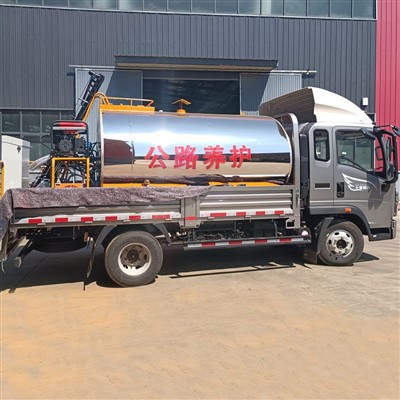
When it comes to asphalt paving projects, the asphalt distributor plays a crucial role in ensuring the efficient and effective application of asphalt. At the heart of an asphalt distributor is the asphalt distributor tank, which stores the hot asphalt before it is distributed onto the road surface. One common question that often arises is, "What is the height of an Asphalt Distributor Tank?" In this blog post, I'll delve into this topic as a supplier of asphalt distributor tanks, exploring the factors that influence tank height and its significance in the overall performance of asphalt distributors.
Factors Influencing the Height of an Asphalt Distributor Tank
The height of an asphalt distributor tank is not randomly determined; it is influenced by several key factors that are essential to the functionality and design of the asphalt distributor.
Firstly, the capacity of the tank is a primary factor. Generally, larger-capacity tanks tend to have greater heights. This is because, to store more asphalt, the tank needs to increase either its diameter or its height. Given the space constraints on asphalt distributor trucks Asphalt Distributor Truck and the need for a stable center of gravity, increasing the height is often a practical solution. For example, in large-scale highway paving projects, distributors with high-capacity tanks are required to minimize the frequency of refilling. These tanks can reach heights of several meters, depending on the specific volume requirements.
Secondly, the design of the asphalt distributor system also affects the tank height. Modern asphalt distributor systems often incorporate advanced insulation and heating technologies to maintain the asphalt at the optimal temperature. The height of the tank may need to be adjusted to accommodate these components. For instance, taller tanks can provide more space for insulation layers, which helps to reduce heat loss during transportation and storage. In addition, the height can influence the pressure and flow of the asphalt during distribution. A taller tank can create a greater hydrostatic pressure, which can be beneficial for ensuring a consistent and even distribution of the asphalt.
Thirdly, transportation and road regulations play a role in determining the tank height. The height of an asphalt distributor tank is limited by the maximum height allowed on public roads. This is to ensure the safety of the vehicle during transportation and to avoid collisions with overhead structures such as bridges and power lines. As a result, manufacturers need to strike a balance between the desired tank capacity and the legal height limits. In countries with strict road regulations, the height of asphalt distributor tanks is carefully designed to comply with these restrictions.
Significance of the Tank Height in Asphalt Distribution
The height of an asphalt distributor tank has a significant impact on the performance of the asphalt distribution process.
From a fluid mechanics perspective, the height of the tank affects the hydrostatic pressure acting on the asphalt. According to Pascal's principle, the pressure at the bottom of a fluid column is proportional to the height of the column. In the case of an asphalt distributor tank, a greater height results in a higher pressure at the outlet, which can improve the flow rate and force of the asphalt. This is particularly important for achieving a uniform distribution of asphalt on the road surface. For example, when applying asphalt in a thick layer or over a large area, sufficient pressure is needed to ensure that the asphalt spreads evenly and adheres well to the substrate.


Moreover, the tank height can influence the loading and unloading processes. A taller tank may require more specialized equipment for loading and unloading, such as elevated platforms or extended hoses. However, it can also provide advantages in terms of gravity-assisted unloading. When the tank is properly designed, the asphalt can flow out more smoothly under the influence of gravity, reducing the need for additional pumping or mechanical assistance. This can improve the efficiency of the operation and reduce energy consumption.
In addition, the visual aspect of the tank height can play a role in the perception of quality and capacity. A taller tank may give the impression of a larger capacity, which can be appealing to customers who are looking for a more powerful and productive asphalt distributor. It can also enhance the overall aesthetics of the asphalt distributor truck, making it more recognizable on the job site.
Different Types of Asphalt Distributor Tanks and Their Heights
There are various types of asphalt distributor tanks available in the market, each with its own characteristics and height ranges.
One common type is the horizontal tank. Horizontal tanks are often used in smaller asphalt distributors or in applications where space is limited. They typically have a lower height compared to vertical tanks, which makes them more stable during transportation. The height of a horizontal asphalt distributor tank can range from around 1 to 2 meters, depending on the capacity. These tanks are suitable for small to medium-sized paving projects, such as residential driveways or local roads.
Vertical tanks, on the other hand, are commonly used in larger asphalt distributors and are designed to accommodate higher volumes of asphalt. They can have heights ranging from 2 to 5 meters or more, depending on the specific design and requirements. Vertical tanks offer the advantage of a larger capacity in a relatively smaller footprint, which is ideal for large-scale projects such as highway construction. Asphalt Distributor Tank
In addition to the traditional stainless steel or carbon steel tanks, there are also some specialized tanks, such as those used in Automatic Asphalt Distributor. These tanks are often equipped with advanced control systems and sensors to ensure precise asphalt distribution. The height of these tanks may be customized to meet the specific requirements of the automatic distribution system.
Customizing the Height of Asphalt Distributor Tanks
As a supplier of asphalt distributor tanks, I understand that different customers have different needs and requirements. That's why we offer customization services for the height of our asphalt distributor tanks.
We work closely with our customers to understand their specific project requirements, including the type of paving, the volume of asphalt needed, and the transportation conditions. Based on this information, we can design and manufacture asphalt distributor tanks with the optimal height. For example, if a customer needs a tank for a project in an area with low overhead clearance, we can design a tank with a lower height while still maintaining the required capacity.
Our team of experienced engineers uses the latest design and manufacturing technologies to ensure the quality and performance of our customized tanks. We also conduct rigorous quality control checks at every stage of the manufacturing process to ensure that the tanks meet the highest standards.
Conclusion
In conclusion, the height of an asphalt distributor tank is a critical factor that is influenced by multiple aspects, including tank capacity, system design, and road regulations. It has a significant impact on the performance of the asphalt distribution process, affecting factors such as pressure, flow, and loading/unloading efficiency. At our company, we offer a variety of asphalt distributor tanks with different heights to meet the diverse needs of our customers. Whether you need a small horizontal tank for a residential project or a large vertical tank for a highway construction, we have the solution for you.
If you're interested in purchasing an asphalt distributor tank or would like to discuss your specific requirements, please don't hesitate to contact us. We look forward to working with you and helping you find the perfect asphalt distributor tank for your project.
References
- Smith, J. (2018). Handbook of Asphalt Paving Technology. McGraw-Hill.
- Johnson, R. (2020). Design and Analysis of Asphalt Distribution Systems. Wiley.
- International Road Transport Union. (2021). Road Transport Regulations.