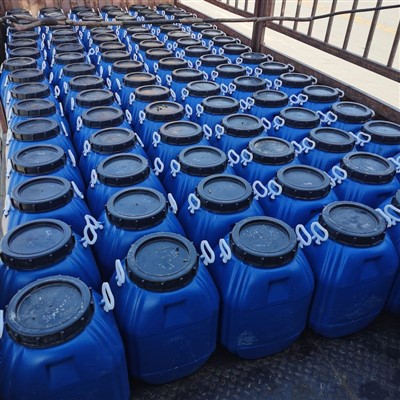
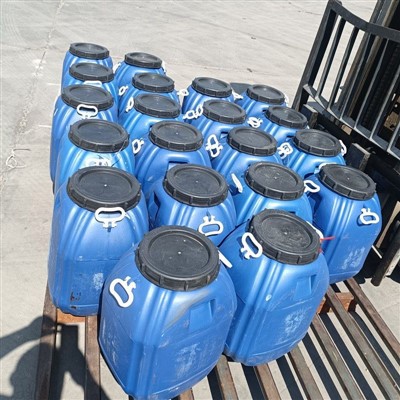
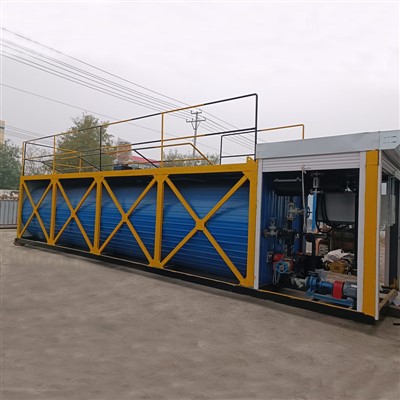
As a supplier of Bitumen Emulsion Plant, I often encounter inquiries about the mixing ratio in a bitumen emulsion plant. Understanding the correct mixing ratio is crucial for producing high - quality bitumen emulsions that meet the specific requirements of various construction and road - building projects.
Basics of Bitumen Emulsion
Bitumen emulsion is a stable mixture of bitumen, water, and an emulsifying agent. The bitumen, which is a viscous and sticky material, is dispersed in water in the form of tiny droplets with the help of the emulsifying agent. The resulting emulsion has a lower viscosity than pure bitumen, making it easier to handle, transport, and apply at lower temperatures.
Factors Affecting the Mixing Ratio
Bitumen Type
Different types of bitumen, such as penetration - graded bitumen, polymer - modified bitumen, and oxidized bitumen, have different properties. For example, polymer - modified bitumen has enhanced elasticity and durability. The mixing ratio needs to be adjusted according to the type of bitumen used. If a more viscous bitumen is employed, a different emulsifying agent concentration and water - bitumen ratio may be required to achieve a stable emulsion.
Emulsifying Agent
The emulsifying agent plays a vital role in the stability of the bitumen emulsion. There are two main types of emulsifying agents: cationic and anionic. Cationic emulsifying agents are positively charged and are more suitable for use with acidic aggregates, while anionic emulsifying agents are negatively charged and work well with basic aggregates. The concentration of the emulsifying agent in the emulsion affects the size of the bitumen droplets and the stability of the emulsion. A higher concentration of the emulsifying agent may lead to smaller bitumen droplets and a more stable emulsion, but it also increases the cost.
Aggregate Type and Application
The type of aggregate that the bitumen emulsion will be used with and the specific application also influence the mixing ratio. For surface dressing applications, where the emulsion is sprayed on the road surface and then covered with aggregates, a different mixing ratio may be needed compared to a slurry seal application, where the emulsion is mixed with fine aggregates and fillers to form a paste - like material. If the aggregates are porous, a higher bitumen content in the emulsion may be required to ensure good adhesion.
Typical Mixing Ratios
Bitumen - to - Water Ratio
In general, the bitumen - to - water ratio in a bitumen emulsion can range from 30:70 to 70:30. For light - duty applications such as dust suppression on unpaved roads, a lower bitumen content (around 30 - 40%) may be sufficient. In contrast, for heavy - duty road construction projects, a higher bitumen content (60 - 70%) is often required to provide better binding and durability.
Emulsifying Agent Concentration
The concentration of the emulsifying agent typically ranges from 0.5% to 3% by weight of the total emulsion. A lower concentration may be used for less demanding applications, while a higher concentration is necessary for more stable emulsions, especially when using more viscous bitumen or when the emulsion needs to have a longer shelf - life.
Determining the Optimal Mixing Ratio
Laboratory Testing
To determine the optimal mixing ratio for a specific project, laboratory testing is essential. Samples of the bitumen, water, emulsifying agent, and aggregates are used to prepare small - scale emulsions. These emulsions are then tested for various properties such as viscosity, stability, droplet size distribution, and adhesion to aggregates. By varying the mixing ratios and analyzing the test results, the most suitable combination can be identified.
Field Trials
After the laboratory testing, field trials are conducted to verify the performance of the bitumen emulsion under real - world conditions. The emulsion is applied to a small section of the road or construction site, and its behavior is observed over a period of time. Factors such as curing time, adhesion to the surface, and resistance to traffic and environmental conditions are evaluated. Based on the results of the field trials, the mixing ratio can be further refined if necessary.
Our Fully Automatic Emulsified Asphalt Equipment and Emulsion Bitumen Equipment
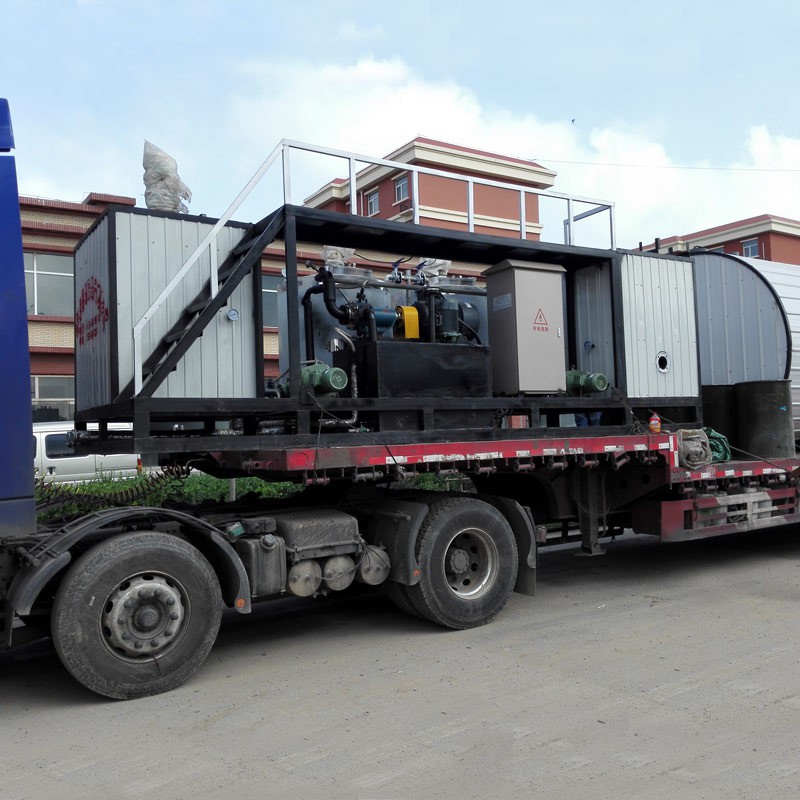
Our company offers a range of Bitumen Emulsion Plant solutions, including Fully Automatic Emulsified Asphalt Equipment and Emulsion Bitumen Equipment. These equipment are designed to accurately control the mixing ratio of bitumen, water, and emulsifying agent.
The fully automatic equipment is equipped with advanced control systems that can precisely measure and adjust the flow rates of the different components. This ensures that the desired mixing ratio is maintained consistently during the production process, resulting in high - quality and uniform bitumen emulsions. Our emulsion bitumen equipment is also designed to handle different types of bitumen and emulsifying agents, allowing for flexibility in meeting the diverse needs of our customers.

Importance of Correct Mixing Ratio
A correct mixing ratio is essential for several reasons. Firstly, it ensures the stability of the bitumen emulsion. A stable emulsion will not separate into its components during storage and transportation, which is crucial for its usability. Secondly, it affects the performance of the bitumen emulsion in the application. A well - formulated emulsion will provide good adhesion to the aggregates, high durability, and resistance to environmental factors such as water and temperature changes. Finally, an appropriate mixing ratio can also optimize the cost - effectiveness of the production process by using the right amount of each component.
Contact Us for More Information
If you are involved in road construction, asphalt production, or any other projects that require bitumen emulsions, we are here to assist you. Our team of experts can help you determine the optimal mixing ratio for your specific needs and provide you with the best Bitumen Emulsion Plant solutions. Whether you need a fully automatic system or a customized setup, we have the expertise and equipment to meet your requirements. Contact us today to start a discussion about your project and explore the possibilities of working together.
References
- Asphalt Institute. (20XX). "Bitumen Emulsion Technology".
- Transport Research Laboratory. (20XX). "Guidelines for Bitumen Emulsion Mixing Ratios".
- ASTM International. (20XX). "Standards for Bitumen Emulsion Testing".