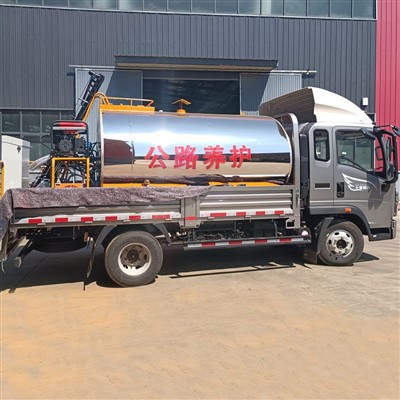
As a supplier of Bitumen Melting Equipment, I've had the privilege of witnessing firsthand the diverse landscape of this industry. Bitumen, also known as asphalt in some regions, is a crucial material in road construction, waterproofing, and various industrial applications. The process of melting bitumen is a critical step, and the equipment used can significantly impact efficiency, quality, and cost. In this blog, I'll explore the key differences between different brands of bitumen melting equipment.
Heating Technology
One of the most fundamental differences between brands lies in their heating technology. There are primarily three types of heating methods used in bitumen melting equipment: direct heating, indirect heating, and microwave heating.
Direct heating systems, as the name suggests, involve direct contact between the heat source and the bitumen. This method is often faster and more energy - efficient in terms of heat transfer. However, it can also lead to overheating and thermal degradation of the bitumen if not carefully controlled. Some brands that use direct heating have advanced temperature control systems to mitigate these risks. For example, [Brand X] has a patented temperature sensor that constantly monitors the bitumen temperature and adjusts the heat input accordingly.
Indirect heating systems use a heat transfer medium, such as hot oil or steam, to transfer heat to the bitumen. This method provides a more uniform heating process and reduces the risk of thermal degradation. It is also safer as there is no direct contact between the heat source and the bitumen. [Brand Y] is well - known for its indirect heating systems, which are designed to ensure consistent temperature distribution throughout the melting process.


Microwave heating is a relatively new technology in the bitumen melting industry. It offers rapid and uniform heating without the need for a heat transfer medium. However, it is still more expensive and less common than direct and indirect heating methods. [Brand Z] has been at the forefront of developing microwave - based bitumen melting equipment, which is highly efficient but requires a significant initial investment.
Capacity and Output
The capacity and output of bitumen melting equipment vary widely between brands. Small - scale equipment is suitable for local contractors or small - scale projects, while large - scale industrial plants are needed for major infrastructure projects.
Some brands specialize in producing small - capacity equipment, such as mobile bitumen melting units. These units are easy to transport and can be set up quickly at the project site. [Brand A] offers a range of mobile bitumen melting equipment with capacities ranging from 1 to 5 tons per hour. They are ideal for small road repair projects or rural construction sites.
On the other hand, large - scale brands focus on high - capacity asphalt melting plants. These plants can produce hundreds of tons of melted bitumen per day. [Brand B] has developed state - of - the - art Asphalt Melting Plant [/asphalt-plant/bitumen-melting-machine/asphalt-melting-plant.html] with capacities up to 500 tons per day, which are used in large - scale highway construction projects.
Safety Features
Safety is a top priority in the operation of bitumen melting equipment. Different brands incorporate various safety features to protect operators and prevent accidents.
Some brands use explosion - proof designs in their equipment. This is especially important when dealing with bitumen, which is a flammable material. [Brand C] has designed its Bitumen Melting Equipment [/asphalt-plant/bitumen-melting-machine/bitumen-melting-equipment.html] with explosion - proof electrical components and ventilation systems to reduce the risk of fire and explosion.
Other safety features include automatic shut - off systems. In case of overheating, overpressure, or other abnormal conditions, the equipment will automatically shut down to prevent further damage. [Brand D]'s asphalt melting equipment is equipped with multiple sensors that monitor various parameters and trigger an automatic shut - off if any unsafe conditions are detected.
Control and Automation
The level of control and automation also varies between brands. Modern bitumen melting equipment often comes with advanced control systems that allow operators to monitor and adjust various parameters easily.
Some brands offer basic control panels with manual settings. These are suitable for operators who prefer a more hands - on approach. [Brand E]'s equipment has a simple control panel that allows operators to set the temperature, melting time, and other parameters manually.
On the other hand, more advanced brands provide fully automated systems. These systems can be programmed to operate continuously, adjusting the heating, mixing, and output based on pre - set parameters. [Brand F]'s Asphalt Melting Equipment [/asphalt-plant/bitumen-melting-machine/asphalt-melting-equipment.html] is equipped with a touch - screen control panel and a PLC (Programmable Logic Controller) system, which enables remote monitoring and control of the entire melting process.
Quality and Durability
The quality and durability of bitumen melting equipment are crucial factors that can affect the long - term performance and cost - effectiveness of the equipment.
Brands that use high - quality materials and advanced manufacturing processes tend to produce more durable equipment. [Brand G] uses stainless steel and high - strength alloys in the construction of its bitumen melting tanks, which are resistant to corrosion and wear. This ensures a longer service life and reduces the need for frequent maintenance.
Some brands also offer comprehensive after - sales service and support. They provide regular maintenance, spare parts supply, and technical training to ensure that the equipment operates at its best. [Brand H] has a global network of service centers that can quickly respond to customer needs and provide on - site support.
Cost
Cost is an important consideration for any buyer of bitumen melting equipment. The price of the equipment can vary depending on the brand, capacity, features, and quality.
Generally, small - scale and basic equipment from less well - known brands are more affordable. However, they may lack some of the advanced features and quality of more established brands. [Brand I] offers budget - friendly bitumen melting equipment that is suitable for small - scale users on a tight budget.
On the other hand, high - end equipment from leading brands can be more expensive but offers better performance, reliability, and safety features. [Brand J]'s state - of - the - art bitumen melting plants are priced higher, but they are known for their high efficiency and long - term durability, which can result in lower overall costs in the long run.
Conclusion
In conclusion, there are significant differences between different brands of bitumen melting equipment in terms of heating technology, capacity, safety features, control and automation, quality, and cost. When choosing bitumen melting equipment, buyers should carefully consider their specific needs, project requirements, and budget.
As a supplier of Bitumen Melting Equipment, we understand the importance of providing high - quality, reliable, and cost - effective solutions to our customers. We offer a wide range of products that cater to different needs and budgets. Whether you are a small - scale contractor or a large - scale industrial user, we have the right equipment for you.
If you are interested in learning more about our Bitumen Melting Equipment or would like to discuss your specific requirements, please feel free to contact us. We are committed to providing you with the best products and services to meet your needs.
References
- "Bitumen Melting and Storage Technology" - Industry Report
- "Advances in Asphalt Melting Equipment" - Journal of Construction Engineering
- Manufacturer brochures and technical specifications from various brands of bitumen melting equipment.