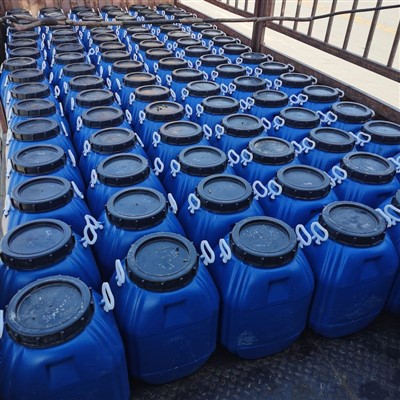
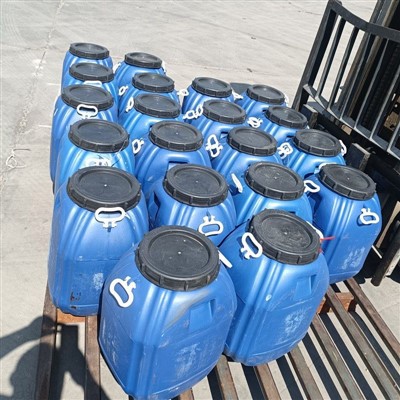
Hey there! As an asphalt emulsifier supplier, I've been diving deep into the world of asphalt emulsions. One question that often pops up is how the particle size of asphalt emulsion affects its performance when used with emulsifiers. Let's break it down.
First off, what's an asphalt emulsion anyway? Well, it's basically a mixture of asphalt, water, and an emulsifier. The emulsifier plays a crucial role here. It helps to keep the asphalt droplets dispersed in the water, preventing them from clumping together. You can learn more about Asphalt Emulsifier on our website.
Now, let's talk about particle size. The particle size of asphalt emulsion can vary quite a bit, and this variation has a significant impact on its performance. When the particle size is small, the asphalt emulsion tends to have better stability. Smaller particles are less likely to settle at the bottom of the container, which means the emulsion stays well - mixed for a longer time. This is super important, especially when you're storing the emulsion for a while before use.
On the other hand, larger particle sizes can lead to quicker separation. If the particles are too big, they'll start to sink to the bottom of the container, and you'll end up with a layer of asphalt at the bottom and mostly water on top. That's definitely not what you want, as it can make the emulsion unusable.
But it's not just about stability. The particle size also affects the application properties of the Emulsified Asphalt Liquid. Smaller particle sizes generally result in a smoother application. When you're spraying or spreading the emulsion on a road surface, for example, smaller particles can cover the surface more evenly. This leads to a better - looking and more durable road surface.
Larger particles, however, might cause some issues during application. They can clog the nozzles of spraying equipment, which is a real pain in the neck. And even if you manage to apply the emulsion with larger particles, the surface might not be as smooth, and it could lead to a less - durable finish.
Another aspect to consider is the interaction between the particle size and the type of emulsifier. There are different types of emulsifiers, like anionic, cationic, and non - ionic. Let's take a closer look at Anionic Bitumen Emulsion for now.
Anionic emulsifiers are negatively charged. When used with asphalt emulsion, the particle size can influence how well the emulsifier works. Smaller particles provide a larger surface area for the emulsifier to interact with. This means that the anionic emulsifier can more effectively coat the asphalt particles, keeping them dispersed in the water.
If the particle size is large, the surface area available for the emulsifier to attach to is relatively small. As a result, the emulsifier might not be able to do its job as well, and the emulsion could become less stable.
The curing time of the asphalt emulsion is also affected by the particle size. Smaller particles usually lead to a faster curing time. This is because smaller particles have a larger surface area exposed to the air and other curing agents. So, when you're using the emulsion for road construction or repair, a faster curing time can be a huge advantage. It means that the road can be opened to traffic sooner, reducing disruptions.
Larger particles, in contrast, have a slower curing time. This can be a problem, especially in areas where traffic needs to resume quickly. You might end up with a road that's still soft and not fully cured, which can lead to damage from vehicles driving over it.
Now, let's talk about how we, as an asphalt emulsifier supplier, can help with all these particle size issues. We have a wide range of emulsifiers that are designed to work well with different particle sizes. Our team of experts can analyze your specific needs and recommend the best emulsifier for your asphalt emulsion.
Whether you need an emulsion with small particles for a smooth application and fast curing or larger particles for a specific type of project, we've got you covered. We can also provide guidance on how to control the particle size during the production process.


If you're in the market for asphalt emulsifiers and want to ensure that your asphalt emulsion performs at its best, don't hesitate to reach out. We're here to help you make the most of your asphalt emulsion projects. Whether it's for road construction, roofing, or any other application, we can provide the right emulsifier to optimize the particle size and performance of your emulsion.
In conclusion, the particle size of asphalt emulsion has a profound impact on its performance when used with emulsifiers. From stability and application properties to curing time, every aspect is affected. As an asphalt emulsifier supplier, we're committed to providing high - quality products and expert advice to help you get the best results. So, if you're interested in learning more or making a purchase, just get in touch, and we'll start the conversation.
References
- "Asphalt Emulsion Technology" - A comprehensive guide on the science behind asphalt emulsions and their properties.
- "The Role of Emulsifiers in Asphalt Emulsion Stability" - A research paper that delves into how emulsifiers interact with asphalt particles of different sizes.