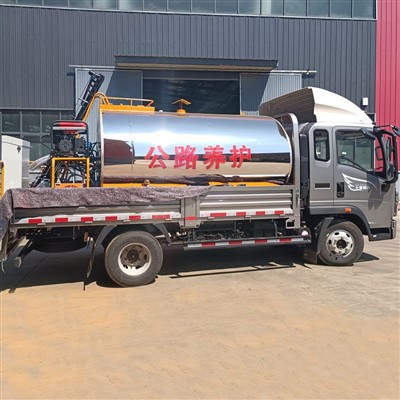
An emulsion bitumen plant is a crucial facility in the construction and road - building industries. It produces bitumen emulsion, which is a mixture of bitumen, water, and an emulsifying agent. This product is widely used due to its advantages such as easy handling, low - temperature application, and environmental friendliness. But what exactly powers an emulsion bitumen plant? In this blog, as a supplier of emulsion bitumen plants, I will delve into the power sources for these plants.
1. Electricity
Electricity is one of the most common power sources for emulsion bitumen plants. It powers a variety of components within the plant, including pumps, mixers, and control systems.
Pumps
Pumps are essential for moving bitumen, water, and the emulsifying agent through the plant. Electric pumps are highly efficient and can be precisely controlled. For example, centrifugal pumps, which are often used in emulsion bitumen plants, rely on an electric motor to rotate an impeller. This rotation creates a centrifugal force that moves the liquid through the pump and into the next stage of the production process. The flow rate and pressure of the pumps can be adjusted by changing the speed of the electric motor, allowing for accurate dosing of the different components.
Mixers
Mixers play a vital role in ensuring that the bitumen, water, and emulsifying agent are thoroughly combined to form a stable emulsion. Electric mixers can range from simple paddle mixers to high - shear mixers. High - shear mixers are particularly important as they can break down the bitumen into tiny droplets and disperse them evenly in the water phase. These mixers require a significant amount of power to operate at high speeds, and electricity provides a reliable and controllable source of energy for this purpose.
Control Systems
Modern emulsion bitumen plants are equipped with sophisticated control systems that monitor and regulate various parameters such as temperature, pressure, and flow rate. These control systems are powered by electricity and use sensors and actuators to maintain optimal operating conditions. For example, temperature sensors can detect the temperature of the bitumen and water, and the control system can adjust the heating elements accordingly. Without a stable electricity supply, these control systems would not be able to function properly, leading to inconsistent product quality.
One of the main advantages of using electricity as a power source is its cleanliness and ease of use. It does not produce harmful emissions during operation, making it an environmentally friendly option. Additionally, electricity is readily available in most industrial areas, and the infrastructure for its distribution is well - established. However, the cost of electricity can be relatively high, especially in regions where the electricity grid is overloaded or where there are high tariffs. Moreover, in case of a power outage, the plant may have to shut down, which can cause delays in production.
2. Diesel Generators
In areas where the electricity supply is unreliable or where there is no access to the grid, diesel generators are often used as an alternative power source for emulsion bitumen plants.
Operation Principle
Diesel generators work by converting the chemical energy of diesel fuel into electrical energy. The diesel engine in the generator burns diesel fuel to produce mechanical energy, which is then used to rotate an alternator. The alternator converts the mechanical energy into electrical energy, which can be used to power the various components of the emulsion bitumen plant.
Advantages
Diesel generators provide a high degree of flexibility. They can be easily transported and installed at different locations, making them suitable for mobile emulsion bitumen plants. They can also provide a continuous power supply, even in remote areas. In case of a power outage, a diesel generator can be quickly started up to keep the plant running, minimizing production downtime.
Disadvantages
However, diesel generators also have some drawbacks. Diesel fuel is a fossil fuel, and its combustion produces harmful emissions such as carbon monoxide, nitrogen oxides, and particulate matter. These emissions can have a negative impact on the environment and human health. Additionally, the cost of diesel fuel can be volatile, and the maintenance of diesel generators can be relatively expensive. Regular servicing is required to ensure the reliable operation of the generator, and the replacement of parts such as filters and spark plugs can add to the overall cost of running the plant.


3. Natural Gas
Natural gas is another potential power source for emulsion bitumen plants. It can be used to power both the heating systems and the electrical generators in the plant.
Heating Systems
In an emulsion bitumen plant, heating is required to maintain the bitumen at a suitable temperature for processing. Natural gas - fired heaters can provide a cost - effective and efficient way to heat the bitumen. The combustion of natural gas releases a large amount of heat, which can be transferred to the bitumen through a heat exchanger. Natural gas - fired heaters are relatively clean - burning compared to diesel - fired heaters, producing fewer emissions of pollutants such as sulfur dioxide and particulate matter.
Electrical Generation
Natural gas can also be used to generate electricity in combined heat and power (CHP) systems. In a CHP system, a natural gas engine or turbine is used to generate electricity, and the waste heat produced during the power generation process is recovered and used for heating purposes. This increases the overall energy efficiency of the plant, as the same fuel is used to produce both electricity and heat.
The advantage of using natural gas is its relatively low cost and low emissions compared to diesel. It is also a more abundant and widely available energy source. However, the infrastructure for natural gas distribution may not be available in all areas, and there may be safety concerns associated with storing and handling natural gas.
4. Renewable Energy Sources
With the increasing focus on sustainability, renewable energy sources such as solar and wind power are also being considered as potential power sources for emulsion bitumen plants.
Solar Power
Solar power can be used to generate electricity through photovoltaic (PV) panels. PV panels convert sunlight into electrical energy, which can be used to power the components of the emulsion bitumen plant. Solar power is a clean and renewable energy source, and its use can significantly reduce the carbon footprint of the plant. However, the output of solar panels is dependent on sunlight availability, which can be affected by factors such as weather conditions and the time of day. Energy storage systems such as batteries may be required to ensure a continuous power supply during periods of low sunlight.
Wind Power
Wind power can also be harnessed to generate electricity. Wind turbines convert the kinetic energy of the wind into electrical energy. Similar to solar power, wind power is clean and renewable. However, the installation of wind turbines requires a suitable location with consistent wind resources. The initial investment for wind power generation can be high, and there may be concerns about the visual impact and noise pollution associated with wind turbines.
As a supplier of emulsion bitumen plants, we understand the importance of choosing the right power source for your plant. The choice of power source depends on various factors such as the location of the plant, the availability of energy sources, the cost, and the environmental requirements. We offer a range of Emulsion Bitumen Equipment that can be customized to work with different power sources. Our Fully Automatic Emulsified Asphalt Equipment is designed to be energy - efficient and reliable, regardless of the power source used. We also provide Bitumen Emulsion Equipment that can be integrated with different power generation systems.
If you are interested in purchasing an emulsion bitumen plant or need more information about the power sources available, please feel free to contact us for a detailed discussion. We are committed to providing you with the best solutions for your specific needs.
References
- ASTM D2397/D2397M - 19 Standard Specification for Emulsified Asphalt
- Shell Bitumen Handbook, 6th Edition
- Industry reports on energy sources in the construction industry