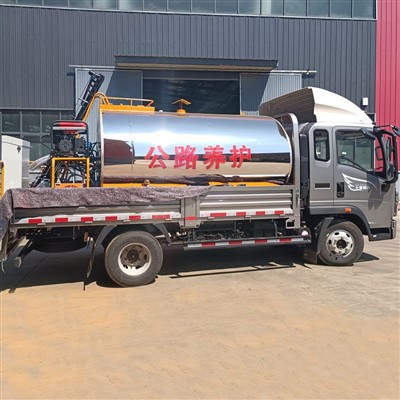
Hey there! As a supplier of asphalt rubber plants, I often get asked about how long it takes to produce a batch of asphalt rubber in an asphalt rubber plant. Well, there's no one - size - fits - all answer to this question because several factors come into play.
Factors Affecting Production Time
Plant Capacity
First off, the capacity of the asphalt rubber plant is a major factor. Different plants have different production capabilities. For example, a small - scale Asphalt Rubber Blending Plant might be able to produce around 10 - 20 tons per batch. On the other hand, larger industrial plants can handle 50 tons or more in a single batch.
A smaller plant generally takes less time to fill up the necessary materials and start the production process. But it also has a lower output rate. If you're using a small plant with a capacity of 15 tons, it might take about 1 - 2 hours to produce a batch. The filling of raw materials, which include asphalt, rubber powder, and additives, is relatively quick. Then, the mixing process, which is crucial for getting a homogeneous asphalt - rubber blend, usually takes around 30 - 60 minutes. After that, there's a short period for quality control checks before the batch is ready.
In contrast, a large - scale plant with a 50 - ton capacity will take longer to fill with materials. It could take 2 - 3 hours just to load all the necessary components. The mixing process in a big plant also takes longer because there's more material to blend thoroughly. This could take 1.5 - 2.5 hours. And then, the quality control process is more extensive due to the larger quantity, adding another 30 minutes to an hour. So, in total, it could take 4 - 6 hours to produce a batch in a large - capacity plant.
Raw Material Quality and Preparation
The quality and preparation of raw materials can significantly impact production time. High - quality asphalt and well - processed rubber powder are easier to mix. If the rubber powder has a consistent particle size, it will blend more quickly with the asphalt.
For instance, if the rubber powder has a wide range of particle sizes, it might take longer to achieve a uniform mixture. The larger particles need more time to break down and disperse evenly in the asphalt. This can add an extra 30 minutes to an hour to the mixing process.
Also, if the raw materials need pre - treatment, such as heating the asphalt to the right temperature or drying the rubber powder, it will add to the overall production time. If the asphalt needs to be heated from room temperature to the optimal mixing temperature of around 160 - 180°C, it could take 30 - 60 minutes depending on the heating system of the plant.
Mixing Technology
The mixing technology used in the asphalt rubber plant is another important factor. There are different types of mixers, such as batch mixers and continuous mixers.
Batch mixers are more common in smaller plants. They work by loading a specific amount of materials into the mixer, mixing them for a set period, and then discharging the batch. A well - designed batch mixer can reduce mixing time. For example, a modern batch mixer with advanced agitation systems can cut the mixing time by 15 - 20% compared to an older model. So, instead of taking 60 minutes to mix a 15 - ton batch, it might only take 48 - 51 minutes.
Continuous mixers, on the other hand, are often used in larger plants. They allow for a continuous flow of raw materials into the mixer, which can increase the overall production rate. However, they require a more precise control of the input materials. If the flow rate of the asphalt, rubber powder, and additives is not well - regulated, it can lead to an uneven blend. A well - optimized continuous mixer can produce a large batch of asphalt rubber in a relatively short time, maybe 3 - 4 hours for a 50 - ton batch, compared to the 4 - 6 hours it might take with a batch mixer in a large plant.
Quality Control
Quality control is an essential part of the production process. No matter the size of the plant, ensuring that the asphalt rubber meets the required standards is crucial. This involves testing for properties like viscosity, elasticity, and stability.
In a small - scale production, a basic quality control check can be done quickly. It might involve taking a few samples from different parts of the batch and testing them for viscosity. This can be done in about 15 - 30 minutes. However, in a large - scale production, the quality control process is more comprehensive. They might test for multiple properties, and take more samples from different depths and areas of the batch. This can take 30 minutes to an hour or even more, especially if there are any issues detected and adjustments need to be made.
Our Product Range and Their Production Times
We offer a variety of asphalt rubber plants, including Rubber Colored Asphalt Equipment and Mobile Rubber Asphalt Plant.
Our Rubber Colored Asphalt Equipment is designed to produce high - quality colored asphalt rubber. The production time for a batch in this equipment is similar to that of a small - to medium - sized regular asphalt rubber plant. A typical batch of 20 tons of colored asphalt rubber might take 2 - 3 hours. The additional time compared to non - colored asphalt rubber is mainly due to the addition of color pigments. These pigments need to be carefully mixed to ensure an even color distribution. The mixing process for the pigments can take an extra 30 - 60 minutes.
Our Mobile Rubber Asphalt Plant is great for on - site production. It has a relatively small capacity, usually around 10 - 15 tons. The advantage of a mobile plant is that it can be set up quickly at the construction site. The production time for a batch in a mobile plant is around 1 - 2 hours. The quick setup and relatively small capacity make it a great choice for projects where you need a small amount of asphalt rubber quickly.
Conclusion
In conclusion, the time it takes to produce a batch of asphalt rubber in an asphalt rubber plant can vary widely. It depends on factors like plant capacity, raw material quality and preparation, mixing technology, and quality control requirements. Small - scale plants can produce a batch in 1 - 2 hours, while large - scale plants might take 4 - 6 hours.


If you're in the market for an asphalt rubber plant, considering your production needs is crucial. If you have small - scale projects with a low demand for asphalt rubber, a small - capacity plant or a mobile plant could be the right choice. For large - scale infrastructure projects, a high - capacity plant will be more suitable, even though it takes longer to produce a batch.
If you're interested in learning more about our asphalt rubber plants or have questions about production times for your specific needs, feel free to reach out to us. We're here to help you find the best solution for your asphalt rubber production requirements.
References
- Asphalt Technology Handbook, published by the Asphalt Institute.
- Rubber - Modified Asphalt: Properties and Applications, research paper by the Transportation Research Board.