As a seasoned supplier of asphalt distributors, I've often encountered a common question from clients and industry enthusiasts alike: Can an asphalt distributor be used for spraying other materials besides asphalt? This query opens up a fascinating discussion about the versatility and potential of these machines beyond their primary application. In this blog, we'll delve into the technical aspects, explore the feasibility, and examine real - world scenarios where asphalt distributors can be repurposed.
Understanding the Asphalt Distributor
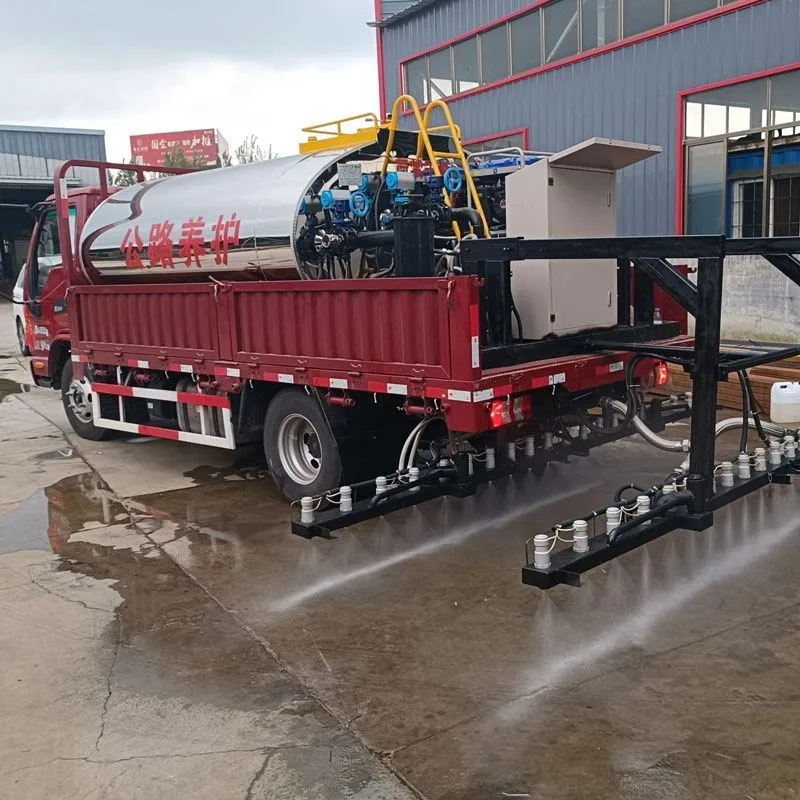
Before we explore alternative uses, it's crucial to understand how an asphalt distributor works. An asphalt distributor is a specialized vehicle or equipment designed to spray asphalt evenly on road surfaces. It consists of a tank to store the asphalt, a heating system to keep the asphalt at the right temperature for spraying, a pumping system to transfer the asphalt from the tank to the spraying nozzles, and a control system to regulate the spraying rate and pattern.
The Standard Asphalt Distributor is a basic model that offers reliable performance for general asphalt spraying tasks. It is widely used in road construction and maintenance projects. The Intelligent Asphalt Distributor takes it a step further with advanced features such as automatic control, real - time monitoring, and precise spraying adjustment. The Automatic Asphalt Distributor provides a high - level of automation, reducing the need for manual intervention during the spraying process.
Feasibility of Spraying Other Materials
The answer to whether an asphalt distributor can spray other materials depends on several factors, including the physical and chemical properties of the alternative materials, the compatibility with the distributor's components, and the required spraying parameters.
Physical and Chemical Compatibility
One of the primary concerns is the compatibility of the alternative material with the asphalt distributor's tank, pipes, and nozzles. Asphalt is a viscous, petroleum - based material that requires a heating system to maintain its fluidity. Some alternative materials may have different viscosities, densities, and chemical compositions. For example, water - based materials may not require heating, and their lower viscosity may affect the pumping and spraying performance.
Corrosion is another important factor. Asphalt distributors are typically made of materials that are resistant to the corrosive effects of asphalt. However, some alternative materials may be more corrosive, which could damage the distributor's components over time. For instance, acidic or alkaline solutions may react with the metal parts of the distributor, leading to premature wear and failure.
Spraying Parameters
The spraying parameters, such as pressure, flow rate, and droplet size, need to be adjusted according to the properties of the alternative material. Asphalt is usually sprayed at relatively high pressures to ensure proper coverage and adhesion. Other materials may require different pressure settings. For example, a light - weight coating material may need a lower pressure to avoid over - spraying or splashing.
Materials That Can Be Sprayed
Despite the challenges, there are several materials that can potentially be sprayed using an asphalt distributor with some modifications or adjustments.
Emulsified Materials
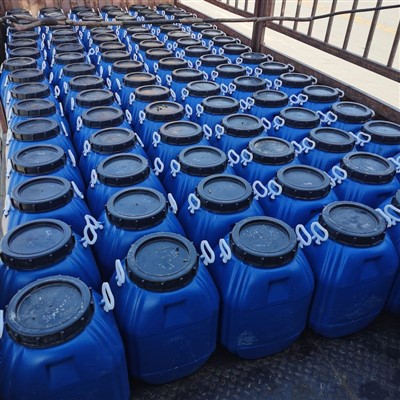
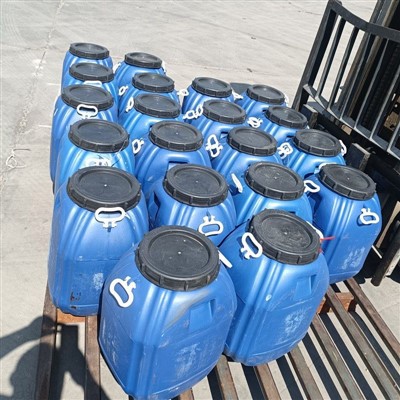
Emulsified materials, such as asphalt emulsions and polymer emulsions, are good candidates for use in asphalt distributors. These materials are a mixture of asphalt or polymers and water, stabilized by an emulsifying agent. They have lower viscosities than pure asphalt, making them easier to pump and spray. In addition, they can be used at lower temperatures, reducing the energy consumption of the heating system.
Asphalt emulsions are commonly used for surface treatments, such as chip sealing and slurry sealing. Polymer emulsions can be used to enhance the performance of road surfaces, providing better durability and resistance to cracking. By adjusting the spraying parameters, an asphalt distributor can effectively spray these emulsified materials.
Sealants and Coatings
Sealants and coatings are another group of materials that can be sprayed using an asphalt distributor. These materials are used to protect and enhance the appearance of road surfaces, as well as to prevent water penetration and oxidation. Some sealants and coatings are based on asphalt, while others are made of synthetic polymers.
For example, coal - tar - based sealants were once widely used for driveway and parking lot sealing. Although their use has been restricted in some areas due to environmental concerns, other types of sealants, such as acrylic and polyurethane coatings, are becoming more popular. An asphalt distributor can be adapted to spray these sealants and coatings, providing a cost - effective solution for large - scale applications.
Fertilizers and Pesticides
In some agricultural applications, asphalt distributors can be used to spray fertilizers and pesticides. These materials are usually in liquid form and need to be evenly distributed over a large area. By adjusting the spraying pattern and flow rate, an asphalt distributor can cover a large field quickly and efficiently.
However, it's important to note that when using an asphalt distributor for agricultural purposes, thorough cleaning and disinfection are required after each use to prevent cross - contamination between the agricultural chemicals and the asphalt or other materials used in road construction.
Modifications and Precautions
If you plan to use an asphalt distributor for spraying other materials, some modifications and precautions are necessary.
Modifications
- Heating System Adjustment: If the alternative material does not require heating or requires a different temperature range, the heating system may need to be adjusted or bypassed. For example, for water - based materials, the heating system can be turned off to save energy.
- Nozzle Selection: Different materials may require different nozzle sizes and designs to achieve the desired spraying pattern and droplet size. You may need to replace the standard asphalt nozzles with nozzles suitable for the alternative material.
- Filtration System: To prevent clogging of the nozzles and pipes, a proper filtration system should be installed. This is especially important for materials that may contain solid particles or debris.
Precautions
- Cleaning: Thorough cleaning of the asphalt distributor is essential before and after using it for different materials. This helps to prevent cross - contamination and ensures the proper functioning of the distributor.
- Testing: Before large - scale application, it's recommended to conduct small - scale tests to evaluate the performance of the distributor with the alternative material. This can help you identify any potential problems and make the necessary adjustments.
Real - World Applications
There are already some real - world examples of using asphalt distributors for spraying other materials.
In the construction industry, some contractors have used asphalt distributors to spray fire - retardant coatings on large - scale building structures. These coatings can help to prevent the spread of fire, providing an additional layer of safety. By adjusting the spraying parameters and using the appropriate nozzles, the asphalt distributor can ensure uniform coverage of the fire - retardant coating.
In the environmental field, asphalt distributors have been used to spray soil stabilizers on construction sites. These stabilizers can improve the strength and stability of the soil, reducing erosion and sedimentation. The ability of the asphalt distributor to cover a large area quickly makes it an efficient tool for this type of application.

Conclusion
In conclusion, an asphalt distributor can be used for spraying other materials besides asphalt, but it requires careful consideration of the material's properties, compatibility with the distributor's components, and necessary modifications. With the right approach, an asphalt distributor can be a versatile tool for a variety of applications, expanding its utility beyond traditional road construction.
If you're interested in exploring the possibility of using an asphalt distributor for spraying alternative materials or need more information about our Standard Asphalt Distributor, Intelligent Asphalt Distributor, or Automatic Asphalt Distributor, please feel free to contact us for a detailed discussion. We're committed to providing you with the best solutions and support for your specific needs.
References
- "Asphalt Paving Handbook", Asphalt Institute
- "Principles of Road Construction", McGraw - Hill Education
- Industry reports on asphalt distributors and alternative spraying materials