Yo! I'm a supplier of Emulsion Asphalt Plants, and I often get asked about the differences between different models of these plants. So, I thought I'd write this blog to break it down for you in a simple and easy - to - understand way.
First off, let's talk about the basic types of emulsion asphalt plants. There are generally two main categories: batch - type and continuous - type plants.
Batch - type Emulsion Asphalt Plants
Batch - type plants are like the old - school way of making emulsion asphalt. In these plants, the production process happens in batches. You load a specific amount of bitumen, water, and emulsifiers into the mixing chamber. Then you start the mixing process, and once it's done, you discharge the finished emulsion asphalt.
One of the big advantages of batch - type plants is their flexibility. If you need to produce small quantities of emulsion asphalt with different formulations for various projects, these plants are a great choice. For example, if you have a small road repair job that requires a special type of emulsion asphalt with a unique additive, you can easily adjust the batch size and ingredients.
However, batch - type plants also have their drawbacks. They are generally slower in production compared to continuous - type plants. Since you have to wait for one batch to finish before starting the next, the overall output rate is lower. Also, they might require more manual intervention. You need someone to monitor the batch process, make sure the right amounts of ingredients are added at the right time, and handle the discharging process.
If you're interested in the equipment for making bitumen emulsion, you can check out Bitumen Emulsion Equipment. It has all the details about the tools and machinery used in the production of bitumen emulsion.
Continuous - type Emulsion Asphalt Plants
Continuous - type plants, on the other hand, are all about high - volume, non - stop production. In these plants, the raw materials (bitumen, water, and emulsifiers) are continuously fed into the system, and the emulsion asphalt is continuously produced and discharged.
The biggest plus of continuous - type plants is their high production capacity. They can churn out large amounts of emulsion asphalt in a short period. This makes them ideal for big - scale road construction projects where you need a constant supply of emulsion asphalt.
Another advantage is the consistency of the product. Since the process is continuous and automated, the quality of the emulsion asphalt is more uniform throughout the production. There's less chance of human error affecting the final product.
But continuous - type plants aren't perfect. They're more expensive to set up and maintain. The initial investment for a continuous - type plant is quite high because of the complex machinery and automation systems. Also, they're not very flexible when it comes to changing the production formula. If you need to switch to a different type of emulsion asphalt, it can be a time - consuming process to adjust the settings of the continuous plant.
If you're looking for fully automatic equipment for making emulsified asphalt, Fully Automatic Emulsified Asphalt Equipment is the link for you. It showcases some of the best fully - automated options in the market.
Mobile vs. Stationary Emulsion Asphalt Plants
Apart from the batch - and continuous - type classification, we also have mobile and stationary emulsion asphalt plants.
Mobile Emulsion Asphalt Plants
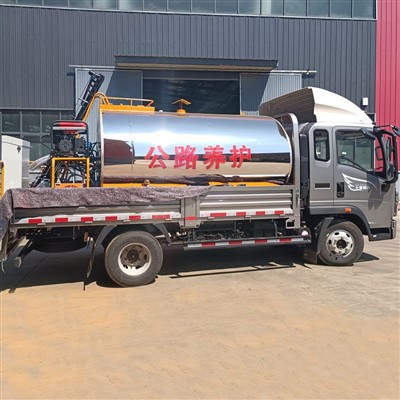
Mobile plants are designed to be easily transported from one location to another. They're usually mounted on trailers or trucks. This makes them extremely useful for projects that are spread out over different areas. For example, if you're working on a series of rural road projects in different villages, a mobile plant can be moved from one site to another without much hassle.
The setup time for mobile plants is relatively short. You can quickly set up the plant at a new location and start production. However, they generally have a lower production capacity compared to stationary plants. The space on a mobile unit is limited, which restricts the size of the equipment and the amount of raw materials that can be stored on - board.
Stationary Emulsion Asphalt Plants
Stationary plants are fixed at one location. They're built on a permanent foundation and are designed for long - term, high - volume production. These plants can be customized to meet the specific needs of a particular project. For instance, if you're building a major highway that requires a large and continuous supply of emulsion asphalt over a long period, a stationary plant is the way to go.
Stationary plants have a higher production capacity and can be more efficient in the long run. But they lack the mobility of mobile plants. Once they're set up, it's very difficult and expensive to move them to a different location.
If you want to know more about the equipment used in making asphalt emulsion, Asphalt Emulsion Equipment provides in - depth information.
Key Factors in Choosing the Right Model
When you're in the market to buy an emulsion asphalt plant, there are a few key factors to consider.
Firstly, think about your production volume requirements. If you're mainly doing small - scale jobs, a batch - type or mobile plant might be sufficient. But if you're involved in large - scale infrastructure projects, a continuous - type or stationary plant would be a better fit.


Secondly, consider your budget. As I mentioned earlier, continuous - type and stationary plants are more expensive upfront. You need to make sure you have the financial resources to purchase and maintain these plants.
Thirdly, look at the flexibility of the plant. If you need to change the production formula frequently, a more flexible batch - type plant might be the answer.
In conclusion, there are significant differences between different models of emulsion asphalt plants. Each model has its own pros and cons, and the right choice depends on your specific needs and circumstances.
If you're interested in learning more about our emulsion asphalt plants or are thinking of making a purchase, don't hesitate to reach out. We're here to help you find the perfect plant for your projects.
References
- Industry reports on asphalt plant technology
- Interviews with construction industry professionals