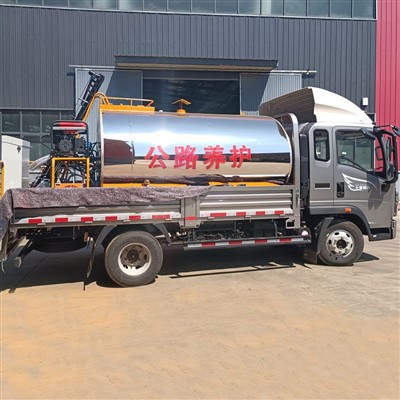
As a supplier of cationic emulsifiers, I've witnessed firsthand the growing demand for these products across various industries, particularly in road construction and waterproofing applications. Cationic emulsifiers play a crucial role in creating stable emulsions, which are essential for the proper functioning of Emulsified Asphalt Liquid and Cationic Emulsion. However, achieving optimal performance can be a challenge. In this blog post, I'll share some insights on how the performance of cationic emulsifiers can be improved.
Understanding Cationic Emulsifiers
Before delving into performance improvement strategies, it's important to understand what cationic emulsifiers are and how they work. Cationic emulsifiers are positively charged surfactants that are used to disperse and stabilize droplets of one liquid (such as asphalt) in another liquid (such as water). They work by adsorbing at the interface between the two liquids, reducing the surface tension and preventing the droplets from coalescing.
The performance of cationic emulsifiers is influenced by several factors, including their chemical structure, concentration, and the properties of the liquids being emulsified. For example, the type of hydrocarbon chain in the emulsifier molecule can affect its solubility, hydrophilic-lipophilic balance (HLB), and adsorption behavior at the interface. A well-designed cationic emulsifier should have the right balance of hydrophilic and lipophilic groups to ensure good emulsification and stability.
Chemical Modification
One of the most effective ways to improve the performance of cationic emulsifiers is through chemical modification. This can involve altering the chemical structure of the emulsifier molecule to enhance its emulsifying ability, stability, or other properties. For example, introducing functional groups such as hydroxyl, carboxyl, or amino groups can increase the hydrophilicity of the emulsifier, making it more effective at stabilizing the emulsion.
Another approach is to synthesize new cationic emulsifiers with unique chemical structures. For instance, using quaternary ammonium salts with different alkyl chain lengths or branching patterns can lead to emulsifiers with improved performance characteristics. These new emulsifiers may have better solubility, lower critical micelle concentration (CMC), and stronger adsorption at the interface, resulting in more stable emulsions.
Optimization of Formulation
In addition to chemical modification, optimizing the formulation of the cationic emulsifier in the emulsion is crucial for improving performance. This includes determining the optimal concentration of the emulsifier, as well as the ratio of the emulsifier to the other components in the formulation, such as the asphalt and water.
The concentration of the cationic emulsifier should be carefully adjusted to achieve the desired emulsification and stability. Too low a concentration may result in poor emulsification and phase separation, while too high a concentration can lead to excessive foaming and increased cost. The ratio of the emulsifier to the asphalt can also affect the properties of the emulsion, such as its viscosity, particle size distribution, and storage stability.
Furthermore, the addition of other additives, such as stabilizers, pH adjusters, and co-emulsifiers, can enhance the performance of the cationic emulsifier. Stabilizers can prevent the emulsion from breaking down over time, while pH adjusters can optimize the ionization state of the emulsifier and improve its emulsifying ability. Co-emulsifiers can work synergistically with the cationic emulsifier to improve the stability and performance of the emulsion.
Process Optimization
The process of preparing the emulsion also plays a significant role in the performance of the cationic emulsifier. Factors such as mixing speed, temperature, and shear rate can affect the emulsification process and the properties of the resulting emulsion.
Proper mixing is essential for ensuring that the cationic emulsifier is evenly distributed throughout the emulsion and that the asphalt droplets are uniformly dispersed. High shear mixing can help to reduce the particle size of the asphalt droplets, resulting in a more stable emulsion. However, excessive shear can also cause the emulsion to break down, so it's important to find the right balance.
Temperature can also have a significant impact on the performance of the cationic emulsifier. Generally, higher temperatures can improve the solubility and mobility of the emulsifier, making it more effective at emulsifying the asphalt. However, too high a temperature can cause the emulsion to become unstable and may lead to the evaporation of water or the degradation of the emulsifier.
Quality Control
Maintaining strict quality control measures is essential for ensuring the consistent performance of cationic emulsifiers. This includes testing the raw materials used in the production of the emulsifier, as well as the finished product.
The raw materials should be of high quality and meet the specified standards. For example, the purity of the cationic surfactant and the quality of the solvents can affect the performance of the emulsifier. Regular testing of the finished product can help to identify any issues with its quality, such as variations in emulsifying ability, stability, or particle size distribution.


Quality control tests can include measuring the pH, viscosity, particle size, and stability of the emulsion over time. These tests can provide valuable information about the performance of the cationic emulsifier and help to ensure that the emulsion meets the required specifications for its intended application.
Application-Specific Optimization
Finally, it's important to optimize the performance of the cationic emulsifier for the specific application. Different applications may have different requirements for the properties of the emulsion, such as its setting time, adhesion, and resistance to weathering.
For example, in road construction, the cationic emulsifier should be formulated to provide good adhesion to the aggregate and a fast setting time to minimize traffic disruption. In waterproofing applications, the emulsion should have good water resistance and durability. By understanding the specific requirements of the application, the cationic emulsifier can be tailored to meet these needs, resulting in improved performance and customer satisfaction.
Conclusion
Improving the performance of cationic emulsifiers is a complex but achievable goal. By using chemical modification, optimizing the formulation and process, and implementing strict quality control measures, we can develop cationic emulsifiers with enhanced emulsifying ability, stability, and other properties.
As a supplier of Asphalt Emulsifier, I'm committed to providing high-quality products and technical support to our customers. If you're interested in learning more about our cationic emulsifiers or have any questions about improving their performance, please don't hesitate to contact us for a detailed discussion and potential procurement. We look forward to working with you to meet your specific needs and achieve the best results in your applications.
References
- Shah, D. O., & Sjoblom, J. (Eds.). (1996). Surface Phenomena in Enhanced Oil Recovery. Marcel Dekker.
- McClements, D. J. (2005). Food Emulsions: Principles, Practice, and Techniques. CRC Press.
- Tadros, T. F. (Ed.). (2005). Encyclopedia of Emulsion Technology. Marcel Dekker.