Hey there! I'm a supplier of anionic emulsifiers, and today I want to dig into how these little guys affect the evaporation rate of emulsions. Emulsions are all around us, from the paint on our walls to the asphalt on our roads. And anionic emulsifiers play a crucial role in making them work just right.
First off, let's quickly go over what an emulsion is. An emulsion is a mixture of two immiscible liquids, like oil and water. Without an emulsifier, these two liquids would just separate over time. An emulsifier helps keep the droplets of one liquid dispersed in the other, creating a stable mixture.
Anionic emulsifiers are a type of surfactant that have a negative charge. They work by surrounding the droplets of the dispersed phase (usually oil) and creating a protective layer. This layer helps prevent the droplets from coalescing and separating from the continuous phase (usually water).
So, how do anionic emulsifiers impact the evaporation rate of emulsions? Well, it all comes down to the properties of the emulsifier and how it interacts with the other components of the emulsion.
One of the key factors is the solubility of the anionic emulsifier in the continuous phase. If the emulsifier is highly soluble in water, it can form a thin film on the surface of the emulsion droplets. This film can act as a barrier, reducing the rate at which water can evaporate from the surface of the droplets.
On the other hand, if the emulsifier has low solubility in water, it may not form a continuous film around the droplets. This can lead to a higher evaporation rate, as water can more easily escape from the surface of the droplets.
Another important factor is the concentration of the anionic emulsifier in the emulsion. At low concentrations, the emulsifier may not be able to fully cover the surface of the droplets, leaving some areas exposed. This can increase the evaporation rate. As the concentration of the emulsifier increases, it can form a more complete and stable film around the droplets, reducing the evaporation rate.
The type of anionic emulsifier also matters. Different emulsifiers have different chemical structures and properties, which can affect their ability to form a protective film and reduce evaporation. For example, some emulsifiers may have longer hydrocarbon chains, which can provide a more effective barrier against evaporation.
In addition to these factors, the evaporation rate of an emulsion can also be influenced by other components in the formulation, such as the type and concentration of the dispersed phase, the presence of other surfactants or additives, and the temperature and humidity of the environment.
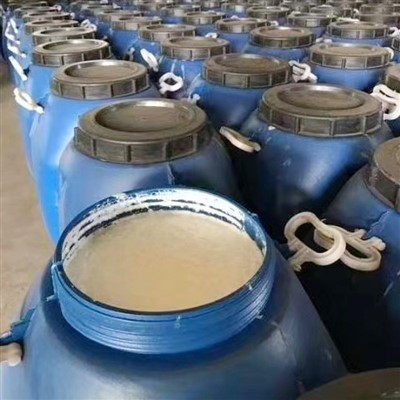
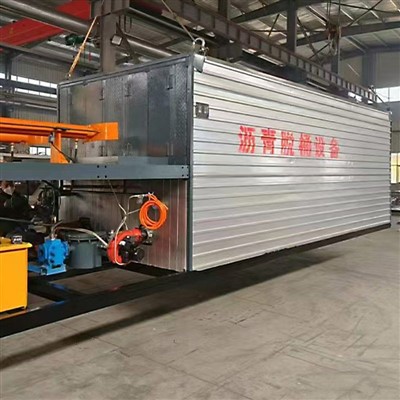
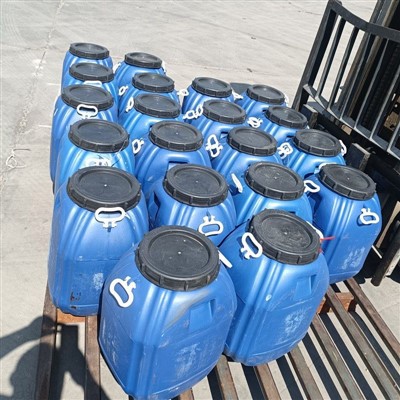
Let's take a look at some real-world applications. One common use of anionic emulsifiers is in Emulsified Asphalt Liquid. Asphalt emulsions are used in road construction and maintenance to provide a smooth and durable surface. The evaporation rate of the water in the asphalt emulsion is an important factor in determining how quickly the emulsion can set and cure.
Anionic emulsifiers can help control the evaporation rate of the water in the asphalt emulsion, ensuring that it sets at the right time and provides a strong bond between the asphalt and the aggregate. By adjusting the type and concentration of the anionic emulsifier, we can optimize the performance of the asphalt emulsion for different applications and environmental conditions.
Another application is in the paint industry. Anionic emulsifiers are used to stabilize latex paints, which are water-based paints that contain polymer particles dispersed in water. The evaporation rate of the water in the paint affects how quickly the paint dries and how well it adheres to the surface.
By using the right anionic emulsifier, we can control the evaporation rate of the water in the paint, ensuring that it dries evenly and provides a smooth and durable finish. This can improve the quality and performance of the paint, as well as reduce the drying time and energy consumption.
Now, let's compare anionic emulsifiers with Cationic Emulsifier. Cationic emulsifiers have a positive charge, which gives them different properties and performance characteristics compared to anionic emulsifiers.


Cationic emulsifiers are often used in applications where a strong electrostatic attraction is needed between the emulsifier and the surface of the dispersed phase. For example, in some metalworking fluids, cationic emulsifiers can help the fluid adhere to the metal surface, providing better lubrication and corrosion protection.
However, when it comes to controlling the evaporation rate of emulsions, anionic emulsifiers may have some advantages. Anionic emulsifiers can form a more stable film around the droplets, which can provide a better barrier against evaporation. They are also generally more compatible with other components in the emulsion, such as polymers and additives.
Of course, the choice between anionic and cationic emulsifiers depends on the specific application and requirements. In some cases, a combination of both types of emulsifiers may be used to achieve the best results.
As a supplier of anionic emulsifiers, I understand the importance of providing high-quality products that meet the specific needs of our customers. We offer a wide range of anionic emulsifiers with different properties and performance characteristics, so you can choose the one that's right for your application.
Whether you're in the asphalt, paint, or any other industry that uses emulsions, we can work with you to develop a customized solution that meets your requirements. Our team of experts can provide technical support and advice to help you optimize the performance of your emulsions and achieve the best results.
If you're interested in learning more about our Asphalt Emulsifier or other anionic emulsifiers, or if you have any questions or need assistance with your application, please don't hesitate to reach out. We're here to help you find the right solution and make your products better.
In conclusion, anionic emulsifiers play a crucial role in controlling the evaporation rate of emulsions. By understanding the factors that affect the evaporation rate and choosing the right anionic emulsifier for your application, you can optimize the performance of your emulsions and achieve the desired results. So, if you're looking for a reliable supplier of anionic emulsifiers, give us a call and let's start a conversation.
References
- McClements, D. J. (2015). Food Emulsions: Principles, Practice, and Techniques. CRC Press.
- Myers, D. (2012). Surfaces, Interfaces, and Colloids: Principles and Applications. Wiley.
- Tadros, T. F. (2013). Encyclopedia of Emulsion Technology. Springer.