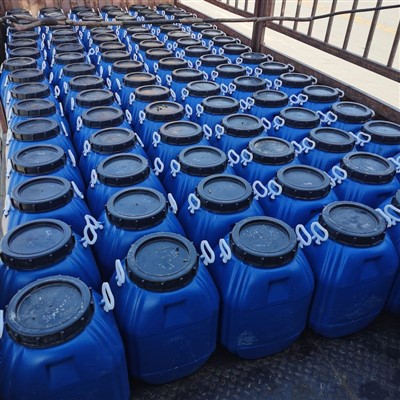
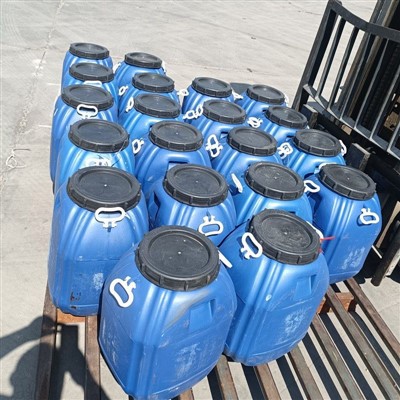
Nanoparticles have become a hot topic in various industries due to their unique properties and potential applications. Their size and shape play a crucial role in determining their performance. As an Anionic Emulsifier supplier, I've seen firsthand how these emulsifiers can effectively control the size and shape of nanoparticles. In this blog, I'll share some insights on this fascinating topic.
Understanding Anionic Emulsifiers
First off, let's talk about what anionic emulsifiers are. Anionic emulsifiers are substances that have a negative charge on their hydrophilic part. They're super useful in creating stable emulsions, where one liquid is dispersed in another immiscible liquid. You can find out more about Anionic Emulsifier on our website.
These emulsifiers work by reducing the surface tension between two immiscible liquids, like oil and water. When added to a mixture, they surround the droplets of one liquid and prevent them from coalescing. This is essential for controlling the size and shape of nanoparticles during their formation.
Controlling Nanoparticle Size
One of the key ways anionic emulsifiers control the size of nanoparticles is through steric and electrostatic stabilization. When nanoparticles are being formed, anionic emulsifiers adsorb onto their surface. The negative charges on the emulsifiers create an electrostatic repulsion between the nanoparticles. This repulsion prevents the nanoparticles from coming too close to each other and merging, thus keeping their size in check.
For example, in a typical emulsion polymerization process, the anionic emulsifier forms micelles in the aqueous phase. Monomers are then solubilized in these micelles. As the polymerization reaction occurs inside the micelles, the growing polymer chains are confined within the micellar structure. The size of the micelles, which is influenced by the concentration and type of anionic emulsifier, determines the initial size of the nanoparticles.
If you increase the concentration of the anionic emulsifier, you'll have more micelles in the system. This means that the monomers will be distributed among a larger number of micelles, resulting in smaller nanoparticles. On the other hand, a lower concentration of emulsifier will lead to fewer micelles and larger nanoparticles.


Another factor that affects nanoparticle size is the chain length of the anionic emulsifier. Longer-chain anionic emulsifiers tend to form more stable micelles with a larger core volume. This can accommodate more monomers during the polymerization process, leading to larger nanoparticles compared to shorter-chain emulsifiers.
Shaping Nanoparticles
Anionic emulsifiers can also have a significant impact on the shape of nanoparticles. The adsorption of anionic emulsifiers on the surface of nanoparticles can induce anisotropic growth, which means that the nanoparticles grow at different rates in different directions.
In some cases, the anionic emulsifier can interact with specific crystal planes of a growing nanoparticle. This interaction can either promote or inhibit the growth of these planes. For example, if the anionic emulsifier has a strong affinity for a particular crystal plane, it can adsorb onto that plane and slow down its growth. As a result, the nanoparticle will grow preferentially in other directions, leading to a non - spherical shape.
In addition, the self - assembly behavior of anionic emulsifiers can influence nanoparticle shape. Anionic emulsifiers can form various supramolecular structures, such as lamellae, vesicles, or hexagonal phases. These structures can act as templates for the growth of nanoparticles. For instance, if nanoparticles are formed within the channels of a hexagonal phase of an anionic emulsifier, they may adopt a rod - like shape.
Applications in Emulsified Asphalt
Anionic emulsifiers are widely used in the production of Emulsified Asphalt Liquid and Anionic Bitumen Emulsion. In these applications, controlling the size and shape of asphalt droplets (which can be considered as nanoparticles in the context of the emulsion) is crucial for the performance of the final product.
A well - controlled size of asphalt droplets ensures better dispersion and stability of the emulsion. Smaller droplets have a larger surface area, which allows for better adhesion to aggregates in road construction. The shape of the asphalt droplets can also affect the rheological properties of the emulsion. For example, non - spherical droplets may result in different flow behavior compared to spherical ones.
Factors Affecting the Effectiveness of Anionic Emulsifiers
There are several factors that can affect how well anionic emulsifiers control the size and shape of nanoparticles. Temperature is one of them. Higher temperatures can increase the mobility of the anionic emulsifier molecules and the monomers, which may affect the formation and stability of micelles. This, in turn, can influence the size and shape of the nanoparticles.
The pH of the system also plays a role. Anionic emulsifiers are sensitive to pH changes. At a certain pH range, the anionic emulsifier may be fully ionized, providing maximum electrostatic stabilization. However, if the pH is outside this range, the ionization state of the emulsifier may change, leading to a decrease in its effectiveness in controlling nanoparticle size and shape.
Conclusion
In conclusion, anionic emulsifiers are powerful tools for controlling the size and shape of nanoparticles. Through electrostatic and steric stabilization, they can keep the nanoparticles from aggregating and determine their initial size during formation. They can also induce anisotropic growth and act as templates to shape the nanoparticles.
As an Anionic Emulsifier supplier, we understand the importance of these processes in various industries, especially in the production of emulsified asphalt. Our high - quality anionic emulsifiers are designed to provide precise control over nanoparticle size and shape, ensuring the best performance of your products.
If you're interested in learning more about our anionic emulsifiers or have specific requirements for your nanoparticle production, don't hesitate to get in touch with us. We're here to help you find the perfect solution for your needs and look forward to discussing potential procurement opportunities with you.
References
- Danielsson, I., & Lindman, B. (1981). Amphiphile self - assembly: basic concepts. Colloids and Surfaces, 3(3), 391 - 422.
- Napper, D. H. (1983). Polymeric stabilization of colloidal dispersions. Academic Press.
- Tan, B. T. G., & Turro, N. J. (2009). Emulsion polymerization. In Polymer synthesis: theory and practice (pp. 243 - 276). Springer.