Hey there! As a supplier of Anionic Emulsifiers, I've been getting a lot of questions lately about how these little wonders can improve the lubricating properties of emulsions. So, I thought I'd sit down and share some insights on this topic.
First off, let's quickly understand what an emulsion is. An emulsion is a mixture of two immiscible liquids, like oil and water, where one liquid is dispersed in the other in the form of tiny droplets. Emulsions are all around us, from the milk we drink to the lotions we use on our skin. And in industrial applications, emulsions play a crucial role in various processes, including lubrication.


Now, what are anionic emulsifiers? Anionic emulsifiers are surfactants with a negatively charged head group. They are widely used in the formulation of emulsions because they can lower the surface tension between the two immiscible liquids, allowing them to mix more easily and form a stable emulsion. You can learn more about Anionic Emulsifiers on our website Anionic Emulsifier.
So, how do anionic emulsifiers improve the lubricating properties of emulsions? Let's break it down.
1. Stabilizing the Emulsion
One of the primary ways anionic emulsifiers enhance lubrication is by stabilizing the emulsion. In a lubricating emulsion, the oil droplets are dispersed in a water - continuous phase. Without a proper emulsifier, these oil droplets would tend to coalesce and separate from the water phase over time.
Anionic emulsifiers adsorb at the interface between the oil droplets and the water phase. The negatively charged head groups of the emulsifier molecules are attracted to the water, while the non - polar tails are attracted to the oil. This forms a protective layer around the oil droplets, preventing them from coming together and maintaining the stability of the emulsion.
A stable emulsion is essential for good lubrication because it ensures that the oil, which is the main lubricating component, remains evenly distributed throughout the system. If the emulsion breaks down, the oil will separate, and the lubricating performance will be severely compromised.
2. Reducing Friction
Anionic emulsifiers can also directly reduce friction between moving surfaces. When an emulsion is used as a lubricant, it forms a thin film between the surfaces in contact. The anionic emulsifier molecules in this film can interact with the surfaces in a way that reduces the coefficient of friction.
The negatively charged head groups of the anionic emulsifier can adsorb onto positively charged sites on the metal surfaces. This forms a boundary layer that acts as a cushion, reducing the direct contact between the metal surfaces and thus lowering the friction. Additionally, the presence of the emulsifier - stabilized oil droplets in the film can also provide some rolling or sliding action, further reducing friction.
3. Preventing Wear
In addition to reducing friction, anionic emulsifiers can help prevent wear of the surfaces in contact. The stable emulsion film formed by the anionic emulsifier - containing lubricant acts as a barrier between the metal surfaces. This barrier prevents direct metal - to - metal contact, which can cause abrasion and wear.
The oil droplets in the emulsion can also act as a reservoir of lubricant. When the pressure between the surfaces is high, the oil droplets can be squeezed out and replenish the lubricating film, ensuring continuous protection against wear.
4. Corrosion Protection
Another benefit related to lubrication is corrosion protection. Anionic emulsifiers can contribute to this aspect as well. The negatively charged head groups of the emulsifier can form a protective layer on the metal surface, preventing the access of corrosive agents such as water and oxygen.
In an emulsion lubricant, the water phase can potentially cause corrosion if it comes into direct contact with the metal surfaces. However, the anionic emulsifier - stabilized oil droplets can cover the metal surface, isolating it from the water and reducing the risk of corrosion. This is particularly important in applications where the lubricant is exposed to a moist environment.
Comparing with Cationic Emulsifiers
It's worth mentioning that there are other types of emulsifiers, such as Cationic Emulsifier. Cationic emulsifiers have a positively charged head group. While both anionic and cationic emulsifiers can be used to form emulsions, they have different properties and applications.
Anionic emulsifiers are often preferred in applications where the pH of the system is relatively high. They are also more compatible with certain types of oils and additives. Cationic emulsifiers, on the other hand, are better suited for systems with a lower pH and can have better adhesion to negatively charged surfaces.
Applications in Emulsified Asphalt Liquid
Anionic emulsifiers are widely used in the production of Emulsified Asphalt Liquid. In this application, the anionic emulsifier helps to disperse the asphalt particles in water, forming a stable emulsion.
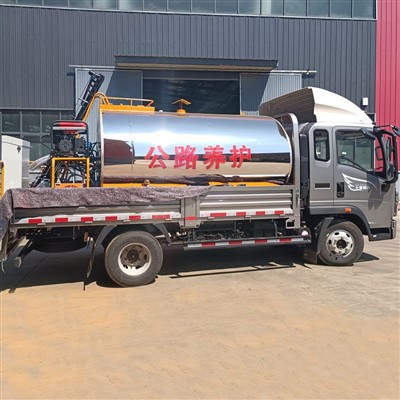
The stable emulsified asphalt liquid can be used as a lubricant in road construction and maintenance. It can be sprayed onto the road surface, where it provides a smooth and lubricated layer. The anionic emulsifier in the emulsion ensures that the asphalt particles remain evenly distributed, providing consistent lubrication and adhesion to the road surface.
How to Choose the Right Anionic Emulsifier
When choosing an anionic emulsifier for a lubricating emulsion, there are several factors to consider. First, the chemical nature of the oil and water phases is important. Different anionic emulsifiers have different solubilities and affinities for various oils and water - based systems.
The pH of the system also plays a role. As mentioned earlier, anionic emulsifiers are generally more stable in high - pH environments. Additionally, the desired stability of the emulsion, the required lubricating performance, and the specific application requirements all need to be taken into account.
If you're not sure which anionic emulsifier is right for your application, don't hesitate to reach out to us. We have a team of experts who can help you select the most suitable product based on your specific needs.
Conclusion
In conclusion, anionic emulsifiers play a vital role in improving the lubricating properties of emulsions. They stabilize the emulsion, reduce friction, prevent wear, and provide corrosion protection. Whether you're in the automotive, manufacturing, or construction industry, using an anionic emulsifier - based lubricating emulsion can significantly enhance the performance and durability of your equipment.
If you're interested in learning more about our Anionic Emulsifiers or would like to discuss a potential purchase, we'd love to hear from you. Contact us today to start a conversation about how our products can meet your lubrication needs.
References
- Smith, J. (2018). Surfactants in Emulsion Lubrication. Journal of Tribology, 140(2), 021301.
- Johnson, A. (2019). Anionic Emulsifiers: Properties and Applications in Industrial Lubricants. Lubrication Science, 31(4), 221 - 235.
- Brown, C. (2020). The Role of Emulsifiers in Corrosion - Resistant Lubricants. Corrosion Science, 167, 108541.