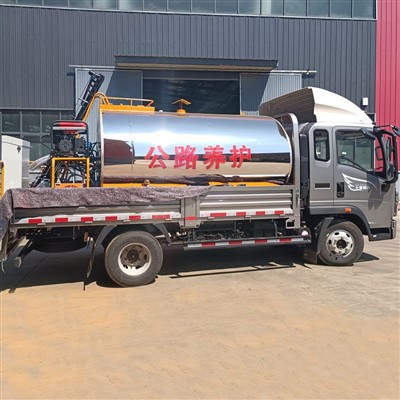
As a supplier of Asphalt Distributor Trucks, I've witnessed firsthand the critical role that anti - corrosion treatment plays in protecting these vehicles. In this blog, I'll delve into how anti - corrosion treatment safeguards Asphalt Distributor Trucks and why it's an essential aspect of their maintenance and longevity.
The Working Environment of Asphalt Distributor Trucks
Asphalt Distributor Trucks operate in harsh environments. They are constantly exposed to asphalt, which is a complex mixture of hydrocarbons. Asphalt contains various chemicals that can be corrosive to the truck's components over time. Additionally, these trucks often work outdoors, facing exposure to rain, humidity, and road salts. All these factors contribute to an environment that is highly conducive to corrosion.
The corrosion process on an Asphalt Distributor Truck can start with the oxidation of the metal surfaces. When the metal comes into contact with oxygen and moisture, a chemical reaction occurs, forming metal oxides. This is particularly problematic for the truck's tank, pipes, and other components that come into direct contact with asphalt. If left untreated, corrosion can lead to leaks, structural damage, and ultimately, a significant reduction in the truck's lifespan.
Types of Anti - Corrosion Treatments
Coating Treatments
One of the most common anti - corrosion treatments for Asphalt Distributor Trucks is the application of specialized coatings. These coatings act as a barrier between the metal surface and the corrosive elements. For example, epoxy coatings are widely used due to their excellent adhesion and chemical resistance. Epoxy coatings can withstand the harsh chemicals in asphalt and protect the underlying metal from corrosion.
Another type of coating is the polyurethane coating. Polyurethane coatings offer high flexibility and durability, which is important for parts of the truck that may experience mechanical stress. They can also provide good UV resistance, protecting the truck from the sun's harmful rays when it's parked outdoors.
Galvanization
Galvanization is another effective anti - corrosion method. It involves coating the metal with a layer of zinc. Zinc is more reactive than the base metal (usually steel), so when exposed to a corrosive environment, the zinc corrodes first, sacrificing itself to protect the underlying metal. This process is known as sacrificial protection. Galvanized parts on an Asphalt Distributor Truck, such as bolts and some structural components, can have a significantly longer lifespan compared to non - galvanized parts.
Cathodic Protection
Cathodic protection is a more advanced anti - corrosion technique. It works by making the metal surface the cathode of an electrochemical cell. There are two main types of cathodic protection: sacrificial anode cathodic protection and impressed current cathodic protection.
In sacrificial anode cathodic protection, a more reactive metal (such as magnesium or aluminum) is connected to the metal to be protected. The sacrificial anode corrodes instead of the protected metal. Impressed current cathodic protection, on the other hand, uses an external power source to supply a direct current to the metal surface, preventing corrosion. This method is often used for larger structures on the Asphalt Distributor Truck, such as the tank.
How Anti - Corrosion Treatment Protects the Vehicle
Protecting the Tank
The tank is one of the most critical components of an Asphalt Distributor Truck. It stores the asphalt before it is distributed. Anti - corrosion treatments on the tank are crucial to prevent leaks. A corroded tank can not only lead to the loss of valuable asphalt but also pose a safety hazard.
Coatings on the inner surface of the tank prevent the asphalt from coming into direct contact with the metal. This reduces the risk of chemical corrosion. Cathodic protection can be used in combination with coatings to provide an extra layer of protection, especially for large - capacity tanks. By protecting the tank, anti - corrosion treatments ensure the truck can continue to store and transport asphalt safely and efficiently.
Preserving the Piping System
The piping system of an Asphalt Distributor Truck is responsible for transporting the asphalt from the tank to the distribution nozzles. Corrosion in the pipes can lead to blockages, reduced flow rates, and even pipe failures. Anti - corrosion coatings on the pipes prevent the build - up of rust and other corrosive products. Galvanized pipes are also commonly used in areas where the risk of corrosion is high. By maintaining the integrity of the piping system, anti - corrosion treatments ensure that the asphalt can be distributed evenly and at the right pressure.
Extending the Lifespan of Structural Components
The structural components of an Asphalt Distributor Truck, such as the frame and chassis, are also susceptible to corrosion. These components provide the overall support and stability of the vehicle. Corrosion can weaken the structure, leading to safety issues and costly repairs.
Anti - corrosion treatments, such as coatings and galvanization, protect these structural components from the elements. This helps to maintain the strength and integrity of the truck's structure over time. By extending the lifespan of the structural components, anti - corrosion treatments reduce the need for frequent replacements and keep the truck in service for a longer period.
The Economic Benefits of Anti - Corrosion Treatment
Investing in anti - corrosion treatment for Asphalt Distributor Trucks brings significant economic benefits. Firstly, it reduces the maintenance costs. By preventing corrosion, the need for frequent repairs and part replacements is minimized. This saves both time and money for the truck owners.
Secondly, it increases the resale value of the truck. A well - maintained Asphalt Distributor Truck with effective anti - corrosion treatment will be more attractive to potential buyers. They can be confident that the truck has a longer remaining lifespan and is less likely to experience major problems in the near future.
Thirdly, it improves the operational efficiency of the truck. A truck with a corrosion - free tank and piping system can distribute asphalt more effectively, reducing downtime and increasing productivity.
Conclusion
In conclusion, anti - corrosion treatment is of utmost importance for Asphalt Distributor Trucks. It protects the vehicle from the harsh working environment, extends its lifespan, and brings significant economic benefits. As a supplier of Intelligent Asphalt Distributor Trucks, we understand the value of anti - corrosion treatment and ensure that all our trucks are equipped with the latest and most effective anti - corrosion technologies.
If you're in the market for an Asphalt Distributor Truck or an Intelligent Asphalt Distributor, don't overlook the importance of anti - corrosion treatment. Contact us today to discuss your requirements and learn more about how our trucks can meet your needs.


References
- Jones, D. A. (1996). Principles and Prevention of Corrosion. Prentice Hall.
- Uhlig, H. H., & Revie, R. W. (1985). Corrosion and Corrosion Control: An Introduction to Corrosion Science and Engineering. Wiley.
- Fontana, M. G. (1986). Corrosion Engineering. McGraw - Hill.