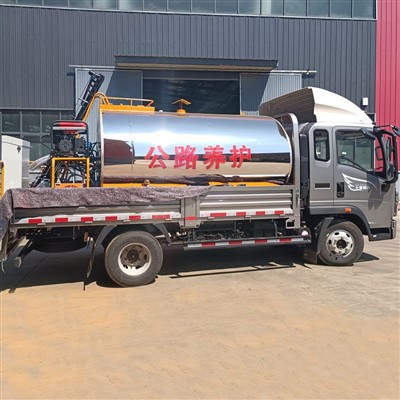
Hey there! As a supplier of emulsion bitumen plants, I've had my fair share of experiences with adjusting production parameters. It's a crucial part of running an efficient and high - quality operation. So, let's dive right in and talk about how to adjust the production parameters of an emulsion bitumen plant.
Understanding the Basics
First off, you gotta understand what emulsion bitumen is. It's a mixture of bitumen, water, and an emulsifying agent. The production process involves breaking down the bitumen into tiny droplets and dispersing them in water. The key production parameters we're gonna focus on are bitumen content, emulsifier dosage, pH level, temperature, and mixing speed.
Bitumen Content
The bitumen content in the emulsion is super important. It affects the performance of the emulsion in various applications, like road construction. If you want a more viscous emulsion, you'll need to increase the bitumen content. But be careful, too much bitumen can make the emulsion unstable.
To adjust the bitumen content, you need to control the flow rate of the bitumen into the mixing chamber. Most modern emulsion bitumen plants, like our Fully Automatic Emulsified Asphalt Equipment, have automated flow control systems. You can set the desired bitumen flow rate based on your production requirements. Start with small adjustments and test the emulsion regularly to see how it behaves.
Emulsifier Dosage
The emulsifier is what keeps the bitumen droplets suspended in the water. The right dosage of the emulsifier is crucial for the stability of the emulsion. If you use too little emulsifier, the bitumen droplets will start to coalesce, and the emulsion will break. On the other hand, using too much emulsifier can be costly and may also affect the performance of the emulsion.
To adjust the emulsifier dosage, you need to know the recommended dosage range for the specific emulsifier you're using. Our Modified Emulsified Asphalt Complete Equipment comes with a precise dosing system. You can gradually increase or decrease the emulsifier dosage while monitoring the stability of the emulsion. A good way to test the stability is by using a simple separation test. Let the emulsion sit for a while and see if there's any separation of bitumen and water.
pH Level
The pH level of the emulsion also plays a significant role in its stability. Different emulsifiers work best at different pH levels. For most anionic emulsifiers, a pH range of 2 - 4 is ideal, while cationic emulsifiers usually work well at a pH of 10 - 12.
To adjust the pH level, you can add acids or alkalis to the emulsion. You need to use a pH meter to measure the pH accurately. Our Bitumen Emulsion Equipment has a built - in pH monitoring system. You can make small adjustments to the pH by adding the appropriate chemicals in small increments and then retesting the pH.
Temperature
Temperature affects the viscosity of the bitumen and the reaction rate of the emulsification process. Higher temperatures can make the bitumen less viscous, which makes it easier to break into small droplets. However, if the temperature is too high, it can cause the emulsion to break or the emulsifier to degrade.
The ideal temperature for bitumen emulsification usually ranges from 60 - 80 degrees Celsius. You can adjust the temperature by controlling the heating system of the bitumen tank and the mixing chamber. Most of our emulsion bitumen plants have temperature sensors and controllers that allow you to set and maintain the desired temperature.
Mixing Speed
The mixing speed determines how well the bitumen is dispersed in the water. A higher mixing speed can break the bitumen into smaller droplets, resulting in a more stable emulsion. But if the mixing speed is too high, it can create excessive shear forces that may damage the emulsion.
You can adjust the mixing speed of the mixer in the plant. Start with a moderate speed and gradually increase it if needed. Observe the quality of the emulsion during the mixing process. If you notice any signs of instability, like large bitumen droplets or separation, you may need to adjust the mixing speed accordingly.
Continuous Monitoring and Testing
Adjusting the production parameters is not a one - time thing. You need to continuously monitor and test the emulsion during the production process. Regularly take samples of the emulsion and test its properties, such as viscosity, stability, and particle size distribution.
Use quality control equipment to ensure that the emulsion meets the required standards. If you find that the emulsion is not meeting the standards, go back and adjust the production parameters as necessary.


Troubleshooting
Sometimes, you may encounter problems during the production process. For example, if the emulsion is breaking, it could be due to incorrect bitumen content, emulsifier dosage, or pH level. Check each parameter one by one and make the necessary adjustments.
If you're having trouble with the equipment, like a malfunctioning flow control valve or a faulty temperature sensor, don't hesitate to contact our technical support team. We have a team of experts who can help you diagnose and fix the problem quickly.
Conclusion
Adjusting the production parameters of an emulsion bitumen plant is a complex but essential process. By understanding the key parameters, using the right equipment, and continuously monitoring and testing the emulsion, you can produce high - quality emulsion bitumen consistently.
If you're in the market for an emulsion bitumen plant or need help with adjusting the production parameters of your existing plant, we're here to help. Our range of Bitumen Emulsion Equipment is designed to meet the diverse needs of our customers. Contact us for a consultation and let's discuss how we can optimize your bitumen emulsion production.
References
- Bitumen Emulsion Manual, Asphalt Institute
- Handbook of Bitumen Science and Technology, CRC Press