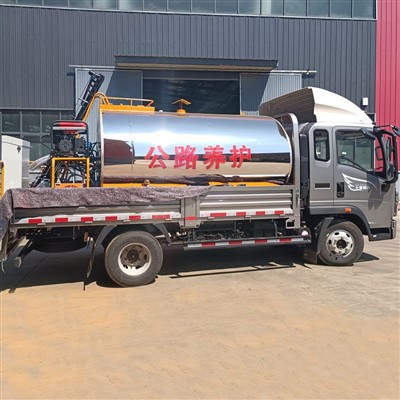
Ensuring the quality of bitumen in a bitumen melting plant is crucial for producing high - grade asphalt products. As a bitumen melting plant supplier, I've seen firsthand how quality control can make or break a project. In this blog, I'll share some key strategies to keep your bitumen in top - notch condition.
Understanding Bitumen Quality
Before diving into the ways to ensure quality, it's important to understand what makes good - quality bitumen. Bitumen is a viscous, black, and sticky substance derived from crude oil. Its quality is determined by several factors, including its viscosity, penetration value, softening point, and ductility.
Viscosity measures how thick and resistant to flow the bitumen is. A proper viscosity ensures that the bitumen can be easily mixed with aggregates and applied to roads or other surfaces. Penetration value indicates the hardness of the bitumen. A lower penetration value means a harder bitumen, which is suitable for areas with high traffic. The softening point is the temperature at which the bitumen starts to soften. It's essential to have a consistent softening point to ensure the bitumen performs well under different environmental conditions. Ductility measures the ability of the bitumen to stretch without breaking. Good ductility is necessary for the bitumen to withstand the stresses of traffic and temperature changes.
Raw Material Selection
The first step in ensuring bitumen quality is choosing the right raw materials. Not all crude oils are created equal when it comes to producing bitumen. As a supplier, I always recommend working with reliable crude oil suppliers. They should be able to provide detailed information about the quality of the crude oil, including its API gravity, sulfur content, and distillation range.
The API gravity of the crude oil affects the properties of the resulting bitumen. A higher API gravity usually means a lighter crude oil, which may produce a bitumen with different characteristics compared to a heavier crude oil. Sulfur content is also important. High - sulfur crude oils can produce bitumen with a higher sulfur content, which may affect the bitumen's performance and environmental impact.


Melting Process Control
Controlling the melting process is crucial for maintaining bitumen quality. The temperature at which the bitumen is melted plays a significant role. If the temperature is too low, the bitumen may not melt completely, leading to uneven mixing and poor - quality asphalt. On the other hand, if the temperature is too high, the bitumen may oxidize, which can change its chemical properties and reduce its quality.
As a supplier, I provide Bitumen Melting Equipment that is designed to maintain a precise melting temperature. These machines are equipped with advanced temperature sensors and control systems to ensure that the bitumen is melted at the optimal temperature.
Another important aspect of the melting process is the melting time. The bitumen should be melted for an appropriate amount of time to ensure that it reaches a homogeneous state. Over - melting can cause the bitumen to degrade, while under - melting can result in lumps and uneven consistency.
Mixing and Homogenization
Once the bitumen is melted, it needs to be properly mixed and homogenized. This is where Asphalt Melting Machine and Asphalt Fast Melting Machine come in handy. These machines are designed to mix the bitumen thoroughly with other additives, such as polymers or fillers, to improve its performance.
During the mixing process, it's important to ensure that the additives are evenly distributed throughout the bitumen. This can be achieved by using high - speed mixers and proper mixing techniques. The mixing time and speed should be carefully controlled to avoid over - mixing, which can also degrade the bitumen.
Quality Testing
Regular quality testing is essential to ensure that the bitumen meets the required standards. There are several tests that can be performed, including viscosity tests, penetration tests, softening point tests, and ductility tests.
Viscosity tests are used to measure the flow properties of the bitumen. A viscometer is typically used to determine the viscosity at a specific temperature. Penetration tests involve measuring the depth to which a standard needle penetrates the bitumen under specific conditions. This test provides an indication of the bitumen's hardness. Softening point tests are conducted to determine the temperature at which the bitumen starts to soften. A ring - and - ball apparatus is commonly used for this test. Ductility tests measure the ability of the bitumen to stretch without breaking. A ductilometer is used to perform this test.
As a supplier, I can provide guidance on the appropriate testing equipment and procedures. Regular testing allows you to identify any quality issues early and take corrective actions.
Storage and Handling
Proper storage and handling of the bitumen are also important for maintaining its quality. Bitumen should be stored in tanks that are designed to prevent contamination and oxidation. The tanks should be insulated to maintain a consistent temperature and prevent the bitumen from solidifying.
When handling the bitumen, it's important to use clean equipment to avoid introducing impurities. The bitumen should be transferred from the storage tanks to the mixing or application equipment using pipes and pumps that are specifically designed for bitumen.
Conclusion
Ensuring the quality of bitumen in a bitumen melting plant requires a comprehensive approach. From raw material selection to storage and handling, every step plays a crucial role in producing high - quality bitumen. As a bitumen melting plant supplier, I'm committed to providing the best equipment and support to help you achieve optimal bitumen quality.
If you're in the market for bitumen melting equipment or have any questions about ensuring bitumen quality, don't hesitate to reach out. We're here to assist you in making the right choices for your project.
References
- ASTM International. (Year). Standard test methods for bituminous materials.
- Shell Bitumen Technical Handbook. (Year). A guide to bitumen and its applications.
- Asphalt Institute. (Year). Manual of asphalt practice.