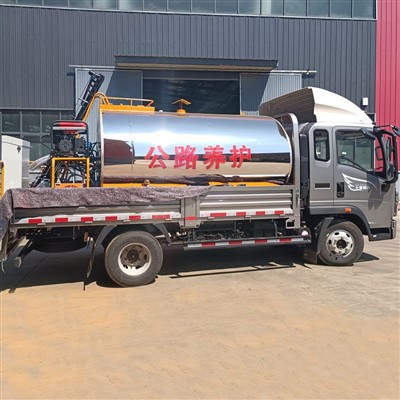
Ensuring the uniformity of rubber asphalt in a Rubber Asphalt Plant is crucial for producing high - quality rubber asphalt that meets industry standards. As a reputable Rubber Asphalt Plant supplier, I understand the significance of this process and have extensive experience in providing solutions to achieve optimal uniformity. In this blog, I will share some key strategies and practices that can help ensure the uniformity of rubber asphalt in your plant.
1. Raw Material Selection and Quality Control
The quality of raw materials is the foundation for uniform rubber asphalt production. Rubber powder and asphalt are the two main components. For rubber powder, it is essential to select materials with consistent particle size distribution. Variations in particle size can lead to uneven dispersion in the asphalt, resulting in non - uniform rubber asphalt. Suppliers should conduct regular sieve analyses to ensure that the particle size of the rubber powder falls within the specified range.


When it comes to asphalt, its properties such as penetration, softening point, and viscosity should be carefully monitored. Different sources of asphalt may have slightly different characteristics, which can affect the compatibility with rubber powder. It is advisable to source asphalt from reliable suppliers and perform quality tests before use. By maintaining strict quality control over raw materials, we can minimize the variables that may cause non - uniformity in the final product.
2. Mixing Equipment and Technology
The mixing equipment in a Rubber Asphalt Plant plays a vital role in achieving uniformity. High - shear mixers are commonly used to disperse rubber powder into asphalt. These mixers use strong mechanical forces to break down the rubber particles and distribute them evenly throughout the asphalt.
It is important to choose a high - shear mixer with appropriate power and design. The mixing speed, mixing time, and temperature control are also critical factors. A higher mixing speed can enhance the dispersion effect, but it should not be too high to cause excessive heat generation, which may degrade the rubber or asphalt. The mixing time should be sufficient to ensure complete dispersion of the rubber powder, but not overly long to avoid energy waste.
Temperature control is another key aspect. The asphalt should be heated to an appropriate temperature to reduce its viscosity and facilitate the mixing process. At the same time, the temperature should be maintained within a certain range to prevent the rubber powder from agglomerating or degrading. Advanced mixing equipment often comes with precise temperature control systems to ensure stable and uniform mixing conditions.
3. Pre - treatment of Rubber Powder
Pre - treatment of rubber powder can significantly improve its dispersion in asphalt. One common pre - treatment method is surface modification. By treating the rubber powder with certain chemicals, its surface properties can be changed, making it more compatible with asphalt. This can enhance the bonding between the rubber and asphalt, resulting in a more uniform mixture.
Another pre - treatment approach is pre - swelling. Soaking the rubber powder in a small amount of asphalt or a solvent for a certain period can make the rubber particles swell, which helps them to disperse more easily during the mixing process. These pre - treatment methods can effectively reduce the likelihood of rubber powder agglomeration and improve the uniformity of the final rubber asphalt product.
4. Continuous Monitoring and Adjustment
During the production process, continuous monitoring of the rubber asphalt is necessary to ensure uniformity. Sampling and testing should be carried out at regular intervals. Physical and chemical properties such as viscosity, softening point, and rubber content can be measured to evaluate the quality and uniformity of the product.
If non - uniformity is detected, immediate adjustments should be made. This may involve adjusting the mixing parameters such as speed, time, or temperature, or checking the raw material quality. By continuously monitoring and adjusting the production process, we can quickly identify and correct any issues that may lead to non - uniformity.
5. Staff Training and Operation Management
Well - trained staff is essential for ensuring the uniformity of rubber asphalt in a Rubber Asphalt Plant. Operators should have a good understanding of the production process, including raw material handling, equipment operation, and quality control. They should be able to follow the standard operating procedures strictly and make appropriate adjustments when necessary.
Regular training programs should be provided to update the staff's knowledge and skills. In addition, proper operation management is also crucial. This includes equipment maintenance, production planning, and quality management. By maintaining a high - level of operation management, we can create a stable production environment and improve the overall uniformity of the rubber asphalt.
Our Solutions as a Rubber Asphalt Plant Supplier
As a professional Rubber Asphalt Plant supplier, we offer a range of high - quality products and services to help our customers ensure the uniformity of rubber asphalt. Our Mobile Rubber Asphalt Plant is designed with advanced mixing technology and precise control systems. It can be easily transported to different construction sites and provides flexible production solutions.
Our Asphalt Rubber Blending Plant is equipped with state - of - the - art high - shear mixers and temperature control devices. It can efficiently mix rubber powder and asphalt to achieve excellent uniformity.
We also provide comprehensive technical support and after - sales service. Our team of experts can assist customers in raw material selection, equipment installation and commissioning, and production process optimization. We are committed to helping our customers produce high - quality, uniform rubber asphalt.
Conclusion
Ensuring the uniformity of rubber asphalt in a Rubber Asphalt Plant requires a comprehensive approach that includes raw material quality control, appropriate mixing equipment and technology, pre - treatment of rubber powder, continuous monitoring and adjustment, and staff training and operation management. By implementing these strategies, we can produce rubber asphalt with consistent quality and performance.
If you are interested in our Rubber Asphalt Plant products or need more information on ensuring the uniformity of rubber asphalt, please feel free to contact us for further discussion and procurement negotiation. We look forward to working with you to achieve your production goals.
References
- [1] "Principles and Technologies of Rubber Asphalt Production", a research report on rubber asphalt production technology.
- [2] "Quality Control in Asphalt Mixing Plants", an industry - standard guidebook on asphalt production quality control.
- [3] "Advances in Rubber - Modified Asphalt Materials", a scientific journal article on the latest developments in rubber - modified asphalt.