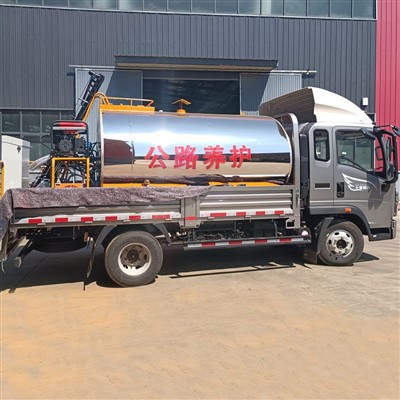
As a leading supplier of asphalt rubber plants, I've witnessed firsthand the crucial role that viscosity control plays in the production of high - quality asphalt rubber. In this blog, I'll delve into the various control methods for the viscosity of asphalt rubber in an asphalt rubber plant.
Understanding the Significance of Viscosity in Asphalt Rubber
Viscosity is a fundamental property of asphalt rubber that directly impacts its performance in road construction. Asphalt rubber with appropriate viscosity ensures proper coating of aggregates, good workability during mixing and paving, and long - term durability of the pavement. If the viscosity is too low, the asphalt rubber may not adhere well to the aggregates, leading to premature failure of the pavement. On the other hand, if the viscosity is too high, it becomes difficult to mix and place the asphalt rubber, resulting in uneven pavements and increased energy consumption during production.
Control Methods for Asphalt Rubber Viscosity
1. Temperature Control
Temperature is one of the most critical factors affecting the viscosity of asphalt rubber. As the temperature increases, the viscosity of asphalt rubber decreases, making it more fluid. In an asphalt rubber plant, we can precisely control the temperature at different stages of the production process.
- Heating the Asphalt: Before adding the rubber modifier, the base asphalt is heated to a specific temperature. This initial heating softens the asphalt and makes it easier to blend with the rubber. The temperature is usually maintained between 150 - 180°C, depending on the type of asphalt and the rubber modifier used.
- Mixing Temperature: During the mixing process, the temperature is carefully monitored and adjusted. A higher mixing temperature promotes better dispersion of the rubber particles in the asphalt matrix, reducing the overall viscosity. However, excessive temperature can cause degradation of the rubber and the asphalt, leading to a decrease in the quality of the asphalt rubber. Therefore, the mixing temperature is typically kept within a narrow range, often around 190 - 210°C.
- Storage and Transport Temperature: After the asphalt rubber is produced, it needs to be stored and transported at a suitable temperature to maintain its viscosity. Insulated storage tanks and heated transport trucks are commonly used to prevent the asphalt rubber from cooling down too quickly and becoming overly viscous.
2. Rubber Modifier Selection and Dosage
The type and amount of rubber modifier added to the asphalt significantly influence the viscosity of the asphalt rubber.
- Type of Rubber Modifier: Different types of rubber, such as crumb rubber, natural rubber, and synthetic rubber, have different chemical and physical properties, which affect the viscosity of the asphalt rubber. For example, crumb rubber is a popular choice due to its cost - effectiveness and ability to improve the performance of asphalt. However, the particle size and source of the crumb rubber can also impact the viscosity. Finer crumb rubber particles tend to disperse more easily in the asphalt, resulting in a lower viscosity compared to coarser particles.
- Dosage of Rubber Modifier: Increasing the dosage of the rubber modifier generally increases the viscosity of the asphalt rubber. However, there is an optimal dosage range for each type of asphalt and rubber modifier combination. Beyond this range, the viscosity may increase too much, making the asphalt rubber difficult to handle. In practice, the rubber modifier dosage typically ranges from 15% - 25% by weight of the asphalt, depending on the desired properties of the asphalt rubber.
3. Mixing Time and Intensity
The mixing process is crucial for achieving a homogeneous blend of asphalt and rubber, which in turn affects the viscosity of the asphalt rubber.
- Mixing Time: Sufficient mixing time is required to ensure that the rubber particles are fully dispersed in the asphalt. A longer mixing time generally leads to a more uniform distribution of the rubber, resulting in a more consistent viscosity. However, over - mixing can cause the rubber particles to break down, which may also affect the viscosity and the performance of the asphalt rubber. In our asphalt rubber plants, the mixing time is usually set between 30 - 60 minutes, depending on the equipment and the specific requirements of the project.
- Mixing Intensity: The intensity of mixing, determined by factors such as the speed of the mixer and the design of the mixing blades, also plays a role in viscosity control. Higher mixing intensities can promote better dispersion of the rubber particles, reducing the viscosity. However, excessive mixing intensity can generate heat and cause shear - induced degradation of the rubber. Therefore, it is important to optimize the mixing intensity to achieve the desired viscosity without compromising the quality of the asphalt rubber.
4. Use of Additives
Additives can be used to fine - tune the viscosity of asphalt rubber.
- Viscosity Reducing Additives: Some additives, such as certain types of oils and polymers, can be added to the asphalt rubber to reduce its viscosity. These additives work by lubricating the rubber particles and the asphalt matrix, making the mixture more fluid. They are particularly useful when the viscosity of the asphalt rubber is too high due to factors such as high rubber dosage or low temperature.
- Viscosity Stabilizing Additives: On the other hand, viscosity stabilizing additives can be used to prevent the viscosity of the asphalt rubber from changing too much over time. These additives help maintain the stability of the asphalt rubber during storage and transport, ensuring consistent performance on the construction site.
Importance of Viscosity Control in Our Asphalt Rubber Plants
As a supplier of Rubber Modified Asphalt Equipment, Rubber Asphalt Plant, and Asphalt Rubber Blending Plant, we understand the importance of precise viscosity control. Our equipment is designed to provide accurate temperature control, efficient mixing, and easy addition of additives, enabling our customers to produce asphalt rubber with the desired viscosity.
Proper viscosity control not only improves the quality of the asphalt rubber but also enhances the efficiency of the production process. Asphalt rubber with the right viscosity is easier to mix, transport, and pave, reducing the time and cost associated with road construction projects. Moreover, it ensures the long - term performance of the pavement, reducing the need for frequent repairs and maintenance.


Contact Us for Your Asphalt Rubber Plant Needs
If you are looking for high - quality asphalt rubber plants and solutions for viscosity control, we are here to help. Our team of experts has extensive experience in the asphalt industry and can provide you with customized solutions based on your specific requirements. Whether you are a small - scale contractor or a large - scale infrastructure developer, we have the right equipment and expertise to meet your needs. Contact us today to start a discussion about your asphalt rubber plant project and explore how we can work together to achieve your goals.
References
- Kandhal, P. S., & Mallick, R. B. (1998). Hot - Mix Asphalt Materials, Mixture Design, and Construction. NAPA Education Foundation.
- Bahia, H. U., Zhai, H., & Anderson, D. A. (2001). Performance - Graded Asphalt Binders: Specification and Testing. Journal of the Association of Asphalt Paving Technologists, 70, 1 - 62.
- Xiao, F., & Amirkhanian, S. N. (2007). Evaluation of Crumb Rubber - Modified Asphalt Binders Using Superpave Binder Tests. Journal of Materials in Civil Engineering, 19(3), 227 - 234.