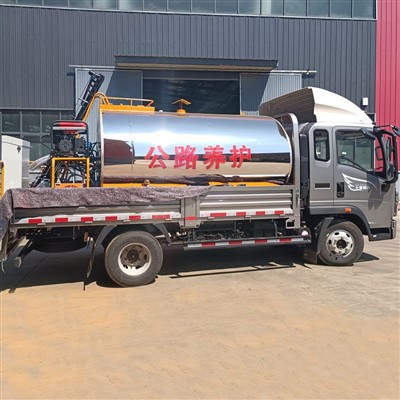
Bitumen-aggregate mixtures are fundamental components in road construction, providing the necessary strength and durability for pavements. The interaction between bitumen and aggregates is crucial for the long - term performance of these mixtures. One of the major challenges in this area is the stripping of bitumen from aggregates, which can lead to pavement distress and reduced service life. Bitumen emulsifiers play a significant role in enhancing the stripping resistance of bitumen - aggregate mixtures, and as a bitumen emulsifier supplier, I will explore this topic in detail.
Understanding Bitumen Stripping
Bitumen stripping refers to the separation of bitumen from the surface of aggregates. This phenomenon is mainly caused by the action of water, which can penetrate the bitumen - aggregate interface and disrupt the adhesion between them. Factors such as the type of aggregates, the properties of bitumen, and environmental conditions can influence the stripping process. Aggregates with a hydrophilic nature, for example, tend to have poor adhesion with bitumen, making them more prone to stripping.
The consequences of bitumen stripping are far - reaching. It can lead to the loss of cohesion in the bitumen - aggregate mixture, resulting in potholes, raveling, and other forms of pavement damage. This not only affects the safety and comfort of road users but also increases the maintenance cost of the pavement.
Role of Bitumen Emulsifiers
Bitumen emulsifiers are chemical substances that help in the formation of bitumen emulsions. They consist of a hydrophilic head and a hydrophobic tail, which allows them to reduce the surface tension between bitumen and water, enabling the dispersion of bitumen droplets in water. But their role goes beyond just emulsification; they also have a significant impact on the adhesion between bitumen and aggregates.


Improving Adhesion
Emulsifiers can modify the surface properties of bitumen and aggregates. They can adsorb onto the surface of bitumen droplets and aggregates, creating a thin film that enhances the interaction between them. For example, cationic emulsifiers have a positive charge, which can attract the negatively charged surface of most aggregates. This electrostatic attraction helps in forming a strong bond between bitumen and aggregates, improving the adhesion and thus the stripping resistance.
Enhancing Wettability
Wettability is another important factor in the adhesion of bitumen to aggregates. Bitumen emulsifiers can improve the wettability of bitumen on aggregates by reducing the interfacial tension. When bitumen has better wettability on aggregates, it can spread more evenly over the surface, forming a continuous and strong bond. This is particularly important in preventing water from penetrating the bitumen - aggregate interface and causing stripping.
Types of Bitumen Emulsifiers and Their Effects
There are mainly two types of bitumen emulsifiers: anionic and cationic. Each type has its own characteristics and effects on the stripping resistance of bitumen - aggregate mixtures.
Anionic Emulsifiers
Anionic emulsifiers have a negative charge. They are typically used in situations where the aggregates have a positive surface charge or in applications where a slower setting time is required. Anionic Emulsifier can form a stable emulsion with bitumen and water. In terms of stripping resistance, anionic emulsifiers can improve the adhesion between bitumen and aggregates by adsorbing onto the aggregate surface and interacting with the bitumen. However, their performance may be affected by the presence of certain contaminants or the pH of the environment.
Cationic Emulsifiers
Cationic emulsifiers, on the other hand, have a positive charge. They are widely used in road construction because of their excellent adhesion properties. Cationic Emulsion can quickly adhere to the negatively charged aggregates, forming a strong bond. The electrostatic attraction between the cationic emulsifier and the aggregates helps in preventing the intrusion of water at the interface, significantly improving the stripping resistance.
Factors Affecting the Performance of Bitumen Emulsifiers
The performance of bitumen emulsifiers in enhancing the stripping resistance of bitumen - aggregate mixtures is influenced by several factors.
Emulsifier Concentration
The concentration of the emulsifier in the bitumen emulsion is crucial. If the concentration is too low, it may not be sufficient to form a stable emulsion or to improve the adhesion between bitumen and aggregates. On the other hand, if the concentration is too high, it may lead to excessive foaming or other stability issues. Therefore, an optimal emulsifier concentration needs to be determined based on the specific requirements of the bitumen - aggregate mixture.
Aggregate Properties
The properties of aggregates, such as their surface texture, mineral composition, and moisture content, can also affect the performance of bitumen emulsifiers. Aggregates with a rough surface texture provide more surface area for bitumen adhesion, and emulsifiers can further enhance this adhesion. Additionally, the mineral composition of aggregates can influence the electrostatic interaction with emulsifiers. For example, aggregates rich in silica may have different adhesion characteristics compared to limestone aggregates.
Environmental Conditions
Environmental conditions, such as temperature and humidity, play an important role in the performance of bitumen emulsifiers. High temperatures can accelerate the evaporation of water in the emulsion, affecting the setting time and adhesion properties. Humidity can also influence the stripping resistance, as high humidity levels can increase the likelihood of water penetration at the bitumen - aggregate interface.
Applications and Benefits of Using Bitumen Emulsifiers for Stripping Resistance
The use of bitumen emulsifiers to improve the stripping resistance of bitumen - aggregate mixtures has several applications and benefits in road construction.
Surface Treatments
In surface treatments, such as chip seals and slurry seals, bitumen emulsions with appropriate emulsifiers are used. These treatments provide a protective layer on the existing pavement surface, improving its skid resistance and preventing water penetration. By enhancing the stripping resistance, the durability of these surface treatments can be significantly increased.
Cold Mix Asphalt
Cold mix asphalt is an environmentally friendly alternative to hot mix asphalt. Bitumen emulsifiers are essential in the production of cold mix asphalt, as they allow the mixing of bitumen and aggregates at lower temperatures. The improved stripping resistance provided by emulsifiers ensures the long - term performance of cold mix asphalt pavements.
Cost - Effectiveness
Using bitumen emulsifiers to enhance stripping resistance can be cost - effective in the long run. By reducing the occurrence of pavement damage caused by stripping, the maintenance cost of the pavement can be significantly reduced. Additionally, the use of emulsifiers can also improve the workability of bitumen - aggregate mixtures, leading to more efficient construction processes.
Our Offerings as a Bitumen Emulsifier Supplier
As a bitumen emulsifier supplier, we offer a wide range of high - quality emulsifiers, including Emulsified Asphalt Liquid, anionic emulsifiers, and cationic emulsifiers. Our products are formulated to meet the specific requirements of different bitumen - aggregate mixtures and environmental conditions.
We have conducted extensive research and development to optimize the performance of our emulsifiers in enhancing stripping resistance. Our technical team can provide professional advice and support to our customers, helping them select the most suitable emulsifier for their projects. We also offer customized solutions based on the unique needs of each customer.
Conclusion
Bitumen emulsifiers play a vital role in improving the stripping resistance of bitumen - aggregate mixtures. By enhancing the adhesion between bitumen and aggregates, they can significantly increase the durability and performance of pavements. The type of emulsifier, its concentration, and other factors such as aggregate properties and environmental conditions all need to be carefully considered to achieve the best results.
If you are involved in road construction or related industries and are looking for high - quality bitumen emulsifiers to improve the stripping resistance of your bitumen - aggregate mixtures, we invite you to contact us for further discussions and procurement. Our team is ready to assist you in finding the most suitable solutions for your projects.
References
- Little, D. N., & Bhasin, A. (2007). Asphalt Materials Science and Technology. CRC Press.
- Bahia, H. U., Davies, T. A., & Hanson, D. I. (2001). Performance - Related Specifications for Asphalt Binders and Mixtures. National Academy Press.
- Kandhal, P. S., & Parker, F. L. (1998). Stripping in Asphalt Concrete Pavements: State of the Art. Transportation Research Board.