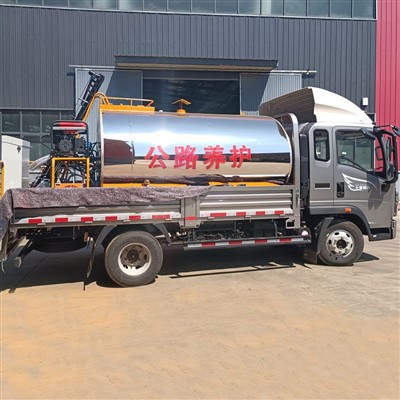
Hey there! As a supplier of Emulsion Asphalt Plants, I'm super stoked to walk you through the production process in an Emulsion Asphalt Plant. It's a pretty fascinating journey from raw materials to the final product that's used in so many construction projects.
Step 1: Raw Material Preparation
First off, we need to gather the main ingredients for making emulsion asphalt. The two key components are bitumen and water. Bitumen, also known as asphalt, is a thick, sticky substance that comes from crude oil. We usually get high - quality bitumen from reliable suppliers.
The water we use has to be clean and free from any contaminants that could affect the quality of the emulsion. Along with these, we also need emulsifiers. Emulsifiers are like the magic glue that helps keep the bitumen and water mixed together. There are different types of emulsifiers available, and we choose the right one based on the specific requirements of the emulsion asphalt we're making.
Step 2: Heating the Bitumen
Once we have all the raw materials ready, the next step is to heat the bitumen. Bitumen is solid at room temperature, so we need to heat it up to make it flowable. We use special heating equipment in our plant to heat the bitumen to a specific temperature, usually between 120 - 160 degrees Celsius. This temperature range ensures that the bitumen is in a liquid state and can be easily mixed with the other components.
During the heating process, we constantly monitor the temperature to make sure it stays within the optimal range. Overheating the bitumen can cause it to break down and lose its properties, while under - heating it won't make it fluid enough for the next steps.
Step 3: Preparing the Soap Solution
While the bitumen is being heated, we start preparing the soap solution. The soap solution is made by dissolving the emulsifier in water. We carefully measure the amount of emulsifier and water to ensure the right concentration.
The type of emulsifier we use determines the properties of the final emulsion asphalt. For example, some emulsifiers are designed to create a slow - setting emulsion, which is great for applications where the asphalt needs to stay workable for a longer time. Others are for fast - setting emulsions, which are used when quick drying is required.
Step 4: Mixing the Components
Now comes the exciting part - mixing the heated bitumen and the soap solution. We use a high - shear mixer for this process. The high - shear mixer creates a lot of force that breaks the bitumen into tiny droplets and disperses them evenly throughout the soap solution.
This mixing process is crucial because it determines the stability and quality of the emulsion asphalt. If the mixing is not done properly, the bitumen droplets may clump together, leading to an unstable emulsion. We run the mixer for a specific period, usually a few minutes, to ensure a homogeneous mixture.
Step 5: Testing the Emulsion
After the mixing is complete, we take a sample of the emulsion asphalt and conduct a series of tests. These tests are to check the quality and properties of the emulsion. We test for things like particle size, viscosity, and stability.
Particle size is important because it affects how the emulsion asphalt will perform in the field. A smaller particle size usually means better adhesion and a more stable emulsion. Viscosity determines how easily the emulsion can be pumped and applied. And stability is crucial to ensure that the emulsion doesn't separate over time.
Step 6: Storage and Packaging
Once the emulsion asphalt passes all the tests, it's ready for storage and packaging. We store the emulsion asphalt in large storage tanks at a controlled temperature to maintain its quality.
Depending on the customer's requirements, we can package the emulsion asphalt in different ways. It can be stored in bulk tanks for large - scale projects or packaged in smaller containers for smaller jobs.
The Role of Equipment in the Process
Throughout the production process, the quality of the equipment we use plays a huge role. For example, the Bitumen Emulsion Equipment we have in our plant is designed to ensure efficient and precise mixing. It's built with high - quality materials and advanced technology to handle the high - temperature and high - pressure conditions during the production.
Our Emulsion Asphalt Plant is also equipped with state - of - the - art control systems. These systems allow us to monitor and adjust the production process in real - time. We can control the temperature, flow rate, and mixing speed to ensure consistent quality in every batch of emulsion asphalt we produce.
If you're looking for a more advanced solution, our Modified Emulsified Asphalt Complete Equipment is a great option. It's designed to produce modified emulsified asphalt, which has enhanced properties such as better adhesion and durability.
Conclusion
So, that's the production process in an Emulsion Asphalt Plant in a nutshell. It's a complex but well - orchestrated process that requires careful attention to detail at every step. Whether you're working on a small road repair project or a large - scale highway construction, the quality of the emulsion asphalt can make a big difference.


If you're in the market for an Emulsion Asphalt Plant or any related equipment, don't hesitate to reach out. We're here to help you find the right solution for your needs. Our team of experts can provide you with all the information you need and assist you in making the best decision for your project.
References
- Asphalt Institute. "Emulsified Asphalt Manual."
- National Asphalt Pavement Association. "Guide to Emulsified Asphalts."