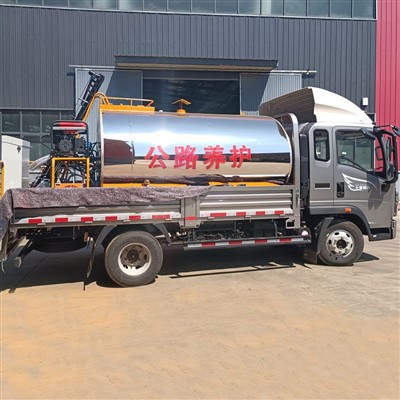
As a seasoned supplier of asphalt emulsifiers, I'm often asked about the production process behind these crucial substances. Asphalt emulsifiers play a pivotal role in various industries, especially in road construction and maintenance, where they enable the creation of emulsified asphalt, a more environmentally friendly and versatile alternative to traditional hot asphalt. In this blog post, I'll take you through the step-by-step production process of asphalt emulsifiers, shedding light on the science and technology that goes into making these essential products.
Understanding Asphalt Emulsifiers
Before delving into the production process, it's important to understand what asphalt emulsifiers are and why they are so important. Asphalt emulsifiers are chemicals that help to disperse asphalt particles in water, creating a stable emulsion. This emulsion can be easily mixed with aggregates and used in a variety of applications, such as surface treatments, cold mix asphalt, and tack coats. The choice of emulsifier depends on several factors, including the type of asphalt, the desired properties of the emulsion, and the application method.
Raw Materials
The production of asphalt emulsifiers begins with the selection of high-quality raw materials. These materials typically include surfactants, which are the key components responsible for stabilizing the emulsion, as well as other additives such as acids, bases, and polymers. Surfactants are molecules that have both hydrophilic (water-loving) and hydrophobic (water-repelling) properties, allowing them to reduce the surface tension between asphalt and water and prevent the asphalt particles from coalescing.


There are several types of surfactants used in asphalt emulsifiers, including cationic, anionic, and non-ionic surfactants. Cationic surfactants are positively charged and are commonly used in warm climates and for applications where rapid setting is required. Anionic surfactants are negatively charged and are often used in colder climates and for applications where a slower setting time is desired. Non-ionic surfactants have no charge and are used in special applications where a neutral pH is required.
Synthesis
Once the raw materials have been selected, the next step is to synthesize the asphalt emulsifier. This process typically involves a series of chemical reactions that combine the surfactants and other additives to form the final product. The specific synthesis method depends on the type of emulsifier being produced and the desired properties of the final product.
One common method of synthesizing asphalt emulsifiers is through the reaction of fatty amines with acids or esters. Fatty amines are organic compounds that contain a long hydrocarbon chain and an amino group. When reacted with an acid or ester, the amino group reacts with the acid or ester group to form an amide or ester bond, respectively. This reaction results in the formation of a surfactant molecule that has both hydrophilic and hydrophobic properties.
Another method of synthesizing asphalt emulsifiers is through the reaction of polymers with surfactants. Polymers are large molecules that are made up of repeating units. When reacted with a surfactant, the polymer can form a complex with the surfactant, which can enhance the stability of the emulsion. This method is often used to produce high-performance asphalt emulsifiers that are resistant to shear and temperature changes.
Formulation
After the synthesis of the asphalt emulsifier, the next step is to formulate the final product. This process involves the addition of other additives, such as acids, bases, and polymers, to the emulsifier to adjust its properties and performance. The specific additives used depend on the type of emulsifier being produced and the desired properties of the final product.
For example, acids are often added to cationic emulsifiers to adjust the pH and improve the stability of the emulsion. Bases are often added to anionic emulsifiers to adjust the pH and improve the adhesion of the emulsion to the aggregates. Polymers are often added to both cationic and anionic emulsifiers to improve the performance of the emulsion, such as its resistance to shear and temperature changes.
Quality Control
Quality control is an essential part of the production process of asphalt emulsifiers. This process involves the testing of the raw materials, the intermediate products, and the final product to ensure that they meet the required specifications and standards. The specific tests used depend on the type of emulsifier being produced and the desired properties of the final product.
Some of the common tests used in the quality control of asphalt emulsifiers include:
- Particle size analysis: This test measures the size of the asphalt particles in the emulsion. A smaller particle size indicates a more stable emulsion.
- Viscosity measurement: This test measures the resistance of the emulsion to flow. A higher viscosity indicates a thicker emulsion.
- Stability test: This test measures the ability of the emulsion to remain stable over time. A more stable emulsion will have a longer shelf life.
- Adhesion test: This test measures the ability of the emulsion to adhere to the aggregates. A higher adhesion indicates a better performance of the emulsion.
Packaging and Storage
Once the asphalt emulsifier has been produced and tested, the next step is to package and store it. The packaging used depends on the type of emulsifier being produced and the quantity being shipped. Common packaging options include drums, totes, and bulk tankers.
The storage conditions for asphalt emulsifiers are also important to ensure their quality and performance. Asphalt emulsifiers should be stored in a cool, dry place away from direct sunlight and heat. They should also be stored in a well-ventilated area to prevent the buildup of fumes.
Applications of Asphalt Emulsifiers
Asphalt emulsifiers have a wide range of applications in various industries, including road construction, waterproofing, and adhesives. Some of the common applications of asphalt emulsifiers include:
- Road construction: Asphalt emulsifiers are used in road construction to create emulsified asphalt, which can be used for surface treatments, cold mix asphalt, and tack coats. Emulsified asphalt is a more environmentally friendly and versatile alternative to traditional hot asphalt, as it can be applied at lower temperatures and does not require the use of solvents.
- Waterproofing: Asphalt emulsifiers are used in waterproofing applications to create waterproof membranes and coatings. These membranes and coatings can be used on roofs, basements, and other structures to prevent water from penetrating the surface.
- Adhesives: Asphalt emulsifiers are used in adhesive applications to create adhesives that can be used to bond asphalt to other materials, such as concrete, metal, and wood. These adhesives are often used in the construction industry to repair and maintain roads, bridges, and other structures.
Conclusion
In conclusion, the production process of asphalt emulsifiers is a complex and scientific process that involves the selection of high-quality raw materials, the synthesis of the emulsifier, the formulation of the final product, and the quality control of the product. As a supplier of asphalt emulsifiers, we are committed to providing our customers with high-quality products that meet their specific needs and requirements. If you are interested in learning more about our asphalt emulsifiers or would like to discuss your specific application, please feel free to contact us. We would be happy to help you find the right product for your needs.
References
- "Asphalt Emulsions: Properties and Uses." Federal Highway Administration.
- "Surfactants in Asphalt Emulsions." Journal of Surfactants and Detergents.
- "Production and Application of Asphalt Emulsifiers." International Journal of Pavement Engineering.
For more information about our Cationic Emulsifier, Emulsified Asphalt Liquid, and Anionic Bitumen Emulsion, or to discuss your specific requirements and initiate a procurement negotiation, please reach out to us. We look forward to working with you to provide the best asphalt emulsifier solutions for your projects.