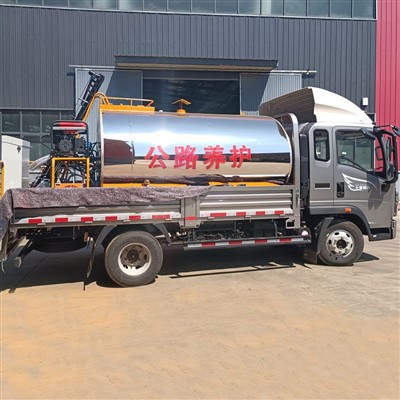
Bitumen emulsifiers play a crucial role in slurry seals, which are a cost - effective and efficient way to preserve and protect pavements. As a bitumen emulsifier supplier, I have witnessed firsthand the significant impact these emulsifiers have on the performance and quality of slurry seal applications.
Understanding Slurry Seals
Slurry seals are a mixture of bituminous emulsion, aggregate, water, and additives. They are applied as a thin layer on the surface of existing pavements to provide a protective coating, improve skid resistance, seal minor cracks, and enhance the overall appearance of the road. Slurry seals can be used on various types of pavements, including asphalt and concrete, and are commonly employed in both preventive and corrective maintenance programs.
The Function of Bitumen Emulsifiers in Slurry Seals
Emulsification
The primary function of bitumen emulsifiers is to break down the bitumen into tiny droplets and disperse them evenly in water. Bitumen is a viscous and hydrophobic material, and without an emulsifier, it would not mix with water. Emulsifiers are surface - active agents that have a hydrophilic (water - loving) head and a hydrophobic (oil - loving) tail. When added to a mixture of bitumen and water, the hydrophobic tails of the emulsifier molecules attach to the bitumen droplets, while the hydrophilic heads face the water. This creates a stable emulsion, where the bitumen droplets are suspended in the water phase, preventing them from coalescing and separating.
The quality of the emulsion is critical for the performance of the slurry seal. A well - emulsified bitumen ensures uniform distribution of the binder throughout the slurry mixture, which in turn leads to a more consistent and durable seal. For example, Cationic Emulsifier is often used in slurry seal applications. Cationic emulsifiers have a positive charge, which allows them to adhere well to negatively charged aggregate particles. This strong adhesion between the bitumen droplets and the aggregate helps to form a stable and cohesive slurry seal.
Setting and Curing
Another important role of bitumen emulsifiers is to control the setting and curing time of the slurry seal. The setting process refers to the initial hardening of the slurry mixture after it is applied to the pavement, while curing is the long - term process of the bitumen droplets coalescing and forming a continuous film.


Emulsifiers can be formulated to have different setting times, depending on the specific requirements of the project. For instance, in some cases, a rapid - setting emulsion may be needed to minimize traffic disruption. The emulsifier can be designed to cause the bitumen droplets to break and coalesce quickly, allowing the slurry seal to set and be opened to traffic within a short period. On the other hand, for projects where more workability time is required, a slow - setting emulsion can be used.
The curing process is also influenced by the emulsifier. A good emulsifier will ensure that the bitumen droplets gradually coalesce and form a strong, durable film over time. This film provides the necessary binding and waterproofing properties to the slurry seal. Asphalt Emulsifier is carefully formulated to optimize the setting and curing characteristics of the asphalt emulsion used in slurry seals, ensuring long - term performance.
Adhesion to Aggregate
Bitumen emulsifiers enhance the adhesion between the bitumen and the aggregate in the slurry seal. As mentioned earlier, cationic emulsifiers have a positive charge that attracts them to the negatively charged surface of the aggregate particles. This electrostatic attraction creates a strong bond between the bitumen and the aggregate, which is essential for the structural integrity of the slurry seal.
Good adhesion prevents the aggregate from dislodging from the slurry seal, which can lead to surface raveling and reduced skid resistance. Additionally, strong adhesion helps the slurry seal to conform to the surface of the pavement, filling in minor irregularities and providing a smooth riding surface. Cationic Emulsion is widely used in slurry seal applications because of its excellent adhesion properties, which contribute to the overall durability and performance of the seal.
Stability of the Slurry Mixture
Bitumen emulsifiers contribute to the stability of the slurry mixture during storage and application. They prevent the bitumen droplets from settling or separating, ensuring that the slurry remains homogeneous. This is particularly important when the slurry is being transported to the job site or when it is being held in storage tanks for an extended period.
A stable slurry mixture is easier to handle and apply evenly on the pavement. It also reduces the risk of blockages in the application equipment, such as spray bars and pumps. The emulsifier helps to maintain the proper viscosity of the slurry, which is crucial for achieving a uniform thickness and texture of the seal.
Benefits of Using High - Quality Bitumen Emulsifiers in Slurry Seals
Improved Performance
High - quality bitumen emulsifiers result in slurry seals with better performance characteristics. These seals have enhanced skid resistance, which improves road safety by reducing the risk of accidents, especially in wet conditions. They also have better waterproofing properties, preventing water from penetrating the pavement and causing damage such as potholes and base erosion.
Cost - Effectiveness
Using the right bitumen emulsifier can lead to cost savings in the long run. A well - formulated emulsion ensures that the slurry seal has a longer service life, reducing the need for frequent repairs and resurfacing. Additionally, proper emulsification allows for more efficient use of bitumen, which can lower the overall material cost of the project.
Environmental Friendliness
Bitumen emulsions are more environmentally friendly than traditional hot - mix asphalt. They can be applied at lower temperatures, which reduces energy consumption and greenhouse gas emissions. High - quality emulsifiers help to optimize the performance of these emulsions, making them a sustainable choice for pavement maintenance.
Conclusion
As a bitumen emulsifier supplier, I understand the importance of providing high - quality products for slurry seal applications. Bitumen emulsifiers are essential components in slurry seals, playing a vital role in emulsification, setting and curing, adhesion to aggregate, and stability of the slurry mixture. The use of the right emulsifier can significantly improve the performance, cost - effectiveness, and environmental friendliness of slurry seals.
If you are involved in a slurry seal project and are looking for reliable bitumen emulsifiers, I encourage you to reach out to discuss your specific needs. Our team of experts can provide you with the best solutions and technical support to ensure the success of your project.
References
- Kandhal, P. S., & Mallick, R. B. (1998). Highway Maintenance and Rehabilitation: Principles and Practices. John Wiley & Sons.
- Little, D. N., & Bhasin, A. (2007). Asphalt Materials Science and Technology. CRC Press.
- McGennis, G. (2002). Slurry Seal Manual. National Slurry Seal Association.