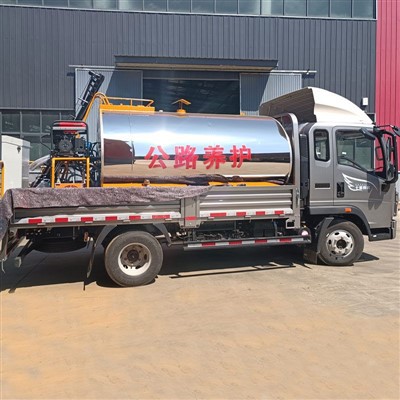
Vibration is a common phenomenon in industrial equipment operation, and an Emulsion Asphalt Plant is no exception. As a well - known supplier of Emulsion Asphalt Plants, I have in - depth knowledge of the vibration situation during its operation. In this blog, I will comprehensively analyze the vibration situation of an Emulsion Asphalt Plant, including the causes, impacts, and corresponding solutions.
1. Causes of Vibration in an Emulsion Asphalt Plant
1.1 Mechanical Imbalance
One of the primary causes of vibration in an Emulsion Asphalt Plant is mechanical imbalance. Components such as the agitator, pump impellers, and rotating shafts may have uneven mass distribution. For example, during the long - term operation of the agitator, the adhesion of asphalt on the blades can lead to an imbalance. When the agitator rotates, this imbalance generates an unbalanced centrifugal force, which causes the equipment to vibrate. The same principle applies to pump impellers. If there is wear or damage on one side of the impeller, it will disrupt the balance of rotation and result in vibration.
1.2 Loose Components
Loose bolts, nuts, and other fasteners can also cause vibration. In the high - speed operation process of the Emulsion Asphalt Plant, the continuous impact and vibration of the equipment may gradually loosen these fasteners. For instance, the bolts connecting the motor to the base may become loose over time. Once the components are loose, they will move relative to each other during operation, generating additional vibration. This not only affects the normal operation of the equipment but also poses a potential safety hazard.
1.3 Fluid Flow Instability
The flow of asphalt emulsion in the plant is a complex process. Unstable fluid flow can cause vibration. When the flow rate of the asphalt emulsion changes suddenly, or there are eddies and cavitation in the pipeline, it will exert uneven forces on the pipeline walls and equipment components. For example, if the valve opening is adjusted too quickly, it may lead to a sudden change in the flow rate of the asphalt emulsion, resulting in vibration in the pipeline system.
1.4 Resonance
Resonance is a special vibration phenomenon. When the natural frequency of a component in the Emulsion Asphalt Plant is close to the excitation frequency generated during operation, resonance will occur. Resonance can significantly amplify the vibration amplitude, causing severe damage to the equipment. For example, if the natural frequency of a certain part of the frame structure is close to the rotational frequency of the motor, resonance may occur, leading to excessive vibration and even structural damage.
2. Impacts of Vibration on an Emulsion Asphalt Plant
2.1 Equipment Damage
Excessive vibration can cause wear and tear on equipment components. The continuous impact and friction generated by vibration can accelerate the wear of bearings, gears, and other moving parts. For example, in a vibrating bearing, the contact surface between the rolling elements and the raceway will be subject to greater stress, which may lead to premature fatigue failure. In addition, vibration can also cause cracks in the equipment structure, especially in welded joints and stress - concentrated areas. These cracks can gradually expand over time, threatening the overall safety of the equipment.
2.2 Product Quality
Vibration can also affect the quality of the asphalt emulsion produced. Unstable operation caused by vibration may lead to uneven mixing of the asphalt and emulsifier. This can result in inconsistent particle size distribution of the asphalt emulsion, affecting its stability and performance. For example, if the agitator vibrates too much during the mixing process, it may not be able to fully mix the components, resulting in a non - uniform product.
2.3 Noise Pollution
Vibration is often accompanied by noise. The high - intensity noise generated by the vibrating Emulsion Asphalt Plant can not only cause discomfort to the operators but also have a negative impact on the surrounding environment. Prolonged exposure to high - noise environments can cause hearing damage to the operators, and excessive noise can also violate environmental protection regulations.
3. Monitoring and Detection of Vibration
3.1 Vibration Sensors
To effectively monitor the vibration situation of an Emulsion Asphalt Plant, vibration sensors are commonly used. These sensors can be installed on key components of the equipment, such as the motor, agitator, and pump. They can accurately measure the vibration amplitude, frequency, and acceleration of the equipment. By analyzing the data collected by the sensors, operators can timely detect abnormal vibration and take corresponding measures. For example, if the vibration amplitude of the motor exceeds the normal range, it may indicate a problem with the motor, such as mechanical imbalance or bearing failure.
3.2 Regular Inspections
In addition to using sensors, regular manual inspections are also necessary. Operators should conduct visual inspections and tactile inspections of the equipment at regular intervals. They can check for loose components, abnormal wear, and other visible problems. For example, by touching the equipment surface, they can feel the vibration intensity and determine whether there is an abnormal increase in vibration.
4. Solutions to Vibration Problems
4.1 Balancing and Alignment
For mechanical imbalance problems, balancing and alignment operations are essential. For rotating components such as agitators and pump impellers, dynamic balancing can be carried out. This involves adjusting the mass distribution of the components to ensure that the center of mass coincides with the axis of rotation. In addition, proper alignment of the motor and other equipment is also crucial. Misaligned equipment can cause additional vibration, so it is necessary to ensure that all components are correctly installed and aligned.
4.2 Tightening Components
Regularly checking and tightening loose components is an effective way to reduce vibration. Operators should use appropriate tools to tighten bolts, nuts, and other fasteners according to the specified torque values. This can prevent the components from moving relative to each other during operation, reducing vibration.
4.3 Improving Fluid Flow
To address fluid flow instability, measures can be taken to optimize the pipeline design and control the flow rate. For example, installing flow regulators and pressure stabilizers in the pipeline can help maintain a stable flow rate and pressure. In addition, the inner surface of the pipeline can be smoothed to reduce eddy formation and cavitation.
4.4 Avoiding Resonance
To avoid resonance, it is necessary to accurately calculate the natural frequencies of equipment components and adjust the operating parameters to avoid the excitation frequency being close to the natural frequency. For example, changing the rotational speed of the motor can change the excitation frequency, thereby avoiding resonance.
5. Our Solutions as a Supplier
As a professional supplier of Emulsion Asphalt Plants, we offer a series of high - quality products and services to help our customers solve vibration problems. Our Bitumen Emulsion Equipment is designed with advanced technology and high - precision manufacturing processes, which can effectively reduce the occurrence of vibration caused by mechanical imbalance. Our Fully Automatic Emulsified Asphalt Equipment is equipped with intelligent control systems that can precisely control the flow rate and pressure of the asphalt emulsion, ensuring stable fluid flow and reducing vibration caused by fluid instability.
In addition, we also provide comprehensive after - sales service. Our professional technical team can conduct on - site inspections and maintenance for our customers, helping them detect and solve vibration problems in a timely manner. We also offer training courses for operators, teaching them how to correctly operate and maintain the equipment to reduce the occurrence of vibration - related problems.


6. Conclusion and Invitation
In conclusion, understanding the vibration situation of an Emulsion Asphalt Plant during operation is crucial for ensuring the normal operation of the equipment, improving product quality, and protecting the environment. By analyzing the causes and impacts of vibration, and taking corresponding solutions, we can effectively reduce the negative effects of vibration.
If you are interested in our Asphalt Emulsion Equipment or have any questions about the vibration problems of Emulsion Asphalt Plants, please feel free to contact us. We are committed to providing you with the best products and services, and look forward to discussing your procurement needs with you.
References
- Smith, J. (2018). Industrial Equipment Vibration Analysis. New York: Industrial Press.
- Brown, A. (2019). Asphalt Emulsion Production Technology. London: Petroleum Press.
- Johnson, R. (2020). Vibration Control in Manufacturing Processes. Tokyo: Manufacturing Technology Institute.