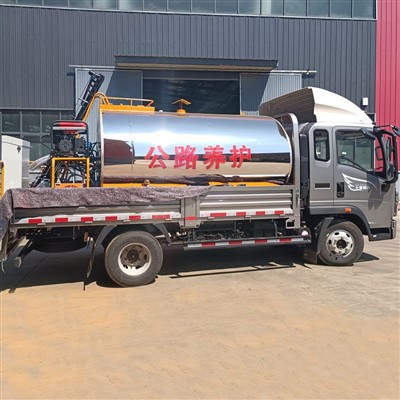
As a supplier of bitumen melting machines, I often encounter inquiries from customers about the versatility of our equipment. One question that frequently arises is whether a bitumen melting machine can be used for producing bitumen emulsions. In this blog post, I'll delve into this topic, exploring the technical aspects, feasibility, and limitations of using a bitumen melting machine in bitumen emulsion production.
Understanding Bitumen Melting Machines
Before we discuss the potential use of bitumen melting machines in bitumen emulsion production, let's first understand what bitumen melting machines are and how they work. Bitumen melting machines are designed to heat and melt solid or semi - solid bitumen into a liquid state for various applications such as road construction, roofing, and waterproofing.
There are different types of bitumen melting machines available in the market, including Bitumen Melting Plant, Asphalt Fast Melting Machine, and Asphalt Melting Plant. These machines typically use direct or indirect heating methods. Direct heating involves the direct contact of the heating source with the bitumen, while indirect heating uses a heat transfer medium such as hot oil to transfer heat to the bitumen.
The main function of a bitumen melting machine is to raise the temperature of the bitumen to a level where it becomes fluid enough to be pumped, transported, and used in subsequent processes. The melting temperature of bitumen usually ranges from 120°C to 180°C, depending on the type of bitumen.
What are Bitumen Emulsions?
Bitumen emulsions are a mixture of bitumen, water, and an emulsifying agent. The emulsifying agent helps to disperse the bitumen droplets evenly throughout the water phase, creating a stable emulsion. Bitumen emulsions are widely used in road construction, especially in surface treatments, slurry seals, and cold mix asphalt production.
The production of bitumen emulsions involves a complex process. First, the bitumen needs to be heated to a suitable temperature to reduce its viscosity. Then, it is pumped into a colloid mill along with water and the emulsifying agent. The colloid mill uses high - shear forces to break the bitumen into tiny droplets and disperse them in the water phase.
Can a Bitumen Melting Machine be Used for Producing Bitumen Emulsions?
The short answer is that a bitumen melting machine alone cannot be used to produce bitumen emulsions, but it is an essential part of the overall production process.
Role of Bitumen Melting Machines in Bitumen Emulsion Production
A bitumen melting machine plays a crucial role in bitumen emulsion production by providing the heated bitumen required for the process. As mentioned earlier, bitumen needs to be in a liquid state with a relatively low viscosity to be effectively pumped into the colloid mill for emulsification. The bitumen melting machine ensures that the bitumen reaches the appropriate temperature and viscosity before it enters the next stage of the production process.
Limitations of Using Only a Bitumen Melting Machine
While a bitumen melting machine can heat and melt bitumen, it lacks the necessary components to create a bitumen emulsion. The production of bitumen emulsions requires additional equipment such as a colloid mill, storage tanks for water and emulsifying agents, and a mixing system.


The colloid mill is a key piece of equipment in bitumen emulsion production. It is responsible for creating the high - shear forces needed to break the bitumen into small droplets and disperse them in the water phase. Without a colloid mill, the bitumen will not be properly emulsified, and the resulting mixture will not be a stable emulsion.
In addition, a bitumen melting machine does not have the means to accurately measure and control the addition of water and emulsifying agents. Precise control of the proportions of bitumen, water, and emulsifying agent is essential for producing a high - quality bitumen emulsion with the desired properties.
Advantages of Incorporating a Bitumen Melting Machine in Bitumen Emulsion Production
Although a bitumen melting machine cannot produce bitumen emulsions on its own, integrating it into a bitumen emulsion production system offers several advantages.
Energy Efficiency
Using a bitumen melting machine to pre - heat the bitumen can improve the energy efficiency of the overall production process. By heating the bitumen to the optimal temperature before it enters the colloid mill, less energy is required to maintain the desired temperature during the emulsification process.
Process Continuity
A reliable bitumen melting machine ensures a continuous supply of heated bitumen to the colloid mill. This helps to maintain a smooth and uninterrupted production process, reducing downtime and increasing productivity.
Quality Control
A well - designed bitumen melting machine can provide precise temperature control, which is important for maintaining the quality of the bitumen. Consistent bitumen temperature ensures that the subsequent emulsification process is more predictable and results in a more uniform and stable bitumen emulsion.
Considerations for Using a Bitumen Melting Machine in Bitumen Emulsion Production
When considering using a bitumen melting machine in bitumen emulsion production, there are several factors to keep in mind.
Compatibility with Other Equipment
The bitumen melting machine should be compatible with the other equipment in the bitumen emulsion production system, such as the colloid mill and the storage tanks. It should be able to deliver the heated bitumen at the right flow rate and temperature to match the requirements of the subsequent processes.
Maintenance and Safety
Regular maintenance of the bitumen melting machine is essential to ensure its reliable operation. This includes cleaning the heating elements, checking the pumps and valves, and monitoring the temperature control system. Safety is also a critical consideration, as bitumen is a flammable material, and proper safety measures should be in place during the operation of the bitumen melting machine.
Conclusion
In conclusion, while a bitumen melting machine cannot be used alone to produce bitumen emulsions, it is an indispensable part of the bitumen emulsion production process. It provides the heated bitumen necessary for the emulsification process, and when integrated with other appropriate equipment, it can contribute to an efficient, continuous, and high - quality bitumen emulsion production.
If you are in the business of bitumen emulsion production or considering entering this field, and you are looking for a reliable bitumen melting machine, we are here to help. Our company offers a wide range of high - quality bitumen melting machines, including Bitumen Melting Plant, Asphalt Fast Melting Machine, and Asphalt Melting Plant. We are committed to providing our customers with the best products and services. If you have any questions or would like to discuss your specific requirements, please feel free to contact us for procurement and negotiation.
References
- Kandhal, P. S., & Mallick, R. B. (1998). Hot Mix Asphalt Materials, Mixture Design, and Construction. NAPA Research and Education Foundation.
- Newcomb, D. E. (2007). Bituminous Materials: Asphalt Cements, Asphalt Binders, and Emulsions. McGraw - Hill Professional.