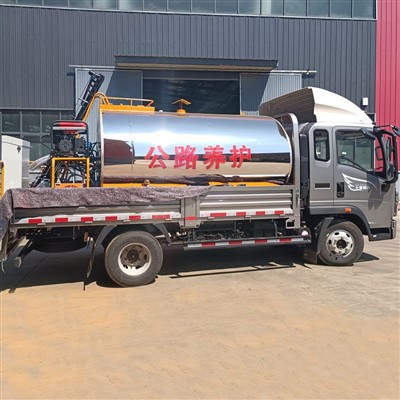
Hey there! I'm a supplier of Bitumen Melting Plants, and I often get asked whether a bitumen melting plant needs CE certification. So, I thought I'd share my thoughts on this topic and clear up some common questions.
What is CE Certification?
First off, let's talk about what CE certification actually is. CE stands for "Conformité Européene," which is French for "European Conformity." It's a certification mark that indicates a product meets the essential health, safety, and environmental protection requirements set by the European Union (EU). By affixing the CE mark to a product, manufacturers declare that their product complies with all the relevant EU directives.
Why CE Certification Matters for Bitumen Melting Plants
Now, let's get to the heart of the matter: why CE certification is important for bitumen melting plants. If you're planning to sell your bitumen melting plant in the EU market, CE certification is not just a nice-to-have; it's a legal requirement. Without CE certification, you won't be able to legally sell your product in any EU member state.
But it's not just about legal compliance. CE certification also provides a number of benefits for both manufacturers and customers. For manufacturers, it can enhance the credibility and reputation of their products, making them more competitive in the market. It also shows that you're committed to producing high-quality, safe, and environmentally friendly products.
For customers, CE certification provides assurance that the bitumen melting plant they're purchasing meets the highest standards of safety and quality. It gives them peace of mind knowing that the product has been tested and approved by independent third-party laboratories.
The Certification Process
The process of obtaining CE certification for a bitumen melting plant can be complex and time-consuming. It typically involves several steps, including:
- Identify the Relevant Directives: The first step is to determine which EU directives apply to your bitumen melting plant. These may include directives related to machinery safety, electromagnetic compatibility, and environmental protection.
- Conduct a Risk Assessment: Once you've identified the relevant directives, you'll need to conduct a risk assessment to identify any potential hazards associated with your product. This will help you determine the appropriate safety measures and protective devices that need to be incorporated into the design of your bitumen melting plant.
- Test and Verify Compliance: After completing the risk assessment, you'll need to have your bitumen melting plant tested by an independent third-party laboratory to verify that it complies with all the relevant EU directives. The laboratory will conduct a series of tests and inspections to ensure that your product meets the required safety and performance standards.
- Prepare the Technical Documentation: Once your bitumen melting plant has passed the testing phase, you'll need to prepare the technical documentation required for CE certification. This documentation includes a detailed description of the product, its design and manufacturing processes, the results of the risk assessment and testing, and any other relevant information.
- Issue the Declaration of Conformity: Finally, once you've completed all the necessary steps and prepared the technical documentation, you'll need to issue a Declaration of Conformity. This is a legal document in which you declare that your bitumen melting plant complies with all the relevant EU directives. You'll also need to affix the CE mark to your product to indicate that it has been CE certified.
The Cost of CE Certification
One of the biggest concerns for manufacturers is the cost of CE certification. The cost can vary depending on a number of factors, including the complexity of the product, the number of directives that apply, and the testing and certification procedures required.
In general, the cost of CE certification for a bitumen melting plant can range from a few thousand dollars to tens of thousands of dollars. This includes the cost of testing, inspection, and certification fees, as well as the cost of preparing the technical documentation.
While the cost of CE certification may seem high, it's important to remember that it's a long-term investment in the success of your business. By obtaining CE certification, you'll be able to access the lucrative EU market and increase your sales and profitability.
What if You Don't Need to Sell in the EU?
If you're not planning to sell your bitumen melting plant in the EU market, you may be wondering whether you still need CE certification. The answer is that it depends on your specific situation.
Even if you're not selling in the EU, CE certification can still be beneficial for your business. It can enhance the credibility and reputation of your products, making them more attractive to customers in other markets. It can also help you meet the requirements of international standards and regulations, which can be important if you're exporting your products to other countries.
On the other hand, if you're only selling your bitumen melting plant in countries that don't require CE certification, you may not need to go through the certification process. However, it's still a good idea to ensure that your product meets the highest standards of safety and quality, even if it's not required by law.
Conclusion
So, does a bitumen melting plant need CE certification? If you're planning to sell your product in the EU market, the answer is yes. CE certification is a legal requirement, and it provides a number of benefits for both manufacturers and customers.


If you're not selling in the EU, CE certification may still be beneficial for your business, but it's not a requirement. Ultimately, the decision to obtain CE certification depends on your specific business goals and market strategy.
If you're interested in learning more about our Bitumen Melting Plant, Asphalt Melting Plant, or Asphalt Fast Melting Machine, or if you have any questions about CE certification, please don't hesitate to contact us. We'd be happy to discuss your needs and provide you with more information.
References
- European Commission. (n.d.). What is CE marking? Retrieved from [European Commission website]
- Machinery Directive 2006/42/EC. (n.d.). Retrieved from [European Union legislation website]