In the realm of road construction and various industrial applications, bitumen plays a pivotal role. As a leading supplier of Bitumen Melting Equipment, I often encounter inquiries from clients regarding the space requirements for installing such equipment. This blog aims to delve into the question: Does bitumen melting equipment require a large installation space?
Understanding Bitumen Melting Equipment
Before we address the space issue, it's essential to understand what bitumen melting equipment is and its functions. Bitumen, also known as asphalt in some regions, is a thick, sticky, and highly viscous liquid or semi - solid form of petroleum. Bitumen melting equipment is designed to heat and melt bitumen from its solid or semi - solid state to a liquid state, making it suitable for further processing, such as mixing with aggregates in asphalt plants.
There are different types of bitumen melting equipment available in the market, including Asphalt Melting Machine, Bitumen Melting Plant, and Asphalt Melting Plant. Each type has its own characteristics, capacities, and design features, which in turn influence the space they require for installation.

Factors Affecting the Installation Space
1. Equipment Capacity
One of the most significant factors determining the installation space is the capacity of the bitumen melting equipment. Larger capacity equipment is designed to handle a greater volume of bitumen per unit of time. For example, a small - scale asphalt melting machine used for minor road repair projects may have a relatively compact design and require less space. On the other hand, a large - scale bitumen melting plant used in major highway construction projects will have a much larger footprint. This is because larger equipment usually has bigger melting chambers, more extensive heating systems, and larger storage tanks to hold the melted bitumen.
2. Heating System Design
The type of heating system employed in the bitumen melting equipment also affects the space requirements. There are several heating methods, such as direct heating, indirect heating, and steam heating. Direct heating systems, which involve direct contact between the heat source and the bitumen, may be more compact but can be less energy - efficient. Indirect heating systems, which use a heat transfer medium to heat the bitumen, often require additional space for the heat exchanger and the associated piping. Steam - heated systems need space for the steam generation equipment, such as boilers, which can be quite large.
3. Auxiliary Equipment
In addition to the main melting unit, bitumen melting equipment often comes with a range of auxiliary equipment. This includes pumps for transferring the melted bitumen, filters to remove impurities, and control panels for monitoring and regulating the melting process. The space required for these auxiliary components can add up significantly. For instance, a high - capacity pump may need a separate enclosure for installation, and multiple filters may need to be arranged in a specific configuration to ensure efficient operation.

4. Safety and Maintenance Requirements
Safety is of utmost importance when dealing with bitumen melting equipment. Adequate space must be provided around the equipment for safe operation and maintenance. This includes space for workers to access different parts of the equipment for inspection, cleaning, and repair. There should also be sufficient clearance for fire - fighting equipment and emergency exits in case of an accident. Moreover, ventilation systems are required to remove fumes and gases generated during the melting process, and these systems need their own space for installation and operation.
Small - Scale vs. Large - Scale Bitumen Melting Equipment
Small - Scale Equipment
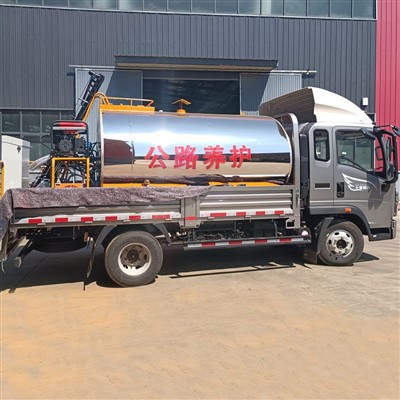
Small - scale bitumen melting equipment, such as some portable asphalt melting machines, is designed for on - site or small - scale projects. These machines are relatively compact and can be easily transported to different locations. They typically have a lower melting capacity, usually ranging from a few hundred kilograms to a couple of tons per day. Due to their small size, they require minimal installation space. For example, a small - scale asphalt melting machine can be installed in a corner of a small workshop or even on a flatbed truck for mobile use.
Large - Scale Equipment
Large - scale bitumen melting plants, on the other hand, are used for large - scale infrastructure projects. These plants can have a melting capacity of tens or even hundreds of tons per day. They consist of multiple components, including large melting tanks, complex heating systems, and extensive piping networks. As a result, they require a large installation area. A large - scale bitumen melting plant may need to be installed in a dedicated industrial facility with a large open space to accommodate all the equipment and ensure proper ventilation and safety.
Space - Saving Design Considerations
As a supplier of bitumen melting equipment, we understand the importance of space efficiency for our clients. That's why we are constantly working on developing space - saving designs for our products.
Modular Design
One approach is to use a modular design for the equipment. Modular bitumen melting plants are composed of pre - fabricated modules that can be easily assembled on - site. This allows for more flexibility in installation and can reduce the overall space requirements. The modules can be arranged in a more compact manner, and they can be easily expanded or modified in the future according to the client's needs.
Vertical Integration
Another space - saving technique is vertical integration. Instead of spreading the equipment horizontally, we can design the equipment to be stacked vertically. For example, the melting tank can be placed on top of the heating system, and the storage tank can be located adjacent to the melting unit in a vertical arrangement. This way, the same amount of equipment can be accommodated in a smaller footprint.

Conclusion
In conclusion, whether bitumen melting equipment requires a large installation space depends on several factors, including the equipment capacity, heating system design, auxiliary equipment, and safety and maintenance requirements. Small - scale equipment generally requires less space and is more suitable for on - site or small - scale projects. In contrast, large - scale bitumen melting plants need a significant amount of space due to their high capacity and complex components.

However, with advancements in technology and innovative design approaches, such as modular design and vertical integration, it is possible to reduce the space requirements of bitumen melting equipment without compromising its performance.
If you are in the market for bitumen melting equipment and have specific space constraints or requirements, we are here to help. Our team of experts can provide you with customized solutions that meet your needs. Contact us to start a discussion about your bitumen melting equipment requirements and explore the best options for your project.
References
- "Bitumen and Asphalt Handbook" - A comprehensive guide on bitumen properties and processing equipment.
- Industry reports on road construction and bitumen processing technologies.