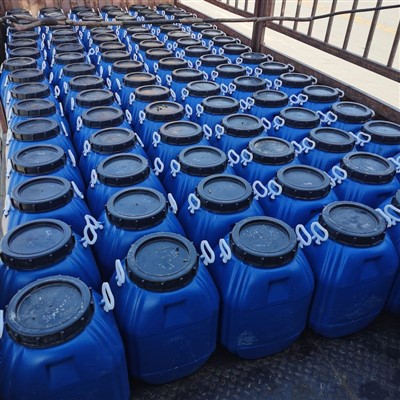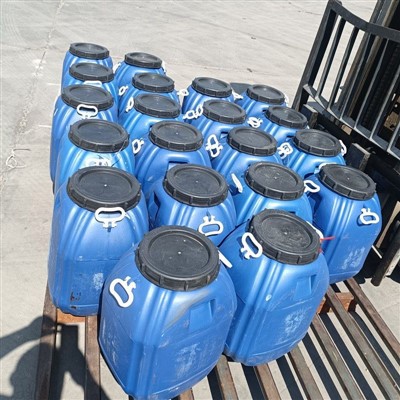
In the field of emulsion technology, cationic emulsifiers play a crucial role. As a reliable cationic emulsifier supplier, I've witnessed firsthand the diverse applications and the complex interactions of cationic emulsifiers with other additives in an emulsion. Understanding these interactions is not only essential for formulating high - quality emulsions but also for optimizing their performance in various industries.
Basic Principles of Cationic Emulsifiers
Cationic emulsifiers are surface - active agents that carry a positive charge in solution. This positive charge gives them unique properties compared to other types of emulsifiers, such as Anionic Emulsifier. They work by reducing the surface tension between two immiscible liquids, typically oil and water, and stabilizing the emulsion droplets. When added to an emulsion system, cationic emulsifiers adsorb at the oil - water interface, with their hydrophobic tails pointing towards the oil phase and the positively charged hydrophilic heads towards the water phase.


Interaction with Anionic Additives
One of the most significant interactions of cationic emulsifiers is with anionic additives. Anionic substances carry a negative charge, and when mixed with cationic emulsifiers, they can form complexes through electrostatic attraction. In some cases, this can lead to the precipitation of the emulsifier - additive complex. For example, in an asphalt emulsion system, if a cationic Asphalt Emulsifier is mixed with an anionic additive without proper control, the resulting complex may cause flocculation and destabilization of the emulsion. However, under carefully controlled conditions, this interaction can also be harnessed to create unique emulsion properties. For instance, by adjusting the ratio of cationic emulsifier to anionic additive, it is possible to create emulsions with enhanced stability and improved adhesion properties.
Interaction with Non - ionic Additives
Non - ionic additives do not carry an electrical charge. Their interaction with cationic emulsifiers is mainly through physical forces such as van der Waals forces and hydrogen bonding. Non - ionic additives can act as co - emulsifiers or stabilizers in the emulsion system. For example, some non - ionic polymers can adsorb onto the surface of the emulsion droplets, forming a protective layer that enhances the stability of the emulsion. When used in combination with cationic emulsifiers, non - ionic additives can improve the overall performance of the emulsion, such as increasing the viscosity and preventing coalescence of the droplets. This combination is often used in the formulation of personal care products, where a stable and smooth - textured emulsion is desired.
Interaction with Other Cationic Additives
When cationic emulsifiers interact with other cationic additives, the electrostatic repulsion between the positively charged species comes into play. This can lead to a more dispersed distribution of the additives in the emulsion system. In some cases, the presence of multiple cationic species can enhance the stability of the emulsion by increasing the surface charge density of the droplets. However, if the concentration of cationic additives is too high, it can also lead to over - stabilization, which may result in a decrease in the emulsion's ability to break and coalesce when required. For example, in the application of Anionic Bitumen Emulsion, proper control of the interaction between cationic emulsifiers and other cationic additives is crucial for achieving the desired performance during the construction process.
Impact on Emulsion Properties
The interaction of cationic emulsifiers with other additives can have a profound impact on the properties of the emulsion.
Stability
The stability of an emulsion is a key factor in its performance. As mentioned earlier, the interaction with different additives can either enhance or reduce the stability of the emulsion. For example, the right combination of cationic emulsifier and non - ionic additive can form a stable interfacial film around the emulsion droplets, preventing them from coalescing. On the other hand, an improper interaction with anionic additives can lead to the breakdown of the emulsion.
Viscosity
The viscosity of an emulsion affects its flow behavior and application properties. The addition of certain additives in combination with cationic emulsifiers can increase or decrease the viscosity of the emulsion. For instance, some polymers can increase the viscosity by forming a network structure within the emulsion, while some low - molecular - weight additives may reduce the viscosity by disrupting the intermolecular forces between the emulsion components.
Adhesion
In applications such as asphalt emulsions for road construction, adhesion is a critical property. The interaction between cationic emulsifiers and other additives can influence the adhesion of the emulsion to the substrate. For example, certain additives can modify the surface properties of the emulsion droplets, improving their wetting and adhesion to the road surface.
Applications in Different Industries
The understanding of the interaction between cationic emulsifiers and other additives is applied in various industries.
Construction Industry
In the construction industry, asphalt emulsions are widely used for road paving and repair. Cationic asphalt emulsifiers are often used in combination with other additives to achieve the desired properties. For example, additives can be used to improve the storage stability of the asphalt emulsion, enhance its adhesion to the aggregate, and adjust its setting time. By carefully controlling the interaction between the cationic emulsifier and these additives, high - quality asphalt emulsions can be produced that meet the strict requirements of road construction.
Personal Care Industry
In the personal care industry, emulsions are used in products such as creams, lotions, and makeup. Cationic emulsifiers are combined with non - ionic and anionic additives to create stable and aesthetically pleasing products. For example, non - ionic polymers can be used to thicken the emulsion, while anionic additives can be used to adjust the pH and improve the feel of the product on the skin.
Agriculture Industry
In agriculture, emulsions are used for pesticide and fertilizer applications. Cationic emulsifiers can be used to formulate stable emulsions of pesticides, which can improve their dispersion and adhesion on the plant surface. By interacting with other additives, such as surfactants and polymers, the performance of these agricultural emulsions can be optimized, leading to more effective pest control and nutrient delivery.
Conclusion
In conclusion, the interaction of cationic emulsifiers with other additives in an emulsion is a complex yet fascinating area of study. As a cationic emulsifier supplier, I understand the importance of this knowledge in formulating high - quality emulsions for various industries. By carefully controlling the type and amount of additives, it is possible to create emulsions with tailored properties that meet the specific requirements of different applications.
If you are interested in learning more about our cationic emulsifiers or have specific requirements for your emulsion formulation, we welcome you to contact us for procurement and further discussion. Our team of experts is ready to provide you with professional advice and support to help you achieve the best results in your projects.
References
- Becher, P. (1965). Emulsions: Theory and Practice. Reinhold Publishing Corporation.
- Tadros, Th. F. (2005). Encyclopedia of Emulsion Technology. Marcel Dekker.
- Myers, D. (1999). Surfaces, Interfaces, and Colloids: Principles and Applications. Wiley - VCH.