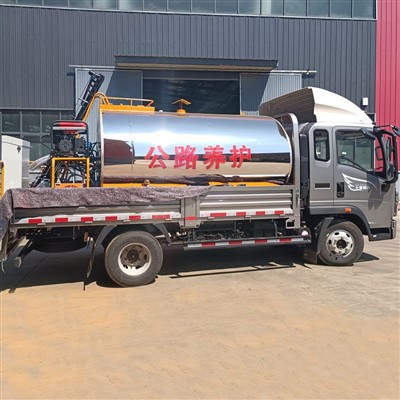
Hey there! As a supplier of bitumen melting machines, I often get asked this question: "How long does it take for a bitumen melting machine to melt bitumen?" Well, it's not a one - size - fits - all answer, and there are quite a few factors that come into play. Let's dive in and break it down.
Factors Affecting Melting Time
1. Machine Capacity
The capacity of the bitumen melting machine is a major factor. Smaller machines, say those with a capacity of around 1 - 2 tons, are going to melt bitumen faster than large - scale industrial machines that can hold 10 tons or more. A smaller machine might take anywhere from 2 to 4 hours to fully melt the bitumen, while a large - capacity machine could take 6 to 10 hours or even longer. For instance, if you've got a small project like patching a few potholes on a local road, a small - capacity machine is your go - to. But for large highway construction projects, you'll need a high - capacity Asphalt Melting Machine.
2. Initial Bitumen Temperature
The starting temperature of the bitumen matters a great deal. Bitumen is usually stored in solid or semi - solid form at low temperatures. If the bitumen starts at a relatively warm temperature, say around 20 - 30 degrees Celsius, it will melt much faster compared to bitumen that's stored in a cold environment, like in a warehouse during winter where the temperature might be close to freezing. On average, for every 10 - degree increase in the initial temperature, the melting time can be reduced by about 15 - 20%.


3. Heating Method
There are different heating methods used in bitumen melting machines, and each has its own efficiency. Direct - fired heating, where the bitumen is heated directly by a flame, is generally faster but can be a bit risky if not properly controlled. Indirect - fired heating, on the other hand, is safer as it uses a heat exchanger to transfer heat to the bitumen. However, it might take a little longer. Electric heating is another option, which is clean and easy to control but can be slower, especially if the power supply is limited. For example, a direct - fired Bitumen Melting Equipment can cut the melting time by almost half compared to an electric - heated one in some cases.
4. Bitumen Grade
Bitumen comes in different grades, and each grade has a different melting point. Harder grades of bitumen, like those used in areas with high traffic and heavy loads, have a higher melting point. So, it will take longer to melt them compared to softer grades. For example, a hard - grade bitumen with a penetration value of 20 - 30 might take 2 - 3 hours more to melt than a soft - grade bitumen with a penetration value of 80 - 100 in the same machine.
Typical Melting Times
Let's look at some typical scenarios to give you a better idea.
Small - Scale Operations
For small - scale operations, like in a local workshop where you're using a 1 - ton bitumen melting machine with electric heating and starting with bitumen at around 20 degrees Celsius, it could take about 2.5 to 3.5 hours to melt the bitumen. If you switch to a direct - fired heating method, you can shave off about an hour from that time.
Medium - Scale Projects
In medium - scale projects, such as building a small parking lot, a 5 - ton machine with indirect - fired heating and bitumen at an initial temperature of 15 degrees Celsius might take around 5 to 7 hours. But if the bitumen is pre - heated to 30 degrees Celsius, the time can be reduced to 4 to 5 hours.
Large - Scale Industrial Projects
For large - scale industrial projects, like constructing a major highway, a 15 - ton Asphalt Melting Plant with direct - fired heating and bitumen starting at 10 degrees Celsius could take 10 to 12 hours. If you use a more advanced heating system and pre - heat the bitumen, you can bring that time down to 8 to 9 hours.
Tips to Reduce Melting Time
If you're looking to cut down on the melting time, here are some tips:
- Pre - heat the bitumen: As we've mentioned, pre - heating the bitumen can significantly reduce the melting time. You can use a simple heating pad or a small pre - heater to raise the temperature before loading it into the melting machine.
- Choose the right heating method: Depending on your project requirements and safety concerns, select the most efficient heating method. If time is of the essence and safety measures are in place, direct - fired heating is a good option.
- Maintain the machine: Regular maintenance of the bitumen melting machine ensures that it operates at its peak efficiency. Clean the heating elements, check for any leaks, and replace worn - out parts as needed.
Conclusion
So, as you can see, the time it takes for a bitumen melting machine to melt bitumen varies widely depending on several factors. But with the right machine, proper pre - heating, and efficient heating methods, you can optimize the process and get your bitumen melted in the shortest time possible.
If you're in the market for a bitumen melting machine, whether it's a small - scale unit or a large - scale industrial plant, we've got you covered. Our machines are designed for maximum efficiency and reliability. Don't hesitate to reach out to us for more information or to discuss your specific project needs. We're here to help you make the best choice for your bitumen melting requirements.
References
- "Bitumen Technology and Refining" by P. J. Hills
- "Asphalt Paving Technology" published by the Asphalt Institute