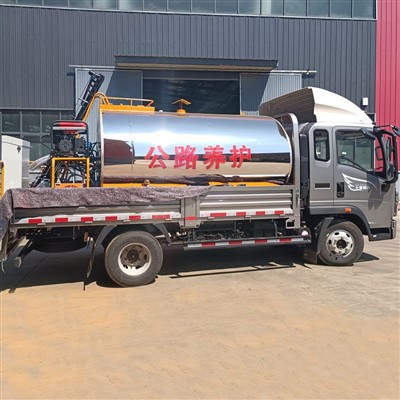
In the realm of road construction and maintenance, emulsion asphalt plays a pivotal role. An Emulsion Asphalt Plant is a key piece of equipment that enables the production of high - quality emulsion asphalt. As a leading supplier of Emulsion Asphalt Plants, I am well - versed in the complex control systems that are integral to the seamless operation of these plants. In this blog, I'll delve into what the control systems in an Emulsion Asphalt Plant are, their functions, and why they are crucial for efficient production.
1. Introduction to Emulsion Asphalt Plant
An Emulsion Asphalt Plant is a specialized facility designed to produce bitumen emulsion, which is a mixture of bitumen and water, stabilized by an emulsifying agent. The emulsion asphalt produced can be used in various applications such as surface dressing, tack coating, and cold - mix asphalt production. For more information on our Emulsion Asphalt Plant, you can visit our dedicated webpage.
2. Types of Control Systems in an Emulsion Asphalt Plant
2.1 Process Control System
The process control system is the heart of the Emulsion Asphalt Plant. It is responsible for regulating and monitoring all the processes involved in the production of emulsion asphalt. This system ensures that the right amount of raw materials, including bitumen, water, and emulsifying agents, are mixed in the correct proportions.
-
Flow Control: Precise flow control is essential to maintain the quality of the emulsion asphalt. The process control system uses flow meters to measure the flow rates of bitumen, water, and other additives. It then adjusts the flow valves accordingly to ensure that the desired flow rates are maintained. For example, if the recipe for a particular type of emulsion asphalt requires a 60:40 ratio of bitumen to water, the process control system will continuously monitor and adjust the flow rates to achieve this ratio.
-
Temperature Control: Temperature is another critical parameter in the production of emulsion asphalt. The bitumen needs to be heated to a certain temperature to reduce its viscosity and make it easier to mix with water. The process control system monitors the temperature of the bitumen, water, and the emulsion during the production process. It uses heaters and coolers to maintain the optimal temperature range. For instance, most bitumen emulsions require a bitumen temperature between 130 - 150°C and a water temperature around 50 - 60°C.


-
Pressure Control: Pressure control is important to ensure the proper operation of the emulsification equipment. The process control system monitors the pressure in the pipelines and the emulsifier. It adjusts the pumps and valves to maintain the correct pressure levels. If the pressure is too high, it can cause damage to the equipment, while too low a pressure may result in incomplete emulsification.
2.2 Quality Control System
The quality control system is designed to ensure that the emulsion asphalt produced meets the required quality standards. This system conducts various tests and analyses on the emulsion asphalt during and after the production process.
-
Particle Size Analysis: The particle size of the bitumen droplets in the emulsion is a crucial factor that affects the stability and performance of the emulsion asphalt. The quality control system uses particle size analyzers to measure the size distribution of the bitumen droplets. It ensures that the particle size is within the specified range. For example, for most applications, the average particle size of the bitumen droplets in the emulsion should be between 1 - 5 micrometers.
-
Stability Testing: Emulsion asphalt needs to be stable during storage and transportation. The quality control system conducts stability tests, such as the storage stability test, to ensure that the emulsion does not separate or break down over time. It also monitors the pH value of the emulsion, as the pH can affect the stability of the emulsion. A proper pH range, usually between 2 - 4 for cationic emulsions and 8 - 10 for anionic emulsions, is maintained to ensure stability.
-
Viscosity Measurement: Viscosity is an important property of emulsion asphalt that affects its workability and application. The quality control system measures the viscosity of the emulsion asphalt using viscometers. It ensures that the viscosity is within the acceptable range for the intended application. For example, emulsion asphalt used for surface dressing may require a lower viscosity than that used for cold - mix asphalt production.
2.3 Safety Control System
Safety is of utmost importance in any industrial plant, and an Emulsion Asphalt Plant is no exception. The safety control system is designed to protect the operators and the equipment from potential hazards.
-
Fire and Explosion Detection: Bitumen is a combustible material, and there is a risk of fire and explosion in an Emulsion Asphalt Plant. The safety control system is equipped with fire and explosion detection sensors, such as smoke detectors and gas sensors. These sensors continuously monitor the plant environment and can trigger an alarm and shut down the system in case of a fire or explosion hazard.
-
Emergency Shutdown System: In case of an emergency, such as a major equipment failure or a safety hazard, the emergency shutdown system can quickly stop all the operations in the plant. This system is designed to be easily accessible to the operators and can be activated manually or automatically in case of a detected emergency.
-
Over - temperature and Over - pressure Protection: The safety control system also includes over - temperature and over - pressure protection devices. These devices monitor the temperature and pressure in the equipment and pipelines. If the temperature or pressure exceeds the safe limits, the system will automatically shut down the relevant equipment or adjust the operating parameters to prevent damage and ensure safety.
3. Integration of Control Systems
The control systems in an Emulsion Asphalt Plant are not independent of each other. They are integrated to work together seamlessly to ensure the overall efficiency, quality, and safety of the production process.
For example, the process control system provides the basic operating parameters for the production process. The quality control system monitors the quality of the product being produced based on these parameters. If the quality control system detects a deviation from the quality standards, it can send signals to the process control system to adjust the operating parameters.
The safety control system, on the other hand, continuously monitors the safety conditions of the plant. If it detects a safety hazard, it can override the process control system and shut down the plant to prevent any accidents. This integration ensures that the Emulsion Asphalt Plant operates in a safe, efficient, and high - quality manner.
4. Benefits of Advanced Control Systems
Investing in advanced control systems for an Emulsion Asphalt Plant offers several benefits.
-
Improved Product Quality: Advanced control systems can precisely regulate the production process, ensuring that the emulsion asphalt produced meets the highest quality standards. This results in better - performing emulsion asphalt for road construction and maintenance applications.
-
Increased Efficiency: By automating the production process, advanced control systems can reduce the need for manual intervention. This leads to increased production efficiency, lower labor costs, and shorter production cycles.
-
Enhanced Safety: The safety control systems in advanced Emulsion Asphalt Plants provide comprehensive protection for the operators and the equipment. This reduces the risk of accidents and ensures a safer working environment.
-
Cost Savings: Precise control of raw materials and energy consumption can lead to significant cost savings. The advanced control systems can optimize the use of bitumen, water, and other additives, as well as reduce energy consumption during the production process.
5. Our Product Offerings
As a leading supplier of Emulsion Asphalt Plants, we offer a wide range of products, including Bitumen Emulsion Plant and Modified Asphalt Emulsification Equipment. Our plants are equipped with state - of - the - art control systems that ensure high - quality production, efficiency, and safety.
6. Conclusion and Procurement Invitation
In conclusion, the control systems in an Emulsion Asphalt Plant are crucial for the production of high - quality emulsion asphalt. The process control system, quality control system, and safety control system work together to ensure efficient, high - quality, and safe production.
If you are in the market for an Emulsion Asphalt Plant or related equipment, our team of experts is ready to assist you. We can provide you with detailed information about our products, answer your questions, and help you find the best solution for your specific needs. Please reach out to us for procurement discussions and take the first step towards improving your road construction and maintenance operations.
References
- "Asphalt Emulsion Handbook" - Federal Highway Administration
- "Principles of Bitumen Emulsion Technology" - Shell Bitumen