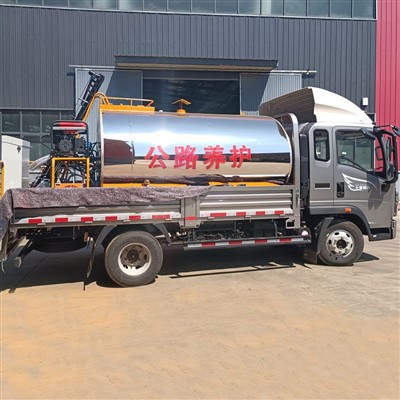
As a supplier of cationic emulsifiers, I've seen firsthand the importance of quality control in our industry. Cationic emulsifiers play a crucial role in various applications, especially in the field of road construction and maintenance. In this blog, I'll share some of the key quality control measures we implement to ensure that our cationic emulsifiers meet the highest standards.
1. Raw Material Inspection
The quality of cationic emulsifiers starts with the raw materials. We source our raw materials from trusted suppliers who have a proven track record of providing high - quality substances. Each batch of raw materials undergoes a thorough inspection upon arrival at our facility.
We check for physical properties such as appearance, color, and odor. For example, any sign of discoloration or an unusual odor could indicate contamination or degradation of the raw material. We also conduct chemical analysis using techniques like chromatography and spectroscopy. These methods allow us to accurately determine the chemical composition of the raw materials, ensuring that they contain the correct active ingredients in the right proportions.


2. Production Process Monitoring
During the production of cationic emulsifiers, we closely monitor every step of the process. Temperature, pressure, and mixing time are critical parameters that can significantly affect the quality of the final product.
We use advanced sensors and control systems to maintain precise temperature and pressure throughout the production. For instance, if the reaction temperature is too high or too low, it can lead to incomplete reactions or the formation of unwanted by - products. Similarly, proper mixing is essential to ensure a homogeneous product. We carefully time the mixing process and may occasionally perform in - process sampling to check the properties of the intermediate product.
3. Particle Size Analysis
The particle size of the emulsion produced by cationic emulsifiers is a key factor in its performance. Smaller and more uniform particle sizes generally result in better stability and performance of the emulsion in applications such as Emulsified Asphalt Liquid.
We use techniques like laser diffraction particle size analysis to measure the particle size distribution of our cationic emulsifiers. This allows us to ensure that the particle sizes fall within the desired range. If the particle sizes are too large, the emulsion may separate or settle over time, which is unacceptable in many applications.
4. Stability Testing
Stability is a crucial characteristic of cationic emulsifiers. An unstable emulsifier can lead to the separation of the emulsion, causing problems in end - use applications. We conduct various stability tests to assess the long - term stability of our products.
One common test is the storage test. We store samples of the cationic emulsifier at different temperatures and for different periods of time. We then observe the samples for signs of separation, sedimentation, or changes in viscosity. If any instability is detected, we adjust our production process or formulation to improve the stability of the product.
5. Performance Testing in Real - World Applications
To truly ensure the quality of our cationic emulsifiers, we test them in real - world applications. For example, in the case of road construction, we work with contractors to use our emulsifiers in actual road paving projects.
We monitor the performance of the cationic emulsifiers during the construction process and in the long - term after the road is completed. We look at factors such as adhesion, curing time, and resistance to weathering. This real - world feedback helps us to identify any potential issues with our products and make necessary improvements.
6. Comparison with Industry Standards
We always compare our cationic emulsifiers with industry standards. There are various national and international standards for cationic emulsifiers, which define the acceptable ranges for different properties such as pH, solid content, and emulsifying ability.
By regularly testing our products against these standards, we can ensure that our cationic emulsifiers are competitive in the market and meet the requirements of our customers. If our products do not meet the standards, we take immediate action to rectify the situation, whether it's adjusting the production process or changing the raw material suppliers.
7. Quality Assurance through Documentation
Documentation is an important part of our quality control system. We maintain detailed records of every batch of cationic emulsifiers we produce. This includes information about the raw materials used, production parameters, test results, and any customer feedback.
These records not only help us to track the quality of our products but also provide transparency to our customers. In case of any quality issues or questions, we can easily refer to these documents to find out what happened during the production process and take appropriate corrective actions.
8. Employee Training
Our employees are the backbone of our quality control efforts. We provide regular training to our production and quality control staff to ensure that they are up - to - date with the latest industry knowledge and best practices.
We train them on how to use the latest testing equipment, interpret the test results accurately, and follow the standard operating procedures during production. A well - trained workforce is more likely to produce high - quality cationic emulsifiers and detect any potential quality issues early on.
9. Supplier Evaluation and Management
Just as we inspect the raw materials, we also evaluate and manage our suppliers. We conduct regular audits of our suppliers' facilities to ensure that they follow good manufacturing practices.
We also keep track of the quality of the materials supplied by different vendors over time. If a particular supplier consistently provides sub - standard raw materials, we may consider switching to a different supplier. This helps us to maintain a high level of quality in our cationic emulsifiers.
10. Continuous Improvement
Quality control is not a one - time thing; it's an ongoing process. We are constantly looking for ways to improve the quality of our cationic emulsifiers. We encourage our employees to suggest new ideas for improving the production process, testing methods, or product formulation.
We also invest in research and development to explore new technologies and materials that can enhance the performance of our cationic emulsifiers. By continuously improving our products, we can better meet the needs of our customers and stay competitive in the market.
If you are in the market for high - quality cationic emulsifiers, we'd love to hear from you. Our team of experts is ready to work with you to understand your specific requirements and provide you with the best - suited products. Whether you need small quantities for a research project or large - scale supplies for a major construction project, we've got you covered. Contact us today to start a discussion about your procurement needs.
References
- ASTM International standards for bituminous emulsions and related products
- European Committee for Standardization (CEN) standards for road construction materials
- Technical literature from leading research institutions in the field of emulsification technology