Hey there! As a supplier of asphalt rubber plants, I'm stoked to share with you all the juicy details about the technical parameters of these amazing machines. Whether you're in the road construction business or just curious about how asphalt rubber is made, this blog post is for you.
Let's start with the basics. An asphalt rubber plant is a specialized piece of equipment used to produce asphalt rubber, which is a high - performance paving material. It combines asphalt binder with rubber particles, usually from recycled tires, to create a more durable and flexible pavement.
Capacity
One of the most important technical parameters of an asphalt rubber plant is its capacity. This is measured in tons per hour (t/h) and indicates how much asphalt rubber the plant can produce within an hour. The capacity you need depends on the scale of your projects. For small - scale road repairs and local projects, a plant with a capacity of 5 - 10 t/h might be sufficient. But for large - scale highway construction, you'll probably need a plant with a capacity of 20 t/h or more.
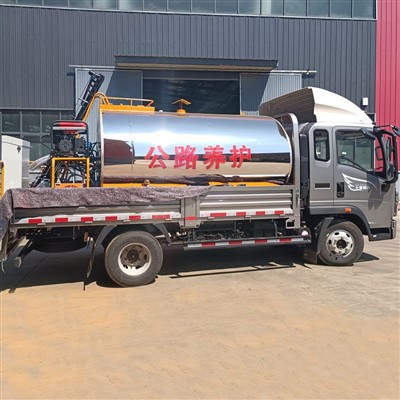
Our Mobile Rubber Asphalt Plant comes in different capacity options, so you can choose the one that fits your needs perfectly. It's super convenient for on - site production, especially for projects that require mobility.
Temperature Control
Temperature control is crucial in the production of asphalt rubber. The asphalt binder needs to be heated to a specific temperature to ensure proper mixing with the rubber particles. Generally, the temperature of the asphalt binder is maintained between 180°C and 200°C. If the temperature is too low, the rubber particles won't blend well with the asphalt, resulting in an uneven mixture. On the other hand, if the temperature is too high, it can cause the asphalt to oxidize and the rubber to degrade.
Our asphalt rubber plants are equipped with advanced temperature control systems. These systems use sensors to monitor the temperature in real - time and adjust the heating elements accordingly. This ensures that the asphalt rubber is produced at the optimal temperature every time.
Mixing Efficiency
The mixing efficiency of an asphalt rubber plant determines how well the rubber particles are dispersed in the asphalt binder. A high - quality plant should be able to achieve a homogeneous mixture in a short period of time. The mixing process usually involves high - shear mixing, which breaks down the rubber particles and distributes them evenly throughout the asphalt.
Our Rubber Asphalt Production Equipment uses state - of - the - art mixing technology. The mixing chambers are designed to maximize the contact between the rubber particles and the asphalt, ensuring a thorough and efficient mix. This results in a high - quality asphalt rubber product with excellent performance characteristics.
Particle Size of Rubber
The particle size of the rubber used in the asphalt rubber production also matters. Different particle sizes can affect the properties of the final product. Generally, the particle size of the rubber ranges from 0.5 mm to 3 mm. Smaller particles tend to provide better adhesion and flexibility, while larger particles can improve the resistance to rutting and cracking.
Our asphalt rubber plants can handle a wide range of rubber particle sizes. You can adjust the particle size according to the specific requirements of your project. This flexibility allows you to produce asphalt rubber with the desired properties for different applications.
Energy Consumption
Energy consumption is an important consideration for any industrial equipment. An asphalt rubber plant that consumes less energy is not only more cost - effective but also more environmentally friendly. Our plants are designed with energy - saving features. For example, the heating systems are optimized to use energy efficiently, and the insulation materials reduce heat loss.
By choosing our asphalt rubber plants, you can save on energy costs in the long run while still getting high - quality production.
Automation Level
In today's fast - paced world, automation is key. An asphalt rubber plant with a high level of automation can improve productivity, reduce labor costs, and minimize human errors. Our Asphalt Rubber Blending Plant is highly automated. It can control the feeding of raw materials, the mixing process, and the discharge of the finished product automatically.
The control panel of our plant is user - friendly, allowing operators to monitor and adjust the production process easily. With just a few clicks, you can set the parameters and let the plant do its job.
Safety Features
Safety is always a top priority. Our asphalt rubber plants are equipped with a variety of safety features. For example, there are emergency stop buttons in case of any unexpected situations. The heating elements are protected to prevent overheating and potential fires. The equipment also has safety guards to prevent operators from getting injured by moving parts.
We take safety seriously, and we make sure that our plants meet all the relevant safety standards.
Maintenance Requirements
Easy maintenance is another advantage of our asphalt rubber plants. We design our equipment with accessibility in mind. The key components are easy to reach for inspection and maintenance. Regular maintenance can extend the lifespan of the plant and ensure its stable operation.
We also provide comprehensive after - sales service, including technical support and spare parts supply. So you don't have to worry about maintenance issues.
If you're in the market for an asphalt rubber plant, I hope this blog post has given you a better understanding of the technical parameters you should consider. Our plants are designed to meet the highest standards in terms of capacity, temperature control, mixing efficiency, and more. Whether you need a mobile plant for on - site production or a large - scale blending plant for major projects, we've got you covered.
If you have any questions or want to discuss your specific requirements, feel free to reach out. We're here to help you make the right choice for your asphalt rubber production needs. Let's work together to build better roads with high - quality asphalt rubber!


References
- "Asphalt Rubber Technology Manual", Federal Highway Administration
- "Pavement Materials and Pavement Design", Elsevier