Emulsifiers play a pivotal role in various industries, especially in the realm of asphalt emulsification. As a proud supplier of Anionic Emulsifier, I am often asked about the differences between anionic and non - ionic emulsifiers. In this blog, I'll delve into the scientific aspects of these two types of emulsifiers, their characteristics, applications, and advantages, to help you make an informed decision when choosing the right emulsifier for your needs.
Understanding Emulsifiers
Before we explore the differences between anionic and non - ionic emulsifiers, it's essential to understand what emulsifiers are. An emulsifier is a substance that stabilizes an emulsion, which is a mixture of two immiscible liquids, typically oil and water. Emulsifiers work by reducing the surface tension between the two liquids, allowing them to mix more easily and preventing them from separating over time.


Anionic Emulsifiers
Anionic emulsifiers are surfactants that carry a negative charge on their hydrophilic (water - loving) end. This negative charge gives them unique properties that make them suitable for a variety of applications.
Chemical Structure and Properties
The chemical structure of anionic emulsifiers consists of a long hydrocarbon chain (hydrophobic or oil - loving part) attached to a negatively charged functional group, such as a carboxylate, sulfate, or sulfonate. This structure allows the emulsifier to orient itself at the interface between the oil and water phases, with the hydrophobic tail in the oil phase and the negatively charged head in the water phase.
The negative charge on anionic emulsifiers provides electrostatic repulsion between the droplets of the dispersed phase, preventing them from coalescing and thus stabilizing the emulsion. Anionic emulsifiers are generally more effective at low pH values, as the negative charge is better maintained under acidic conditions.
Applications
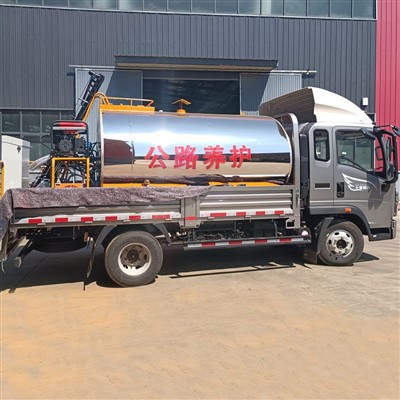
One of the most significant applications of anionic emulsifiers is in the production of Emulsified Asphalt Liquid. In the construction industry, emulsified asphalt is widely used for road paving, surface treatments, and waterproofing. Anionic emulsifiers help to disperse the asphalt particles in water, creating a stable emulsion that can be easily applied.
Anionic emulsifiers are also used in the textile industry for dyeing and finishing processes, in the agricultural industry for pesticide formulations, and in the food industry for products such as salad dressings and mayonnaise.
Advantages
- High Stability: Anionic emulsifiers provide excellent stability to emulsions, especially at low pH values. This stability ensures that the emulsion remains intact during storage and application.
- Good Wetting Properties: The negative charge on anionic emulsifiers allows them to wet surfaces effectively, which is beneficial in applications such as road paving, where the emulsified asphalt needs to adhere well to the road surface.
- Cost - Effective: Anionic emulsifiers are generally more cost - effective compared to some other types of emulsifiers, making them a popular choice for large - scale industrial applications.
Non - Ionic Emulsifiers
Non - ionic emulsifiers, as the name suggests, do not carry an electric charge. Instead, they rely on other mechanisms to stabilize emulsions.
Chemical Structure and Properties
Non - ionic emulsifiers typically consist of a hydrophilic part, such as a polyethylene glycol chain, and a hydrophobic part, such as a long - chain alcohol or fatty acid. The hydrophilic part interacts with water molecules through hydrogen bonding, while the hydrophobic part interacts with the oil phase.
Non - ionic emulsifiers are less affected by pH changes compared to anionic emulsifiers. They can function effectively over a wide range of pH values, from acidic to alkaline conditions.
Applications
Non - ionic emulsifiers are commonly used in the cosmetic and personal care industry for products such as creams, lotions, and shampoos. They are also used in the pharmaceutical industry for drug delivery systems, in the paint industry for emulsion paints, and in the cleaning industry for detergents and cleaners.
In the asphalt industry, non - ionic emulsifiers can be used in certain applications where a more stable emulsion is required under a wide range of pH conditions or where compatibility with other additives is crucial.
Advantages
- pH Independence: Non - ionic emulsifiers can maintain their emulsifying properties over a wide range of pH values, which makes them suitable for applications where the pH of the system may vary.
- Low Sensitivity to Electrolytes: Unlike anionic emulsifiers, non - ionic emulsifiers are less affected by the presence of electrolytes in the system. This property is beneficial in applications where the emulsion may come into contact with salts or other ionic substances.
- Good Compatibility: Non - ionic emulsifiers are generally more compatible with other types of chemicals and additives, which allows for greater flexibility in formulating products.
Key Differences between Anionic and Non - Ionic Emulsifiers
Charge and pH Sensitivity
The most obvious difference between anionic and non - ionic emulsifiers is the presence or absence of an electric charge. Anionic emulsifiers are negatively charged and are more effective at low pH values, while non - ionic emulsifiers are uncharged and can function over a wide pH range.
Stability Mechanisms
Anionic emulsifiers stabilize emulsions primarily through electrostatic repulsion between the negatively charged droplets of the dispersed phase. Non - ionic emulsifiers, on the other hand, rely on steric hindrance and hydrogen bonding to prevent droplet coalescence.
Compatibility with Other Substances
Anionic emulsifiers may react with cationic substances, leading to a decrease in emulsion stability. Non - ionic emulsifiers, being uncharged, are generally more compatible with both anionic and cationic substances, as well as with other non - ionic additives.
Cost
Anionic emulsifiers are usually more cost - effective than non - ionic emulsifiers, especially for large - scale industrial applications. This cost difference can be a significant factor when choosing an emulsifier for a particular application.
Choosing the Right Emulsifier
When choosing between anionic and non - ionic emulsifiers, several factors need to be considered.
Application Requirements
If the application requires a stable emulsion at low pH values, such as in the production of Emulsified Asphalt Liquid, anionic emulsifiers may be the better choice. On the other hand, if the pH of the system is likely to vary or if compatibility with other additives is crucial, non - ionic emulsifiers may be more suitable.
Cost
Cost is always an important consideration, especially for large - scale industrial applications. Anionic emulsifiers are generally more cost - effective, but if the specific properties of non - ionic emulsifiers are required, the additional cost may be justified.
Compatibility with Other Ingredients
If the formulation contains other substances, such as cationic additives, non - ionic emulsifiers may be a better choice due to their greater compatibility.
Conclusion
In conclusion, both anionic and non - ionic emulsifiers have their unique properties, advantages, and applications. As a supplier of Anionic Emulsifier, I understand the importance of choosing the right emulsifier for your specific needs. Whether you are in the asphalt industry, the cosmetic industry, or any other industry that requires emulsification, it's crucial to consider factors such as pH sensitivity, stability mechanisms, compatibility, and cost.
If you are interested in learning more about anionic emulsifiers or are looking to purchase high - quality Asphalt Emulsifier for your projects, I encourage you to reach out. We can discuss your requirements in detail and provide you with the best solutions to meet your emulsification needs. Let's work together to achieve the best results for your applications.
References
- McClements, D. J. (2012). Food Emulsions: Principles, Practice, and Techniques. CRC Press.
- Schwartz, J., & Perry, J. (1999). Surfactants, Emulsifiers, and Dispersants. Kirk - Othmer Encyclopedia of Chemical Technology.
- Shah, D. O. (1998). Anionic Surfactants: Physical Chemistry of Surfactant Action. Marcel Dekker.