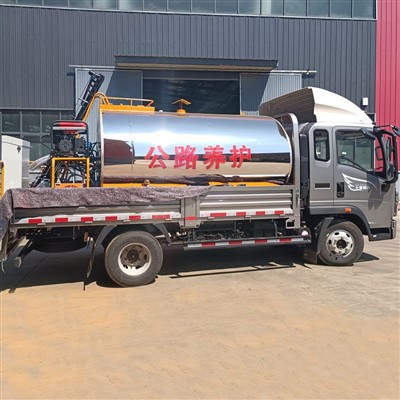
Hey there! I'm a supplier of asphalt rubber plants, and today I wanna chat about one of the key components in these plants: the storage tank. You might be wondering, "What's the big deal about a storage tank in an asphalt rubber plant?" Well, let me break it down for you.
First off, let's understand what asphalt rubber is. Asphalt rubber is a blend of asphalt binder and rubber particles, usually from recycled tires. It's a great alternative to traditional asphalt because it offers better performance in terms of durability, resistance to cracking, and noise reduction. Now, a storage tank plays a crucial role in the whole process of making and using asphalt rubber.


Storage of Raw Materials
One of the primary functions of a storage tank in an asphalt rubber plant is to store the raw materials. We've got two main ingredients here: asphalt and rubber.
Asphalt is a thick, sticky substance that needs to be kept at a certain temperature to maintain its fluidity. Storage tanks are designed to keep the asphalt at the right temperature, usually around 150 - 180 degrees Celsius. This way, when it's time to mix it with the rubber, it can flow smoothly through the pipes and into the mixing chamber.
The rubber, on the other hand, is often in the form of crumb rubber. It's stored in a separate tank until it's ready to be added to the asphalt. The storage tank for the rubber helps to keep it dry and free from contaminants. This is important because any moisture or impurities in the rubber can affect the quality of the final asphalt rubber product.
Mixing and Blending
Once the raw materials are stored in their respective tanks, the next step is to mix them together. The storage tanks are connected to the mixing chamber through a series of pipes and valves.
The asphalt is pumped from its storage tank into the mixing chamber at a controlled rate. At the same time, the crumb rubber is also fed into the chamber in the right proportion. The mixing chamber is where the magic happens. Here, the asphalt and rubber are thoroughly mixed to create a homogenous blend of asphalt rubber.
The storage tanks play a vital role in this process by ensuring a continuous supply of raw materials. They act as a buffer, so even if there are any temporary disruptions in the supply of asphalt or rubber, the plant can still keep running for a while.
Storage of the Final Product
After the asphalt and rubber are mixed, the resulting asphalt rubber is then transferred to another storage tank. This tank is where the final product is stored until it's ready to be used.
The storage tank for the asphalt rubber needs to be designed to maintain the quality of the product. It should be insulated to keep the asphalt rubber at the right temperature and prevent it from cooling down too quickly. Cooling can cause the asphalt rubber to become too thick and hard, making it difficult to handle and apply.
Moreover, the tank should also be equipped with agitators to keep the asphalt rubber well - mixed. This ensures that the rubber particles remain evenly distributed throughout the asphalt, which is essential for the performance of the final product.
Quality Control
Storage tanks also play a role in quality control. Samples of the raw materials and the final product can be taken from the storage tanks for testing.
For example, the asphalt in the storage tank can be tested for its viscosity, penetration, and softening point. These tests help to ensure that the asphalt meets the required specifications. Similarly, the crumb rubber can be tested for its particle size distribution, moisture content, and rubber content.
For the final asphalt rubber product, tests can be conducted to check its performance properties such as elasticity, adhesion, and resistance to aging. By taking samples from the storage tanks, we can monitor the quality of the product at different stages of the production process and make any necessary adjustments.
Flexibility in Production
Having storage tanks in an asphalt rubber plant provides flexibility in production. The plant can produce asphalt rubber in batches and store it in the tanks until there is a demand for it.
This is especially useful when the demand for asphalt rubber is not constant. For example, during the off - season, when there are fewer road construction projects, the plant can still operate at a lower capacity and store the excess product in the tanks. Then, when the demand picks up, the stored asphalt rubber can be used without having to ramp up production immediately.
Importance in Transportation
Storage tanks also facilitate the transportation of the asphalt rubber. Once the product is stored in the tanks, it can be easily loaded onto trucks or other transportation vehicles.
The tanks are designed with outlets and valves that allow for easy and efficient transfer of the asphalt rubber. This ensures that the product can be transported safely and quickly to the construction site.
If you're interested in learning more about the equipment used in asphalt rubber production, you can check out Rubber Asphalt Production Equipment. It provides detailed information about the various components of an asphalt rubber plant, including the storage tanks. You can also visit Rubber Asphalt Plant and Asphalt Rubber Blending Plant for more in - depth knowledge about asphalt rubber plants.
In conclusion, storage tanks are an essential part of an asphalt rubber plant. They play multiple functions, from storing raw materials to ensuring the quality and flexibility of the final product. If you're in the market for an asphalt rubber plant or need to upgrade your existing one, don't overlook the importance of the storage tanks.
If you're interested in purchasing an asphalt rubber plant or have any questions about our products, feel free to reach out. We're here to help you make the best decision for your business.
References
- "Asphalt Rubber Technology Manual" by the Federal Highway Administration
- "Handbook of Asphalt Rubber" by various industry experts