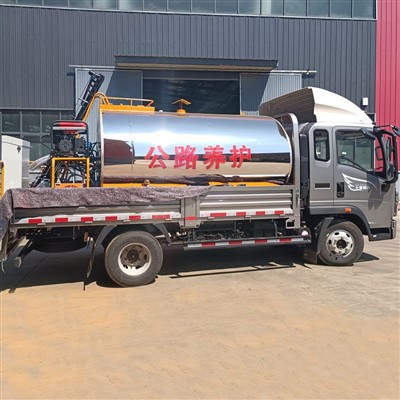
As a seasoned supplier of Asphalt Melting Equipment, I've witnessed firsthand the critical role that heat sources play in the efficient operation of these machines. Asphalt, also known as bitumen, is a thick, sticky substance that needs to be heated to a specific temperature to become workable for various applications such as road construction, roofing, and waterproofing. In this blog, I'll delve into the different heat sources used in asphalt melting equipment, their advantages, and disadvantages.


Combustion of Fossil Fuels
One of the most common heat sources for asphalt melting equipment is the combustion of fossil fuels, including diesel, gasoline, and natural gas. These fuels are burned in a burner, which transfers the heat to the asphalt through a heat exchanger.
Advantages
- High Energy Density: Fossil fuels have a high energy density, which means they can produce a large amount of heat in a relatively small volume. This makes them ideal for applications where a high heat output is required, such as large-scale asphalt melting plants.
- Reliability: Fossil fuels are widely available and can be stored easily, ensuring a reliable supply of heat. This is especially important for continuous operation in industrial settings.
- Controllability: The heat output from fossil fuel burners can be easily controlled, allowing operators to adjust the temperature of the asphalt precisely.
Disadvantages
- Environmental Impact: The combustion of fossil fuels releases greenhouse gases, such as carbon dioxide and nitrogen oxides, which contribute to climate change and air pollution. This has led to increasing regulations and a growing demand for more environmentally friendly alternatives.
- Cost: The price of fossil fuels can be volatile, which can affect the operating costs of asphalt melting equipment. Additionally, the cost of installing and maintaining a fossil fuel burner system can be relatively high.
Electric Heating
Electric heating is another popular option for asphalt melting equipment. In this method, electricity is used to generate heat, which is then transferred to the asphalt.
Advantages
- Clean and Environmentally Friendly: Electric heating produces no emissions, making it a more sustainable option compared to fossil fuel combustion. This is particularly important for applications in environmentally sensitive areas or where strict emission regulations apply.
- Precise Temperature Control: Electric heating systems can provide very precise temperature control, ensuring that the asphalt is heated to the exact temperature required for optimal performance.
- Low Maintenance: Electric heating elements are generally more reliable and require less maintenance compared to fossil fuel burners.
Disadvantages
- High Energy Consumption: Electric heating can be energy-intensive, especially for large-scale applications. This can result in high electricity bills, making it less cost-effective in some cases.
- Dependency on the Power Grid: Electric heating systems rely on a stable power supply. In areas with unreliable electricity or during power outages, the operation of the asphalt melting equipment may be disrupted.
Steam Heating
Steam heating is a traditional method that has been used in asphalt melting equipment for many years. In this process, steam is generated in a boiler and then used to heat the asphalt.
Advantages
- Efficient Heat Transfer: Steam has a high heat transfer coefficient, which means it can transfer heat quickly and efficiently to the asphalt. This results in faster melting times and improved productivity.
- Uniform Heating: Steam heating provides uniform heating throughout the asphalt, ensuring consistent quality and performance.
- Versatility: Steam can be used for other processes in addition to asphalt melting, such as preheating and cleaning, making it a versatile option.
Disadvantages
- Complex System: Steam heating systems are relatively complex and require a boiler, piping, and other equipment. This increases the initial investment and maintenance costs.
- Safety Concerns: Steam is a high-pressure and high-temperature medium, which poses safety risks if not handled properly. Operators need to be trained to operate the steam heating system safely.
Solar Heating
Solar heating is an emerging technology that uses solar energy to heat the asphalt. This method is becoming increasingly popular due to its environmental benefits and potential cost savings.
Advantages
- Renewable and Sustainable: Solar energy is a renewable resource that produces no emissions, making it a clean and sustainable option for asphalt melting.
- Low Operating Costs: Once the solar heating system is installed, the operating costs are relatively low, as the energy source is free.
- Long-Term Investment: Solar heating systems have a long lifespan and can provide a reliable source of heat for many years, making them a good long-term investment.
Disadvantages
- Intermittent Energy Source: Solar energy is dependent on sunlight, which means it is an intermittent energy source. This can be a challenge for continuous operation, especially in areas with limited sunlight or during cloudy days.
- High Initial Investment: The installation cost of a solar heating system can be relatively high, which may be a barrier for some users.
Conclusion
In conclusion, there are several heat sources available for asphalt melting equipment, each with its own advantages and disadvantages. The choice of heat source depends on various factors, such as the scale of the operation, environmental requirements, cost considerations, and availability of energy sources. As a supplier of Bitumen Melting Equipment, Bitumen Melting Plant, and Asphalt Melting Plant, we understand the importance of selecting the right heat source for your specific needs. We offer a range of high-quality asphalt melting equipment with different heat source options to meet the diverse requirements of our customers.
If you're interested in learning more about our asphalt melting equipment or need assistance in choosing the right heat source for your application, please don't hesitate to contact us. Our team of experts is ready to provide you with detailed information and support to help you make an informed decision.
References
- Fwa, T. F., & Ooi, B. S. (Eds.). (2016). Handbook of Asphalt Paving Technology. Springer.
- Kandhal, P. S., & Mallick, R. B. (1998). Hot Mix Asphalt Materials, Mixture Design, and Construction. NAPA.
- Roberts, F. L., Kandhal, P. S., Brown, E. R., Lee, D. Y., & Kennedy, T. W. (1996). Hot Mix Asphalt: Materials, Mixture Design, and Construction. NAPA.