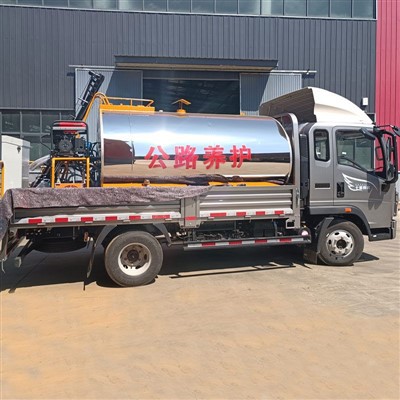
Hey there! I'm a supplier of Bitumen Melting Plants, and today I wanna talk about a super important topic: What is the melting time of bitumen in a bitumen melting plant?
First off, let's understand what bitumen is. Bitumen, also known as asphalt in some regions, is a sticky, black, and highly viscous liquid or semi - solid form of petroleum. It's widely used in road construction, waterproofing, and roofing. When we talk about a bitumen melting plant, we're referring to a facility where solid or semi - solid bitumen is heated to turn it into a liquid state so that it can be easily transported and used in various applications. You can check out our Bitumen Melting Plant for more details on the equipment.
The melting time of bitumen in a bitumen melting plant isn't a one - size - fits - all answer. It depends on several factors. One of the most significant factors is the initial state of the bitumen. Bitumen can come in different forms, like blocks, drums, or bulk. If it's in block form, it'll take longer to melt compared to bitumen in drums or in a bulk liquid form. The size and density of the bitumen blocks play a crucial role. Larger and denser blocks have more mass to heat up, so they need more time and energy to reach the melting point.
Another factor is the heating method used in the bitumen melting plant. There are different heating methods, such as direct heating, indirect heating, and steam heating. Direct heating involves applying heat directly to the bitumen, which can be quite fast but also requires careful control to avoid overheating and damaging the bitumen. Indirect heating, on the other hand, uses a heat transfer medium to heat the bitumen. This method is generally safer but may take a bit longer. Steam heating is a popular choice as it provides a more even and controlled heat source. However, setting up a steam - based heating system can be complex, and the melting time also depends on the steam pressure and temperature. You can learn more about different heating options with our Asphalt Melting Equipment.
The temperature setting in the bitumen melting plant is also key. Bitumen typically starts to soften at around 80 - 100 degrees Celsius and reaches a fully liquid state at higher temperatures, usually between 120 - 180 degrees Celsius. The higher the set temperature, the faster the bitumen will melt, but again, we need to be careful not to go too high. Overheating can cause the bitumen to oxidize, which changes its properties and reduces its quality.
The capacity of the bitumen melting plant is another factor that affects the melting time. A larger - capacity plant can handle more bitumen at once, but it also takes longer to heat up the entire batch. Smaller plants, on the other hand, can heat up the bitumen faster but may not be suitable for large - scale projects.
Let's take a closer look at some practical scenarios. If you're using a small - scale bitumen melting plant with a direct - heating system and you're melting bitumen from drums, you might expect the melting time to be around 1 - 2 hours. This is assuming that the initial temperature of the bitumen is at room temperature and the heating system is set to a temperature of around 150 degrees Celsius.
For a medium - sized plant using indirect heating to melt bitumen blocks, the melting time could be anywhere from 3 - 5 hours. The process is slower because the heat has to penetrate through the block and heat it evenly from the outside in.
In a large - scale industrial bitumen melting plant with a steam - heating system, melting a large quantity of bulk bitumen can take 5 - 8 hours or even longer. The large volume of bitumen and the need to ensure uniform heating throughout the batch contribute to the longer melting time.
Now, you might be wondering how to optimize the melting time in a bitumen melting plant. First, make sure you choose the right heating method for your needs. If time is of the essence, direct heating might be a good option, but make sure you have the right controls in place. Second, pre - heating the bitumen can significantly reduce the melting time. You can do this by storing the bitumen in a warm area before it goes into the melting plant. Third, maintain the right temperature and pressure settings in the plant. Regularly calibrate your equipment to ensure accurate temperature and pressure readings.
If you're in the market for a bitumen melting plant or need more information on how to optimize the melting process, don't hesitate to reach out. We're here to help you find the best solution for your bitumen melting needs. Whether you're a small - scale contractor or a large - scale industrial operation, our Asphalt Melting Machine can meet your requirements.
Contact us today to start a conversation about your bitumen melting needs. We can provide you with detailed information, quotes, and even arrange a demonstration of our equipment. Let's work together to make your bitumen melting process more efficient and cost - effective.


References:
- "Bitumen Technology and Refining" by J. A. Peters
- "Asphalt Paving Handbook" by the Asphalt Institute