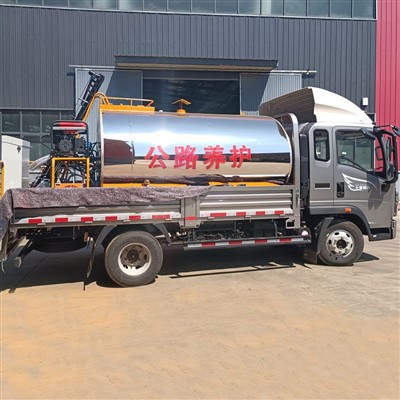
Bitumen emulsions are widely used in the construction industry, especially in road paving and maintenance. Nano-modified bitumen emulsions, a relatively new development, combine the advantages of bitumen emulsions with the unique properties of nanomaterials. As a leading bitumen emulsifier supplier, I am excited to explore the role of bitumen emulsifiers in nano-modified bitumen emulsions.
Understanding Bitumen Emulsions and Nano-Modified Bitumen Emulsions
Bitumen emulsions are a mixture of bitumen, water, and an emulsifier. The emulsifier plays a crucial role in keeping the bitumen droplets dispersed in the water phase, preventing them from coalescing. This allows for easy handling and application of the bitumen at lower temperatures compared to traditional hot bitumen, reducing energy consumption and environmental impact.
Nano-modified bitumen emulsions take this a step further by incorporating nanomaterials such as nanoclays, carbon nanotubes, or nano-silica. These nanomaterials can enhance the mechanical properties, durability, and performance of the bitumen emulsion. For example, they can improve the stiffness, strength, and resistance to aging, rutting, and cracking of the asphalt pavement.
The Role of Bitumen Emulsifiers in Nano-Modified Bitumen Emulsions
1. Dispersion of Nanomaterials
One of the primary roles of bitumen emulsifiers in nano-modified bitumen emulsions is to aid in the dispersion of nanomaterials. Nanomaterials tend to agglomerate due to their high surface energy, which can reduce their effectiveness. The emulsifier molecules can adsorb onto the surface of the nanomaterials, creating a steric or electrostatic barrier that prevents agglomeration and ensures a uniform dispersion in the bitumen emulsion. This uniform dispersion is essential for the nanomaterials to发挥 their full potential in enhancing the properties of the bitumen.
2. Stabilization of the Emulsion
Just as in traditional bitumen emulsions, bitumen emulsifiers are responsible for stabilizing the nano-modified bitumen emulsion. The emulsifier molecules form a protective layer around the bitumen droplets, preventing them from coalescing and separating from the water phase. In the presence of nanomaterials, the emulsifier also needs to interact with the nanomaterials and the bitumen droplets in a way that maintains the stability of the entire system. This is crucial for the long-term storage and application of the nano-modified bitumen emulsion.
3. Compatibility with Nanomaterials
The bitumen emulsifier must be compatible with the nanomaterials used in the nano-modified bitumen emulsion. Different nanomaterials have different surface chemistries and properties, and the emulsifier needs to be able to interact with them effectively. For example, some nanomaterials may require an emulsifier with specific functional groups to ensure good adsorption and dispersion. Compatibility issues can lead to poor dispersion, instability of the emulsion, and reduced performance of the nano-modified bitumen.


4. Enhancement of Interfacial Properties
The emulsifier can also enhance the interfacial properties between the bitumen, nanomaterials, and aggregates in the asphalt mixture. It can improve the adhesion between the bitumen and the aggregates, which is crucial for the strength and durability of the asphalt pavement. In nano-modified bitumen emulsions, the presence of nanomaterials can further modify the interfacial properties, and the emulsifier can work in conjunction with the nanomaterials to optimize these properties.
Types of Bitumen Emulsifiers for Nano-Modified Bitumen Emulsions
1. Anionic Emulsifiers
Anionic emulsifiers are commonly used in bitumen emulsions. They have negatively charged hydrophilic groups, which can interact with the positively charged surfaces of some nanomaterials. Anionic Emulsifier can provide good stability to the bitumen emulsion and are often used in applications where a fast-setting emulsion is required. Anionic Bitumen Emulsion is suitable for various road construction and maintenance projects.
2. Cationic Emulsifiers
Cationic emulsifiers have positively charged hydrophilic groups. They can interact well with the negatively charged surfaces of many aggregates and some nanomaterials. Cationic emulsifiers are known for their good adhesion to aggregates and are often used in applications where a high degree of adhesion is required, such as in chip seals and microsurfacing.
3. Non - ionic Emulsifiers
Non - ionic emulsifiers have no charged hydrophilic groups. They are often used in combination with anionic or cationic emulsifiers to improve the stability and performance of the bitumen emulsion. Non - ionic emulsifiers can provide good compatibility with a wide range of nanomaterials and can help to reduce the sensitivity of the emulsion to changes in pH and electrolyte concentration.
Advantages of Using Bitumen Emulsifiers in Nano-Modified Bitumen Emulsions
1. Improved Performance
The use of bitumen emulsifiers in nano-modified bitumen emulsions can significantly improve the performance of the asphalt pavement. The uniform dispersion of nanomaterials and the stability of the emulsion ensure that the nanomaterials can effectively enhance the mechanical properties, durability, and resistance to various distresses of the asphalt. This can lead to longer - lasting pavements with reduced maintenance costs.
2. Environmental Benefits
Nano-modified bitumen emulsions can be applied at lower temperatures compared to traditional hot bitumen, reducing energy consumption and greenhouse gas emissions. The use of bitumen emulsifiers helps to maintain the stability and workability of the emulsion at these lower temperatures, making the process more environmentally friendly.
3. Cost - Effectiveness
Although the initial cost of nano-modified bitumen emulsions may be higher due to the use of nanomaterials, the improved performance and longer service life of the asphalt pavement can result in cost savings in the long run. The bitumen emulsifier plays a crucial role in ensuring that the nanomaterials are used effectively, maximizing the cost - effectiveness of the nano-modified bitumen emulsion.
Challenges and Future Directions
1. Challenges
One of the main challenges in using bitumen emulsifiers in nano-modified bitumen emulsions is the optimization of the emulsifier - nanomaterial - bitumen system. Finding the right combination of emulsifier, nanomaterial, and bitumen with the appropriate dosage and processing conditions is a complex task. Additionally, the long - term stability and performance of nano-modified bitumen emulsions under different environmental conditions need to be further studied.
2. Future Directions
Future research should focus on developing more advanced bitumen emulsifiers that are specifically designed for nano-modified bitumen emulsions. These emulsifiers should have better compatibility with a wider range of nanomaterials, provide improved dispersion and stability, and enhance the interfacial properties of the asphalt mixture. Furthermore, the development of more sustainable and cost - effective nanomaterials and emulsifiers is also an important direction for the future.
Conclusion
As a bitumen emulsifier supplier, I understand the crucial role that bitumen emulsifiers play in nano-modified bitumen emulsions. They are essential for the dispersion of nanomaterials, the stabilization of the emulsion, the compatibility with nanomaterials, and the enhancement of interfacial properties. The use of bitumen emulsifiers in nano-modified bitumen emulsions offers many advantages, including improved performance, environmental benefits, and cost - effectiveness.
If you are interested in learning more about our Asphalt Emulsifier products or have any questions regarding the use of bitumen emulsifiers in nano-modified bitumen emulsions, please feel free to contact us. We are committed to providing high - quality bitumen emulsifiers and technical support to meet your specific needs. Let's work together to create more sustainable and high - performance asphalt pavements.
References
- Bahia, H. U., & Davies, T. (2007). Characterization of bitumen using advanced rheological methods. Journal of the Association of Asphalt Paving Technologists, 76, 1 - 47.
- Xiao, F., & Amirkhanian, S. N. (2009). Influence of nanosilica on the properties of asphalt binder. Construction and Building Materials, 23(5), 1915 - 1921.
- Liu, H., Huang, B., & You, Z. (2012). Evaluation of the effect of nanoclay on the properties of asphalt binder and mixture. Construction and Building Materials, 31, 102 - 109.