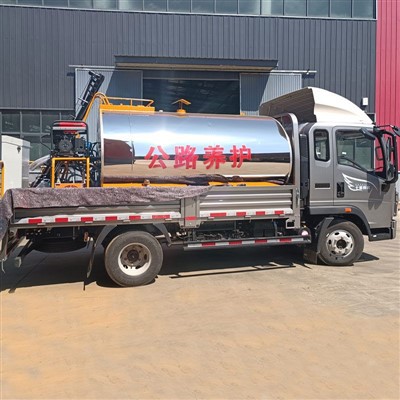
As a supplier of Asphalt Melting Machines, I often encounter inquiries from customers about the appropriate temperature range for asphalt melting in our machines. This is a crucial aspect as it directly impacts the quality of the melted asphalt and the overall efficiency of the operation. In this blog post, I will delve into the details of the temperature range for proper asphalt melting in an asphalt melting machine.
Understanding Asphalt and Its Melting Properties
Asphalt is a sticky, black, and highly viscous liquid or semi - solid form of petroleum. It is widely used in road construction, roofing, and waterproofing applications. The melting point of asphalt can vary depending on its composition, which is influenced by factors such as the source of the crude oil and the refining process. Generally, asphalt has a softening point rather than a distinct melting point. The softening point is the temperature at which asphalt begins to soften and flow.
The properties of asphalt are highly temperature - dependent. At low temperatures, asphalt becomes hard and brittle, while at high temperatures, it becomes too fluid and loses its structural integrity. Therefore, finding the right temperature range for melting asphalt is essential to ensure that it has the desired consistency for its intended application.
Ideal Temperature Range for Asphalt Melting
The ideal temperature range for melting asphalt in an asphalt melting machine typically falls between 140°C (284°F) and 160°C (320°F). This range is recommended for most standard asphalt grades used in common applications such as road paving.
When the temperature is within this range, the asphalt reaches a state where it is fluid enough to be pumped, mixed, and applied effectively. At 140°C, the asphalt starts to soften sufficiently to flow, but it still retains a certain level of viscosity that is suitable for binding aggregates in road construction. As the temperature approaches 160°C, the asphalt becomes even more fluid, which can be beneficial for applications that require a more uniform spread, such as roofing.
However, it's important to note that different asphalt grades may have different optimal melting temperatures. For example, polymer - modified asphalt, which is used in high - performance applications, may require a slightly higher temperature range, typically between 160°C (320°F) and 180°C (356°F). This is because the polymers in the asphalt need a higher temperature to fully activate and provide the enhanced properties such as improved flexibility and durability.
Consequences of Incorrect Temperature
If the temperature during asphalt melting is too low, the asphalt will not reach the desired fluidity. It may remain lumpy and difficult to pump, which can lead to uneven application and poor quality in the final product. In road construction, this can result in a rough surface that is more prone to cracking and potholes. In roofing applications, a low - temperature melt may not adhere properly to the roofing substrate, leading to leaks and premature failure.


On the other hand, if the temperature is too high, the asphalt can start to degrade. At temperatures above 180°C (356°F), the asphalt may begin to oxidize, which causes it to harden and lose its flexibility over time. Oxidized asphalt becomes brittle and is more likely to crack under stress. Additionally, high temperatures can cause the evaporation of volatile components in the asphalt, which can lead to environmental concerns and a change in the asphalt's chemical composition.
Factors Affecting the Temperature Range
Several factors can affect the appropriate temperature range for asphalt melting in an asphalt melting machine. These include:
Asphalt Grade
As mentioned earlier, different asphalt grades have different chemical compositions, which result in different melting points. For instance, penetration - graded asphalt, which is classified based on its hardness at a specific temperature, will have a different optimal melting temperature compared to viscosity - graded asphalt.
Application Requirements
The intended application of the melted asphalt also plays a role in determining the temperature range. For example, if the asphalt is being used for a thin - layer application such as chip sealing, a lower temperature within the recommended range may be sufficient. However, for a thick - layer application like a heavy - duty road surface, a slightly higher temperature may be needed to ensure proper compaction and bonding.
Ambient Temperature
The ambient temperature can affect the heat transfer rate during the melting process. In cold weather, more energy may be required to reach and maintain the desired melting temperature. Conversely, in hot weather, the asphalt may heat up more quickly, and the machine may need to be adjusted to prevent over - heating.
Our Asphalt Melting Machines and Temperature Control
At our company, we offer a range of Asphalt Melting Machines that are designed to provide precise temperature control within the optimal range. Our machines are equipped with advanced heating systems and temperature sensors that ensure the asphalt is heated evenly and maintained at the desired temperature throughout the melting process.
Our Asphalt Fast Melting Machine is specifically engineered to quickly heat asphalt to the appropriate temperature while minimizing energy consumption. It uses a combination of direct and indirect heating methods to achieve rapid and efficient melting.
In addition, we also provide Asphalt Melting Equipment that is customizable to meet the specific needs of different customers. Whether you are working with standard asphalt grades or polymer - modified asphalt, our equipment can be adjusted to provide the ideal temperature range for your application.
Importance of Proper Temperature in Asphalt Quality
Maintaining the proper temperature range during asphalt melting is crucial for ensuring the quality of the final product. When asphalt is melted at the right temperature, it retains its chemical and physical properties, which are essential for its performance. For example, the adhesion properties of asphalt are directly related to its temperature during application. If the asphalt is too cold, it may not bond well with aggregates or roofing materials, leading to poor durability.
Proper temperature control also affects the workability of the asphalt. When the asphalt is within the optimal temperature range, it can be easily mixed with other materials, such as additives and fillers, to enhance its performance. This is particularly important in modern asphalt applications, where high - performance materials are often required to meet strict engineering standards.
Conclusion
In conclusion, the temperature range for proper asphalt melting in an asphalt melting machine is a critical factor that can significantly impact the quality and performance of the final product. The ideal temperature range for most standard asphalt grades is between 140°C (284°F) and 160°C (320°F), although different grades may require slightly different ranges.
As a supplier of Asphalt Melting Machines, we are committed to providing our customers with high - quality equipment that can achieve precise temperature control. Our Asphalt Melting Machines, Asphalt Fast Melting Machine, and Asphalt Melting Equipment are designed to meet the diverse needs of our customers and ensure that they can produce high - quality melted asphalt for their specific applications.
If you are interested in learning more about our asphalt melting solutions or have any questions regarding the temperature range for asphalt melting, please feel free to contact us for further discussion and potential procurement opportunities.
References
- "Asphalt Handbook" by the Asphalt Institute
- "Pavement Engineering: Principles and Practice" by Huang, Yang H.