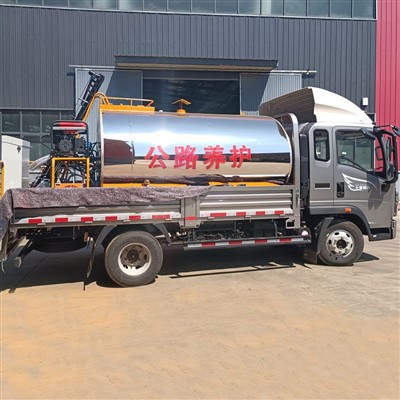
Hey there! As a supplier of modified bitumen plants, I'm super stoked to share with you the ins and outs of how these nifty machines work.
What's Modified Bitumen Anyway?
Before we jump into the working principle, let's quickly talk about what modified bitumen is. Bitumen, which is also known as asphalt, is a sticky, black, and highly viscous liquid or semi - solid form of petroleum. Modified bitumen is bitumen that has been enhanced with polymers or other additives. This modification improves its performance in terms of temperature resistance, elasticity, and durability. So, it's great for things like road construction, waterproofing, and roofing.
The Basics of a Modified Bitumen Plant
A modified bitumen plant is designed to produce high - quality modified bitumen efficiently. It's a complex piece of equipment that combines several processes to achieve the desired end product.
Raw Material Handling
The first step in the process is handling the raw materials. We've got bitumen and polymers as the main ingredients. Bitumen usually comes in bulk and is stored in large tanks. These tanks are often insulated to keep the bitumen at the right temperature, usually around 130 - 160 degrees Celsius, so it remains in a fluid state.
Polymers, on the other hand, can be in various forms like pellets, powders, or granules. They are stored separately in silos or hoppers. When it's time to start production, the bitumen is pumped from the storage tank to a mixing chamber. At the same time, the polymers are metered and fed into the same chamber. The metering system is crucial here because getting the right ratio of bitumen to polymers is key to producing good - quality modified bitumen. For example, if you add too much polymer, the bitumen can become too stiff; too little, and you won't get the desired performance improvements.
Mixing Process
Once the raw materials are in the mixing chamber, the real action begins. There are two main types of mixing methods used in modified bitumen plants: mechanical mixing and high - shear mixing.
Mechanical Mixing
Mechanical mixing uses agitators or paddles to blend the bitumen and polymers. The agitators rotate at a relatively low speed and work to distribute the polymers evenly throughout the bitumen. This method is good for initial blending and can help break up larger polymer clumps. However, it may not be sufficient to fully disperse the polymers at a microscopic level.
High - Shear Mixing
This is where things get really intense. High - shear mixers use a rotor - stator system. The rotor spins at a very high speed, creating a powerful shear force. This force breaks down the polymer particles into tiny pieces and disperses them uniformly in the bitumen. The high - shear mixing process can take some time, usually around 30 minutes to a few hours, depending on the type of polymer and the desired degree of dispersion. It's like a high - tech blender on steroids!
Development and Reaction
After the initial mixing, the modified bitumen needs some time to develop and react. This is often done in a development tank. The temperature in the development tank is carefully controlled, usually around 170 - 190 degrees Celsius. At this temperature, the polymers and bitumen interact chemically. The polymers swell and absorb some of the lighter fractions of the bitumen, forming a homogeneous and stable mixture. This reaction time can range from a couple of hours to a full day, depending on the formulation.
Quality Control
Throughout the production process, quality control is of utmost importance. Samples are taken at various stages to test the properties of the modified bitumen. Tests include things like penetration, softening point, ductility, and elasticity. If the test results don't meet the required specifications, adjustments can be made. For example, if the penetration is too high, more polymer can be added; if the softening point is too low, the temperature during development can be increased.
Storage and Packaging
Once the modified bitumen has passed all the quality tests, it's ready for storage or packaging. It can be stored in large tanks for later use or transported directly to the customer. Some plants also have the option to package the modified bitumen in drums or other containers for easier handling and transportation.
Why Our Modified Bitumen Plants Rock
As a supplier, we've put a lot of effort into making our Polymer Modified Asphalt Plant top - notch. Our plants are designed with the latest technology to ensure efficient production and high - quality output. We use advanced metering systems to accurately control the ratio of raw materials, and our high - shear mixers are engineered for maximum performance.


Our Modified Asphalt Production Equipment is also built to last. We use high - quality materials and components in the construction of our plants, so you don't have to worry about frequent breakdowns or maintenance issues. And if you're looking for a Polymer Modified Bitumen Plant, we've got you covered. Our plants can be customized to meet your specific production requirements, whether you need a small - scale plant for a local project or a large - scale industrial - grade plant.
Let's Talk Business
If you're in the market for a modified bitumen plant, I'd love to have a chat with you. Whether you're a road construction company looking to improve the quality of your asphalt, a roofing contractor in need of better waterproofing materials, or an industrial manufacturer wanting to produce your own modified bitumen, we can find the right solution for you. Just reach out, and we can start discussing your needs and how our plants can help you achieve your goals.
References
- Kandhal, P. S., & Mallick, R. B. (1998). Modified Asphalt Binders and Mixtures. NCHRP Report 419.
- Bahia, H. U., & Davies, T. (2007). Performance - Graded Asphalt Binders. NAPA Education Foundation.