

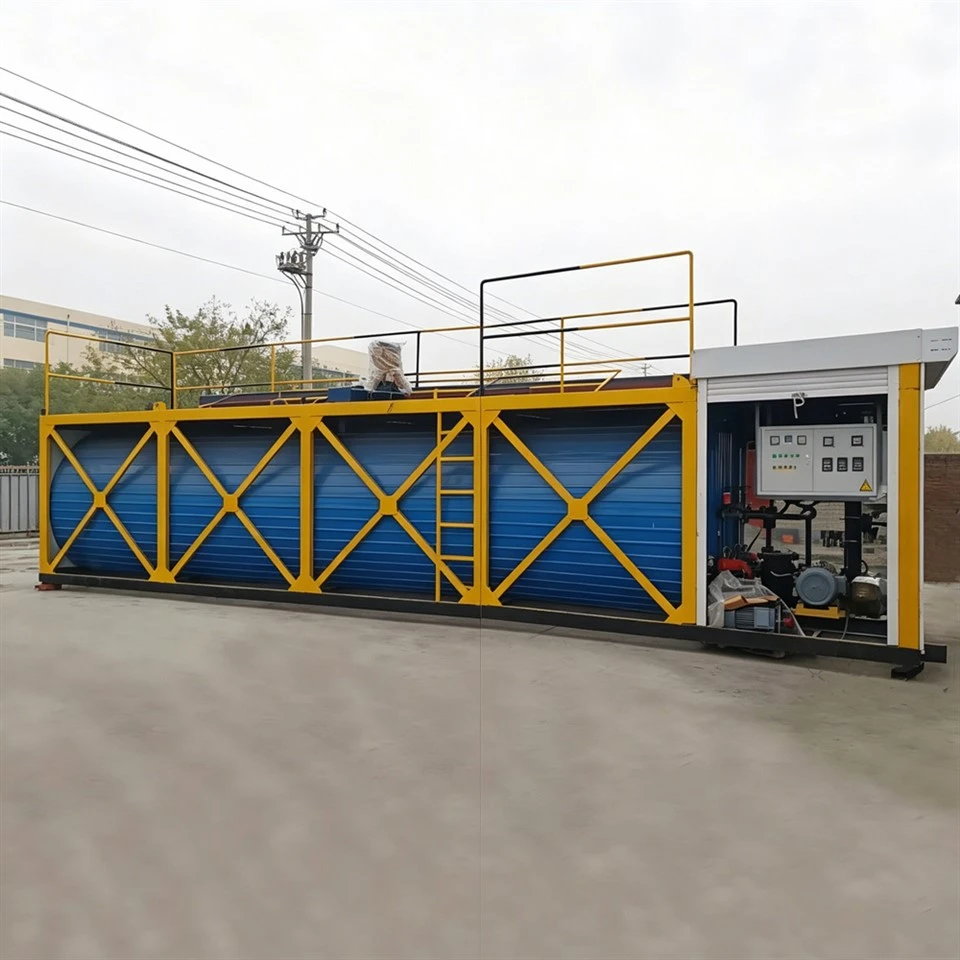
Product Overview
Portable Bitumen Storage and Heating Tanks provide temporary or supplementary storage for hot bitumen at road construction sites, asphalt plants, and bitumen handling facilities.
Controlled Heating: Electric or fuel-fired heating configurations are selected according to tank capacity, target temperature, available utilities, and required heating time.
Thermal Insulation: Rock wool insulation with protective metal cladding helps limit heat loss during storage.
Flexible Mobility: Skid-mounted or trailer-mounted configurations support different site layouts and relocation requirements.
Bitumen Transfer: Compatible pumps, heated pipework, and discharge connections can be configured to match downstream equipment.
Tank Configuration & Selection
Select the tank according to material demand, operating conditions, site utilities, and transportation requirements.
|
Selection Factor |
Available Options |
|
Nominal Capacity |
15, 30, 40, 50, and 60 m³; other sizes subject to confirmation |
|
Mounting Structure |
Skid-mounted or trailer-mounted |
|
Heating Method |
Electric immersion heating, thermal oil heating, or direct-fired heating, subject to design suitability |
|
Temperature Control |
Temperature sensors, control panel, and specified over-temperature protection |
|
Insulation |
Rock wool with protective metal cladding; thickness selected by thermal requirements |
|
Discharge System |
Heated gear pump or gravity outlet, subject to material and operating conditions |
Technical Specifications
The following table summarizes the preliminary product range. Final specifications depend on the approved design and configuration.
|
Parameter |
Preliminary Range / Option |
|
Nominal Tank Capacity |
15–60 m³ |
|
Tank Shell Material |
Q235B or Q345R carbon steel, subject to design verification |
|
Shell Thickness |
6–8 mm, subject to engineering calculation |
|
Primary Application |
Hot bitumen storage and transfer |
|
Other Media |
PMB and heavy fuel oil, subject to compatibility review |
|
Operating Temperature |
Ambient temperature to 200°C, subject to design and component ratings |
|
Electric Heating Output |
60–180 kW, subject to tank size and heat-up requirements |
|
Thermal Oil / Burner Output |
100,000–600,000 kcal/h, subject to configuration |
|
Insulation |
Rock wool with metal cladding |
|
Pump Flow Rate |
To be selected according to bitumen viscosity, temperature, and required discharge conditions |
|
Temperature Control |
Sensor-based monitoring and specified protective functions |
|
Mobility |
Skid-mounted or trailer-mounted; transport dimensions confirmed per project |
Heating, Insulation & Transfer Systems
Heating Options
Electric Heating: Suitable where the available electrical supply can support the required heating load.
Thermal Oil Heating: Provides indirect heating through a thermal oil circuit when configured for the required temperature and heat output.
Direct-Fired Heating: Available only where the tank design, burner arrangement, and applicable safety requirements permit its use.
Insulation & Temperature Monitoring
Thermal Insulation: Insulation thickness is selected according to ambient conditions, target temperature, and expected holding time.
Temperature Sensors: Monitor tank temperature at specified measurement points.
Over-Temperature Protection: Protective interlocks and shutdown functions are specified according to the approved control design.
Discharge & Piping
Pump Selection: Pump capacity is determined by material viscosity, operating temperature, piping layout, and required flow.
Heated Pipework: Thermal oil jackets or electric trace heating may be specified where needed to maintain material flow.
Connection Options: Flange standards, nominal pipe sizes, and hose connections are confirmed during engineering review.
Manufacturing Quality Control & Testing
Inspection and documentation requirements are agreed according to the tank design, applicable regulations, and purchase specifications.
Material Verification: Material certificates can be supplied according to the agreed material grades and documentation scope.
Weld Inspection: Visual inspection and specified non-destructive testing are performed according to the approved inspection plan.
Heating & Control Checks: Heating circuits, temperature sensors, control logic, and protective functions are checked according to the applicable test procedures.
Leak Testing: Tank sections and heating circuits are tested using methods appropriate to their design and operating conditions.
Final Documentation: Inspection records, electrical drawings, operating instructions, and maintenance documentation are supplied according to the agreed scope.
Applicable design codes, inspection methods, and certification requirements must be confirmed before production.
Applications & System Integration
Road Construction Sites: Provides on-site hot bitumen storage for paving operations where mobile storage is required.
Asphalt Mixing Plants: Adds storage capacity when integrated with the plant's material supply and control systems.
Bitumen Handling Facilities: Supports intermediate storage and transfer where the tank design and operating conditions are suitable.
Integration Requirements: Confirm inlet and outlet positions, flange standards, piping dimensions, pump duty, electrical supply, control interfaces, and site installation conditions before ordering.
Customization & RFQ Requirements
Provide the following information to support technical evaluation and quotation.
Capacity: Required nominal and usable volume, plus daily bitumen consumption.
Material & Temperature: Bitumen grade, PMB requirements if applicable, initial temperature, target temperature, and required heating time.
Heating Utilities: Preferred heating method, voltage, frequency, phase, available electrical power, or fuel type.
Mobility & Dimensions: Skid or trailer configuration, site access restrictions, transport route, and destination.
Transfer Requirements: Required flow rate, piping distance, connection standard, and downstream equipment details.
Compliance & Documentation: Applicable local regulations, requested design codes, inspection scope, and certification requirements.
Request a Technical Quotation
Submit your operating conditions and configuration requirements to obtain a proposal covering the proposed tank arrangement, heating system, technical specifications, and applicable documentation.
Frequently Asked Questions
Q: Which heating method should I choose?
A: Electric heating may suit sites with sufficient electrical capacity. Thermal oil or direct-fired systems may suit other operating conditions, depending on tank size, heating demand, fuel availability, and the approved design.
Q: How can bitumen solidification in pumps and pipes be managed?
A: Heating jackets or electric trace heating can be specified where required. Pump and pipework arrangements should also account for bitumen viscosity, shutdown procedures, and the operating temperature.
Q: Can the tank be transported in a 40ft High Cube container?
A: This depends on the tank's external dimensions, loaded weight, support structure, and transport arrangement. Confirm whether the requirement is to load the tank inside a shipping container or transport a containerized tank unit.
Q: What quality documents are available?
A: Documents may include material certificates, inspection and test reports, electrical drawings, and operation and maintenance manuals. Product certifications and third-party reports are subject to the actual equipment scope and agreed requirements.
Q: What information is needed to confirm heating time?
A: The calculation requires the tank's working volume, material properties, initial and target temperatures, heating output, expected thermal losses, and ambient conditions. A specific heat-up time should be confirmed through engineering calculations or representative test data.
Hot Tags: portable bitumen storage and heating tank, China portable bitumen storage and heating tank manufacturers, suppliers, factory