

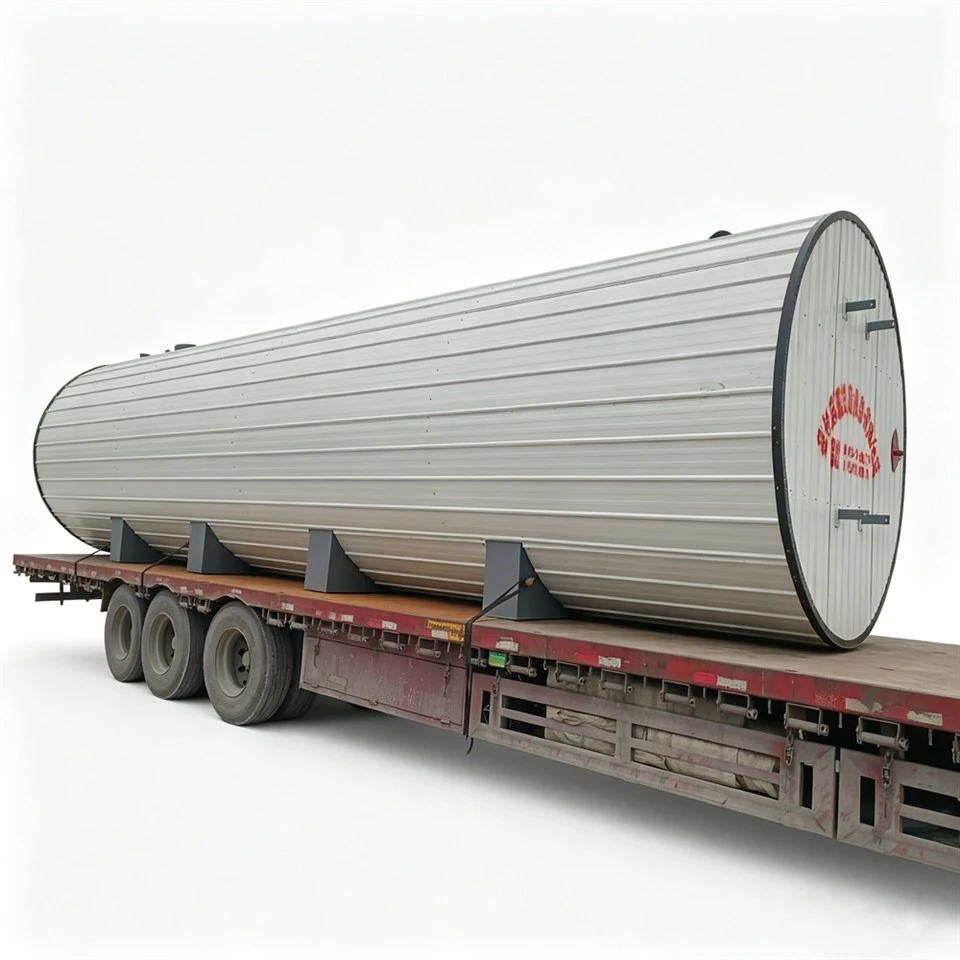
Product Overview
Vertical Storage with Insulation and Configurable Heating
An insulated vertical bitumen silo stores hot bitumen for asphalt production, road construction, and bulk bitumen handling. Thermal insulation helps reduce heat loss, while an optional heating system maintains or restores the required storage temperature.
Thermal Insulation
Mineral wool insulation with protective outer cladding helps limit heat transfer between the stored bitumen and the surrounding environment.
Heating System Options
Thermal oil coils, electric heating, or steam heating can be evaluated according to the required operating temperature, available utilities, and bitumen grade.
Space-Efficient Layout
The vertical configuration provides substantial storage capacity within a compact ground footprint. Tank height, diameter, and foundation requirements must be checked against site conditions.
Process Integration
Inlet and outlet connections, transfer pumps, temperature sensors, level instruments, and control interfaces can be specified according to the existing plant layout.
Technical Specifications
The following values are preliminary selection ranges. Final specifications depend on the approved equipment design and project requirements.
|
Parameter |
Specification |
|
Equipment Type |
Insulated Vertical Bitumen Silo |
|
Nominal Capacity |
30–150 m³, subject to model availability |
|
Tank Configuration |
Vertical cylindrical tank |
|
Shell Material |
Carbon steel; grade to be confirmed |
|
Stainless Steel Option |
Subject to material and project requirements |
|
Insulation Material |
Rockwool / mineral wool, subject to specification |
|
Insulation Thickness |
100–150 mm, subject to thermal design |
|
Outer Cladding |
Aluminum or galvanized steel, subject to configuration |
|
Operating Temperature |
To be confirmed according to bitumen grade and process requirements |
|
Heating Options |
Thermal oil coils, electric heating, or steam coils, subject to design |
|
Temperature Monitoring |
PT100 sensors or alternative specified instruments |
|
Level Monitoring |
Radar or guided-wave radar, subject to tank configuration |
|
Piping Connections |
Nominal sizes and flange standards to be confirmed |
|
Design Standard |
Selected according to tank design, operating conditions, and destination-market requirements |
|
Documentation |
Material certificates, inspection records, and operating documentation as agreed |
Heating and Insulation Options
Thermal Oil Heating
Internal heating coils can transfer heat from a thermal oil system. Coil design and heating capacity should match the required temperature range and heat-up duty.
Electric Heating
Electric heating can be considered where the site has a suitable electrical supply. Required power, control arrangements, and heating-element configuration must be confirmed during engineering.
Steam Heating
Steam coils can be evaluated where a suitable steam supply is available and compatible with the required operating conditions.
Insulation and Cladding
Insulation material, thickness, and outer cladding are selected according to ambient conditions, operating temperature, weather exposure, and thermal performance requirements. Actual heat loss should be established through thermal calculations or testing.
Materials, Instrumentation and Controls
Tank Construction
Shell material, plate thickness, support structure, and corrosion protection are specified according to the design conditions and project requirements.
Temperature Control
Temperature sensors and a local or PLC-based control system can be configured to monitor storage conditions and operate the specified heating equipment.
Level Monitoring and Overfill Protection
Level instruments and high-level alarms can be included according to the required control and safety arrangement.
Piping and Plant Interfaces
Inlet and outlet connections, heating-medium connections, valves, pumps, and electrical interfaces should be confirmed against the plant piping layout and utility requirements.
Manufacturing Quality Control
Material Verification
Material grades and supplied certificates should be checked against the approved material specification and purchase requirements.
Fabrication and Welding Inspection
Plate preparation, welding procedures, dimensional checks, and weld inspections are carried out according to the approved fabrication and inspection plan.
Heating Coil Testing
Heating coils are tested in accordance with their design conditions and applicable procedures. The test method and acceptance criteria should be defined in the technical documentation.
Insulation and Cladding Inspection
Insulation coverage, cladding installation, and joint details are checked before delivery to identify visible gaps or installation defects.
Quality Documentation
The agreed documentation package can include material certificates, dimensional inspection records, applicable weld and NDT reports, heating-coil test records, and operation and maintenance instructions.
Applications
Asphalt Mixing Plants
Provides storage between bitumen deliveries and asphalt production, with heating and transfer arrangements selected for the plant's operating schedule.
Polymer-Modified Bitumen Facilities
Can be configured for PMB storage after confirming the binder's temperature requirements, viscosity, and compatibility with the heating system.
Bitumen Terminals and Depots
Supports bulk storage and transfer operations where tank capacity, loading schedules, and heating requirements are defined by site demand.
Multi-Tank Storage Systems
Multiple tanks can be incorporated into a storage arrangement with shared transfer lines, manifolds, and control interfaces where required by the plant design.
Customization and RFQ Requirements
To prepare a technically appropriate quotation, please provide the following information.
Storage Requirements
Nominal capacity, required usable volume, bitumen grade, daily consumption, and expected storage duration.
Operating Conditions
Target storage temperature, ambient temperature range, heating duty, and whether the requirement is temperature maintenance, cold-start heating, or both.
Heating and Utilities
Preferred heating medium, available thermal oil or steam supply, electrical supply, and required control functions.
Tank and Site Details
Installation location, indoor or outdoor arrangement, available footprint, maximum permitted height, foundation information, and applicable design requirements.
Connections and Scope of Supply
Required pipe connections, transfer pumps, valves, instruments, control panel, insulation, cladding, and site installation scope.
Drawings and Delivery
Available drawings, preferred drawing format, destination port, transport restrictions, and required delivery documentation.
Frequently Asked Questions
Q: What is the difference between an insulated bitumen silo and a heated bitumen silo?
A: An insulated silo uses thermal insulation to reduce heat transfer. A heated silo includes an active heat source to maintain or increase the bitumen temperature. A system combining both can be specified when required by the operating process.
Q: How do I select the appropriate storage capacity?
A: Selection depends on daily bitumen consumption, delivery frequency, storage duration, required operating level, and the available installation space. Usable volume should be calculated separately from nominal tank volume.
Q: Can the silo maintain a specific bitumen temperature?
A: The achievable temperature range depends on the heating capacity, insulation design, ambient conditions, tank fill level, and bitumen properties. Required holding temperature and acceptable temperature variation should be confirmed during engineering.
Q: Can the silo be used for polymer-modified bitumen?
A: It can be considered for PMB applications after confirming the binder specification, required temperature range, viscosity, heating arrangement, and applicable handling requirements.
Q: What inspection and quality documents are available?
A: The documentation package should be agreed before ordering. Depending on the project, it may include material certificates, welding and NDT records where applicable, heating-coil test reports, dimensional inspection records, approved drawings, and operation and maintenance manuals.
Q: How is the silo transported?
A: The transport method depends on the completed tank dimensions, weight, route restrictions, and destination requirements. Oversized equipment may require special transport, modular construction, or on-site assembly, subject to engineering and logistics review.
Hot Tags: insulated vertical bitumen silo, China insulated vertical bitumen silo manufacturers, suppliers, factory