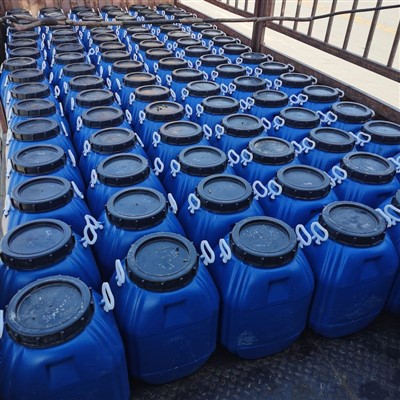
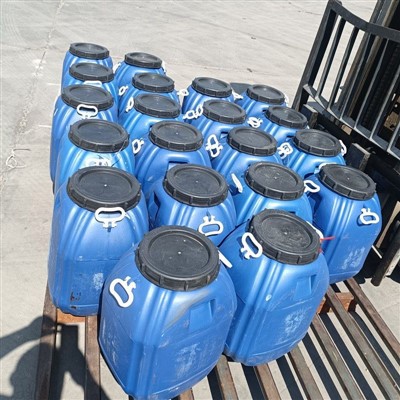
Hey there! As a supplier of anionic emulsifiers, I often get asked whether anionic emulsifiers can be used in oil-in-water emulsions. Well, the short answer is yes, they can! But let's dive deeper into this topic to understand the ins and outs.
First off, let's quickly recap what oil-in-water emulsions are. An oil-in-water (O/W) emulsion is a type of colloid where tiny droplets of oil are dispersed in a continuous water phase. Think of milk, which is essentially an O/W emulsion of fat globules in water. Emulsifiers play a crucial role in stabilizing these emulsions by reducing the surface tension between the oil and water phases, preventing the oil droplets from coalescing and separating.
Anionic emulsifiers are a class of surfactants that carry a negative charge on their hydrophilic (water-loving) head. This negative charge gives them unique properties that make them suitable for various applications in O/W emulsions.
Advantages of Using Anionic Emulsifiers in O/W Emulsions
1. Good Stability
Anionic emulsifiers can form a strong electrostatic repulsion between the negatively charged oil droplets in the O/W emulsion. This repulsion helps to keep the droplets apart, preventing them from getting too close and merging. As a result, the emulsion remains stable over a longer period. For example, in cosmetic products like lotions and creams, anionic emulsifiers can ensure that the oil phase stays evenly dispersed in the water phase, maintaining the product's texture and appearance.
2. Compatibility with Other Ingredients
These emulsifiers are often compatible with a wide range of other ingredients commonly used in O/W emulsions. They can work well with electrolytes, polymers, and other additives. This compatibility allows formulators to create complex formulations with multiple functions. For instance, in the food industry, anionic emulsifiers can be used in salad dressings along with thickeners and flavorings to create a stable and tasty product.
3. Cost-Effectiveness
Anionic emulsifiers are generally more cost-effective compared to some other types of emulsifiers. This makes them an attractive choice for large-scale production, especially in industries where cost is a significant factor. For example, in the production of industrial lubricants or agricultural pesticides, using anionic emulsifiers can help keep the production costs down without sacrificing the quality of the emulsion.
Applications of Anionic Emulsifiers in O/W Emulsions
1. Cosmetics and Personal Care Products
As mentioned earlier, anionic emulsifiers are widely used in cosmetics and personal care products. They are used in the formulation of moisturizers, sunscreens, and hair conditioners. In these products, they help to create a smooth and creamy texture, making the products easy to apply and spread on the skin or hair.
2. Food Industry
In the food industry, anionic emulsifiers are used in products like margarine, mayonnaise, and ice cream. They help to prevent the separation of oil and water phases, ensuring a consistent texture and appearance. For example, in margarine, anionic emulsifiers keep the vegetable oil droplets evenly dispersed in the water phase, giving it a smooth and spreadable consistency.
3. Paints and Coatings
Anionic emulsifiers are also used in the production of water-based paints and coatings. They help to disperse the pigment particles and the binder (usually a polymer) in the water phase, creating a stable emulsion. This results in a paint that has good coverage, adhesion, and durability.
4. Emulsified Asphalt Liquid
In the construction industry, anionic emulsifiers are used to produce Emulsified Asphalt Liquid. This liquid is used for road construction and maintenance. The anionic emulsifier helps to disperse the asphalt particles in water, making it easier to apply and mix with other aggregates.
Limitations and Considerations
While anionic emulsifiers have many advantages, there are also some limitations and considerations to keep in mind.
1. Sensitivity to pH
Anionic emulsifiers are sensitive to pH changes. In acidic conditions, the negative charge on the emulsifier can be neutralized, which may lead to a decrease in the stability of the emulsion. Therefore, it is important to control the pH of the emulsion within a suitable range when using anionic emulsifiers.
2. Compatibility with Cationic Substances
Anionic emulsifiers are generally not compatible with cationic substances. When anionic and cationic substances come into contact, they can form insoluble complexes, which can cause the emulsion to break down. So, it is crucial to avoid mixing anionic emulsifiers with cationic surfactants or other cationic additives in the same formulation.
3. Environmental Impact
Some anionic emulsifiers may have an environmental impact, especially if they are not biodegradable. It is important to choose anionic emulsifiers that are environmentally friendly and comply with relevant environmental regulations.
Comparing Anionic Emulsifiers with Cationic Emulsion
Cationic emulsifiers carry a positive charge on their hydrophilic head, which gives them different properties compared to anionic emulsifiers.
1. Charge and Interaction
The positive charge of cationic emulsifiers allows them to interact differently with surfaces and other substances. For example, they can have a stronger affinity for negatively charged surfaces, which can be useful in some applications such as textile finishing. In contrast, anionic emulsifiers are more suitable for applications where electrostatic repulsion between negatively charged particles is desired.
2. Stability in Different Conditions
Cationic emulsions are generally more stable in acidic conditions compared to anionic emulsions. However, anionic emulsions can be more stable in alkaline conditions. So, the choice between anionic and cationic emulsifiers depends on the specific pH requirements of the application.
3. Cost
As mentioned earlier, anionic emulsifiers are usually more cost-effective than cationic emulsifiers. This can be a significant factor when choosing an emulsifier for large-scale production.
Anionic Bitumen Emulsion
One of the important applications of anionic emulsifiers is in the production of Anionic Bitumen Emulsion. Bitumen is a viscous, black, and sticky material that is used in road construction. By using anionic emulsifiers, bitumen can be dispersed in water to form a stable emulsion.
The Anionic Bitumen Emulsion has several advantages. It is easy to handle and apply, and it can be mixed with other aggregates at normal temperatures. This reduces the energy consumption and environmental impact compared to traditional hot bitumen applications.


Conclusion
In conclusion, anionic emulsifiers can definitely be used in oil-in-water emulsions, and they offer many advantages such as good stability, compatibility with other ingredients, and cost-effectiveness. However, it is important to consider their limitations and choose the right emulsifier based on the specific requirements of the application.
If you are looking for high-quality anionic emulsifiers for your oil-in-water emulsion applications, we are here to help. We offer a wide range of anionic emulsifiers that are suitable for various industries. Whether you are in the cosmetics, food, paint, or construction industry, we can provide you with the right emulsifier to meet your needs. Contact us to start a procurement discussion and find the best solution for your business!
References
- McClements, D. J. (2015). Food Emulsions: Principles, Practice, and Techniques. CRC Press.
- Schramm, L. L. (Ed.). (2005). Emulsions, Foams, and Suspensions: Fundamentals and Applications. CRC Press.
- Becher, P. (1965). Emulsions: Theory and Practice. Reinhold Publishing Corporation.