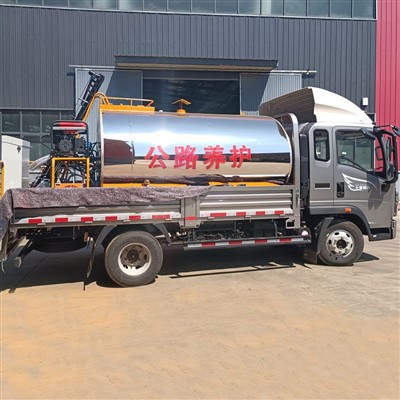
In the realm of road construction and various industrial applications, bitumen stands as a crucial material. Its performance and suitability are largely determined by its grade, which is influenced by factors such as penetration, viscosity, and softening point. As a reputable Bitumen Melting Equipment supplier, a question that frequently arises from our clients is whether our equipment can be used for different grades of bitumen. In this blog, we will delve into this topic, exploring the technical aspects, limitations, and advantages of using our Bitumen Melting Equipment across various bitumen grades.
Understanding Bitumen Grades
Bitumen grades are classified based on their physical properties, which are tailored to specific applications. The most common grading systems include penetration grading, viscosity grading, and performance - based grading.
Penetration grading measures the depth to which a standard needle penetrates the bitumen sample under specific conditions of load, time, and temperature. For example, a bitumen with a penetration value of 60 - 70 means that the needle penetrates the bitumen between 6 and 7 millimeters. This grading system is widely used in many countries and is suitable for traditional road construction.
Viscosity grading, on the other hand, focuses on the flow characteristics of bitumen at high temperatures. It is more relevant for modern high - speed paving operations as it provides a better indication of the bitumen's workability during the mixing and laying processes.
Performance - based grading takes into account the bitumen's performance under different environmental and traffic conditions. It is designed to ensure that the bitumen can withstand the stresses and strains it will encounter over its service life.
Technical Capabilities of Our Bitumen Melting Equipment
Our Bitumen Melting Equipment is engineered with advanced technology to handle a wide range of bitumen grades. The equipment is equipped with precise temperature control systems. Different grades of bitumen require different melting temperatures. For instance, softer bitumens with higher penetration values generally have lower melting points, while harder bitumens with lower penetration values need higher temperatures to melt. Our temperature control system can be adjusted accurately to meet the specific melting requirements of each grade.
The heating elements in our equipment are designed to provide uniform heat distribution. This is crucial because uneven heating can lead to local overheating, which may cause the bitumen to degrade, especially for more sensitive grades. With uniform heat distribution, we can ensure that the bitumen melts evenly without any thermal damage, regardless of its grade.
In addition, our equipment has a robust mixing mechanism. During the melting process, proper mixing is essential to maintain the homogeneity of the bitumen. Different grades of bitumen may have different viscosities, and our mixing system is capable of handling these variations. It can break up any lumps or aggregates in the bitumen and ensure that the additives, if any, are well - dispersed throughout the molten bitumen.
Limitations and Considerations
While our Bitumen Melting Equipment is highly versatile, there are still some limitations and considerations when using it for different grades of bitumen.
One of the main limitations is the extreme grades of bitumen. For example, ultra - hard bitumens with very low penetration values may require extremely high melting temperatures. In such cases, although our equipment can reach high temperatures, there is a risk of thermal degradation if the temperature is not carefully controlled. Also, these ultra - hard bitumens may have very high viscosities even when molten, which can put a strain on the mixing and pumping systems.
Another consideration is the presence of additives in the bitumen. Some grades of bitumen are modified with polymers or other additives to enhance their performance. These additives may have different melting points and chemical properties compared to the base bitumen. Our equipment can handle many common additives, but for highly specialized or custom - formulated bitumens, additional testing and adjustments may be required to ensure that the melting process does not affect the performance of the additives.
Advantages of Using Our Equipment for Different Grades
There are several advantages to using our Bitumen Melting Equipment for different grades of bitumen. Firstly, it offers cost - effectiveness. Instead of investing in multiple pieces of equipment for different bitumen grades, our single - unit equipment can handle a wide range of grades, reducing the overall capital expenditure for our clients.
Secondly, it provides flexibility. In the road construction industry, project requirements can change, and different grades of bitumen may be needed at different stages of a project. With our equipment, clients can easily switch between different grades without the need for major equipment overhauls or replacements.
Moreover, our equipment is designed with user - friendly interfaces. Operators can easily adjust the settings according to the specific grade of bitumen, making it suitable for both experienced and novice users. This ease of use ensures that the melting process is carried out efficiently and safely.
Case Studies
To illustrate the effectiveness of our Bitumen Melting Equipment for different grades of bitumen, let's look at a few case studies.
In a large - scale highway construction project, the contractor needed to use both a softer penetration - graded bitumen (80 - 100) for the base layer and a harder viscosity - graded bitumen for the surface layer. Our equipment was able to adjust the melting temperature and mixing parameters accordingly. The softer bitumen was melted at a relatively low temperature, and the harder bitumen was melted at a higher temperature without any issues. The resulting bitumen mixtures were of high quality, meeting the project's specifications.
In another industrial application, a factory was using a polymer - modified bitumen for waterproofing membranes. The equipment was able to handle the modified bitumen, ensuring that the polymers were well - dispersed in the molten bitumen. The final product had excellent waterproofing properties, thanks to the proper melting and mixing process provided by our equipment.
Conclusion
In conclusion, our Bitumen Melting Equipment is indeed capable of handling different grades of bitumen. With its advanced temperature control, uniform heat distribution, and robust mixing mechanisms, it can meet the diverse melting requirements of various bitumen grades. However, it is important to be aware of the limitations and considerations, especially for extreme grades and bitumens with special additives.
If you are in the market for reliable and versatile Bitumen Melting Equipment or Bitumen Melting Plant or Asphalt Melting Equipment, we invite you to contact us for a detailed discussion. Our team of experts can provide you with customized solutions based on your specific needs and the bitumen grades you plan to use. We look forward to working with you to achieve your project goals.


References
- Kandhal, P. S., & Mallick, R. B. (1998). Hot Mix Asphalt Materials, Mixture Design, and Construction. NAPA Education Foundation.
- Roberts, F. L., Kandhal, P. S., Brown, E. R., Lee, D. Y., & Kennedy, T. W. (1996). Hot Mix Asphalt: Materials, Mixture Design, and Construction. NAPA Education Foundation.
- Standard Specifications for Transportation Materials and Methods of Sampling and Testing. American Association of State Highway and Transportation Officials (AASHTO).