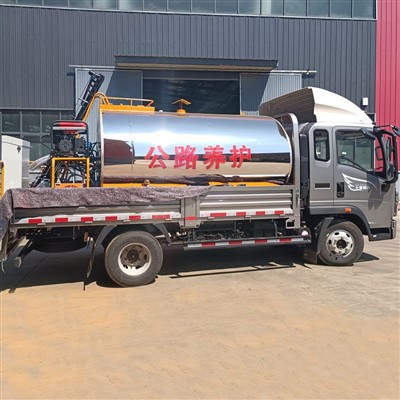
Hey there! As a supplier of Asphalt Melting Machines, I often get asked about the temperature control accuracy of these machines. It's a crucial aspect, especially when you're working with asphalt, which is super sensitive to temperature changes. So, let's dive right into what temperature control accuracy really means for an asphalt melting machine.
First off, what's temperature control accuracy? In simple terms, it's how close the actual temperature inside the asphalt melting machine gets to the set temperature. For example, if you set the machine to heat the asphalt to 150 degrees Celsius, the accuracy tells you how much the real - time temperature might deviate from that 150 degrees.
Why is this so important? Well, asphalt has a very narrow temperature range where it behaves just right. If it's too cold, it'll be too thick and won't flow properly. This can lead to blockages in the pipes and hoses of the melting machine, and it won't mix well with other materials if you're using it in a construction project. On the other hand, if it's too hot, the asphalt can start to break down chemically. This not only changes its physical properties but can also release harmful fumes. So, having precise temperature control is like hitting the sweet spot for getting the best out of your asphalt.
Now, let's talk about the factors that affect the temperature control accuracy of an asphalt melting machine. One of the big ones is the heating system. There are different types of heating systems used in these machines, like direct - fired heaters, indirect - fired heaters, and electric heaters.
Direct - fired heaters heat the asphalt directly by exposing it to a flame. While they can heat up the asphalt quickly, they can also be a bit tricky to control precisely. The flame intensity needs to be carefully regulated, and any fluctuations in the fuel supply can cause temperature variations.
Indirect - fired heaters, on the other hand, use a heat exchanger. The heat is transferred from the heating medium (like hot oil or steam) to the asphalt through the exchanger. This method is generally more stable and allows for better temperature control. The heat transfer process is more gradual, reducing the chances of sudden temperature spikes.
Electric heaters are known for their high precision. They can be easily controlled using electronic thermostats. You can set the temperature with a high degree of accuracy, and they respond quickly to any changes in the setpoint. However, they might not be as powerful as some of the other heating methods for large - scale operations.
Another factor is the insulation of the machine. Good insulation helps to keep the heat inside the machine. If the insulation is poor, heat can escape, and the machine will have to work harder to maintain the set temperature. This can lead to temperature fluctuations and reduced accuracy.
The size and design of the melting chamber also play a role. A larger chamber might take longer to heat up evenly, and there could be temperature differences between the center and the edges. Some machines are designed with mixing mechanisms to help distribute the heat more evenly, which can improve the temperature control accuracy.
So, what kind of temperature control accuracy can you expect from a good asphalt melting machine? Well, in general, a high - quality machine should be able to maintain the temperature within a range of plus or minus 2 - 5 degrees Celsius. This level of accuracy is sufficient for most asphalt applications, whether you're using it for road construction, roofing, or other projects.
But how do you measure the temperature control accuracy of an asphalt melting machine? Most modern machines come with built - in temperature sensors. These sensors continuously monitor the temperature inside the machine and send the data to a control panel. The control panel then adjusts the heating system as needed to keep the temperature at the setpoint.
To ensure the accuracy of these sensors, regular calibration is necessary. Just like any other measuring device, sensors can drift over time. Calibrating them against a known standard helps to make sure that the temperature readings are correct.
As a supplier, we at [company] take temperature control accuracy very seriously. Our Asphalt Melting Machine is designed with state - of the - art technology to provide the best possible accuracy. We use high - quality heating systems and insulation materials to minimize temperature fluctuations. Our machines also come with advanced control panels that allow for easy adjustment and monitoring of the temperature.
If you're in the market for an asphalt melting machine, it's important to consider the temperature control accuracy. A machine with poor accuracy can lead to wasted asphalt, increased energy consumption, and lower - quality end products.
We also offer a range of Asphalt Melting Equipment and Bitumen Melting Plant options. These are designed to meet different production needs, from small - scale projects to large - scale industrial operations.
If you're interested in learning more about our products or have any questions about temperature control accuracy, don't hesitate to get in touch. We're here to help you find the right solution for your asphalt melting needs. Whether you're a contractor, a manufacturer, or someone involved in the asphalt industry, we can provide you with the information and support you need to make an informed decision.


In conclusion, temperature control accuracy is a vital aspect of an asphalt melting machine. It affects the quality of the asphalt, the efficiency of the machine, and the overall success of your projects. By choosing a machine with high - quality temperature control, you can ensure that you get the best results every time.
References
- Asphalt Technology Handbook
- Industry Standards for Asphalt Melting Equipment