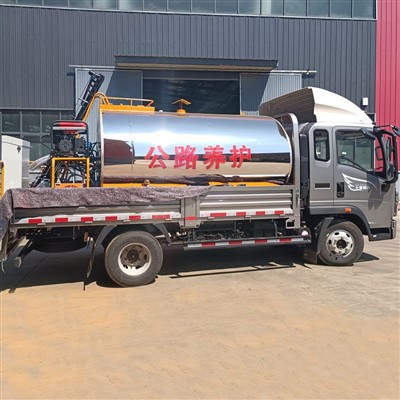
Selecting the right emulsion asphalt plant is a critical decision for businesses in the road construction and related industries. As a supplier of emulsion asphalt plants, I understand the challenges and considerations that come with this choice. In this blog post, I will share some key factors to help you make an informed decision when choosing an emulsion asphalt plant.
Production Capacity
One of the first things to consider is the production capacity of the emulsion asphalt plant. This is determined by the amount of emulsion asphalt you need to produce per hour or per day. Your production requirements will depend on the scale of your projects. For small - scale local road repairs or minor construction jobs, a plant with a lower production capacity, say 5 - 10 tons per hour, might be sufficient. On the other hand, large - scale highway construction projects may demand plants with a production capacity of 20 tons per hour or more.
It's important to not only consider your current needs but also future growth. If you anticipate an increase in project size or frequency in the coming years, it might be wise to invest in a plant with a higher production capacity than your immediate requirements. This can save you from the hassle and cost of upgrading the plant later.
Quality of Emulsion Asphalt
The quality of the emulsion asphalt produced by the plant is of utmost importance. High - quality emulsion asphalt ensures better adhesion, durability, and performance of the road surface. A good emulsion asphalt plant should be able to produce emulsion asphalt with consistent particle size distribution. The smaller and more uniform the particle size, the better the stability and performance of the emulsion.
Look for plants that use advanced colloid mills. Colloid mills play a crucial role in the emulsification process by breaking down the bitumen into fine droplets and dispersing them evenly in the water phase. Modern colloid mills are designed to achieve a high degree of fineness and uniformity, resulting in superior - quality emulsion asphalt. Additionally, the plant should have a reliable system for controlling the temperature, pressure, and flow rates during the production process, as these factors significantly affect the quality of the final product.


Energy Efficiency
Energy costs are a significant part of the operating expenses of an emulsion asphalt plant. An energy - efficient plant can help you save a substantial amount of money in the long run. Consider plants that use energy - saving technologies such as efficient heating systems and well - insulated tanks. Some plants are equipped with heat recovery systems that reuse the waste heat generated during the production process, reducing the overall energy consumption.
For example, a plant with a well - designed heat exchanger can transfer the heat from the hot emulsion asphalt leaving the plant to the incoming cold materials, pre - heating them and reducing the amount of additional energy required for heating. When comparing different plants, look at their energy consumption ratings and ask the supplier for case studies or data on the energy savings achieved by their plants.
Automation and Control Systems
Automation and control systems can greatly improve the efficiency and reliability of an emulsion asphalt plant. A fully automated plant can operate with minimal human intervention, reducing the risk of human error and ensuring consistent production quality. Look for plants that have an advanced control panel that allows you to monitor and adjust all the key parameters of the production process, such as temperature, pressure, flow rates, and mixing ratios.
Some modern plants are equipped with programmable logic controllers (PLCs) and touch - screen interfaces, making it easy for operators to set up and manage the production process. These systems can also provide real - time data on the production status, allowing you to quickly identify and address any issues that may arise. Additionally, automated plants can be integrated with remote monitoring systems, enabling you to monitor the plant's performance from anywhere, which is especially useful for large - scale operations or multiple plant locations.
Maintenance and Serviceability
Regular maintenance is essential to keep an emulsion asphalt plant running smoothly and to extend its service life. A plant that is easy to maintain can save you time and money on maintenance costs. Look for plants with easily accessible components and well - designed maintenance ports. The plant should also come with a comprehensive maintenance manual and training for your operators.
It's also important to consider the availability of spare parts and the supplier's after - sales service. A reliable supplier should have a stock of commonly used spare parts and be able to provide prompt delivery. They should also offer technical support and on - site service in case of any breakdowns or technical issues. Check the supplier's reputation for after - sales service by reading customer reviews and testimonials.
Environmental Friendliness
In today's environmentally conscious world, it's important to choose an emulsion asphalt plant that is environmentally friendly. The plant should comply with all the relevant environmental regulations regarding emissions, waste disposal, and noise levels. Some plants are designed with advanced pollution control systems to reduce the emission of harmful substances such as volatile organic compounds (VOCs) and particulate matter.
For example, plants with proper ventilation and filtration systems can capture and treat the exhaust gases, reducing their environmental impact. Additionally, look for plants that have a system for recycling and reusing the waste materials generated during the production process, such as unused emulsion asphalt and cleaning water.
Cost
Cost is always a major consideration when choosing an emulsion asphalt plant. However, it's important to look beyond the initial purchase price. Consider the total cost of ownership, which includes the purchase price, installation cost, operating costs, maintenance costs, and the cost of spare parts. A cheaper plant may seem like a good deal initially, but if it has high operating costs or requires frequent and expensive maintenance, it may end up being more costly in the long run.
Compare the prices of different plants from various suppliers, but also take into account the features, quality, and performance of each plant. It's often worth investing a little more in a high - quality, energy - efficient, and easy - to - maintain plant that will provide better value for your money over its service life.
Supplier Reputation and Experience
The reputation and experience of the supplier are important factors to consider. A supplier with a good reputation is more likely to provide high - quality products and reliable after - sales service. Look for suppliers who have been in the industry for a long time and have a proven track record of delivering successful projects.
You can check the supplier's reputation by reading customer reviews and testimonials on their website or other independent review platforms. You can also ask for references from the supplier and contact their existing customers to get first - hand information about their products and services. Additionally, a supplier with extensive experience in the industry is more likely to understand your specific needs and provide customized solutions.
Flexibility and Customization
Every business has unique requirements, and a good emulsion asphalt plant supplier should be able to offer some degree of flexibility and customization. Some projects may require the production of special types of emulsion asphalt with specific properties. A plant that can be easily adjusted to produce different types of emulsion asphalt, such as cationic or anionic emulsions, is a great advantage.
The supplier should also be willing to work with you to customize the plant according to your specific needs. This could include modifying the size and capacity of the plant, adding special features, or integrating it with other equipment in your production line.
In conclusion, choosing the right emulsion asphalt plant requires careful consideration of multiple factors. By evaluating the production capacity, quality of emulsion asphalt, energy efficiency, automation, maintenance requirements, environmental friendliness, cost, supplier reputation, and flexibility, you can make an informed decision that meets your business needs.
If you are in the market for an emulsion asphalt plant, I invite you to explore our range of Emulsion Bitumen Equipment, Bitumen Emulsion Equipment, and Asphalt Emulsion Equipment. Our plants are designed to meet the highest standards of quality, performance, and efficiency. We have a team of experts who can help you choose the right plant for your specific requirements and provide comprehensive after - sales support. Contact us today to start the procurement and negotiation process.
References
- Asphalt Institute. (20XX). "Emulsion Asphalt Technology and Use".
- National Asphalt Pavement Association. (20XX). "Best Practices for Emulsion Asphalt Production".