Hey there! As a supplier of cationic emulsifiers, I've seen firsthand the importance of understanding the differences between primary, secondary, and tertiary cationic emulsifiers. In this blog post, I'll break down these differences in a way that's easy to understand, so you can make informed decisions for your projects.
Let's start with the basics. Cationic emulsifiers are substances that help mix two immiscible liquids, like oil and water, by reducing the surface tension between them. They carry a positive charge, which makes them particularly useful in certain applications. Now, let's dive into the differences between primary, secondary, and tertiary cationic emulsifiers.
Primary Cationic Emulsifiers
Primary cationic emulsifiers have a single hydrocarbon chain attached to a nitrogen atom with a positive charge. These emulsifiers are known for their strong emulsifying power and excellent wetting properties. They are often used in applications where quick and efficient emulsification is required.
One of the key advantages of primary cationic emulsifiers is their ability to form stable emulsions at low concentrations. This means you can use less of the emulsifier to achieve the desired results, which can save you money in the long run. They are also effective at low temperatures, making them suitable for a wide range of environmental conditions.
However, primary cationic emulsifiers can be a bit more sensitive to pH changes compared to their secondary and tertiary counterparts. They work best in acidic to neutral pH ranges. If the pH is too high, they may lose their effectiveness, leading to unstable emulsions.
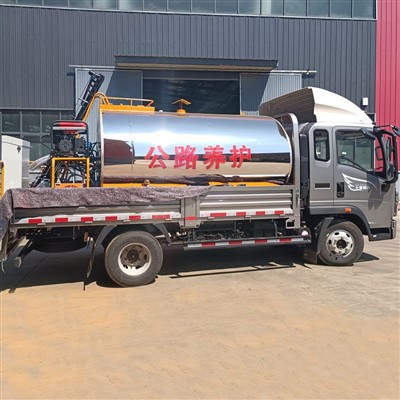
Common applications of primary cationic emulsifiers include Asphalt Emulsifier production. In the asphalt industry, they help disperse asphalt particles in water, creating a stable emulsion that can be easily applied to roads and other surfaces. They are also used in the textile industry for dyeing and finishing processes, where they help improve the wetting and penetration of dyes.
Secondary Cationic Emulsifiers
Secondary cationic emulsifiers have two hydrocarbon chains attached to the nitrogen atom with a positive charge. This structure gives them some unique properties compared to primary cationic emulsifiers.
One of the main advantages of secondary cationic emulsifiers is their improved stability over a wider pH range. They can tolerate slightly more alkaline conditions than primary emulsifiers, which makes them more versatile in different applications. They also tend to have better solubility in organic solvents, which can be beneficial in certain formulations.


However, secondary cationic emulsifiers may require slightly higher concentrations to achieve the same level of emulsification as primary emulsifiers. This is because the additional hydrocarbon chain can reduce the surface activity of the molecule to some extent.
In terms of applications, secondary cationic emulsifiers are commonly used in the production of Anionic Bitumen Emulsion. They can help improve the stability of the emulsion and enhance the adhesion of the bitumen to the aggregate. They are also used in the leather industry for fatliquoring processes, where they help distribute the fat evenly throughout the leather.
Tertiary Cationic Emulsifiers
Tertiary cationic emulsifiers have three hydrocarbon chains attached to the nitrogen atom with a positive charge. This structure gives them the most hydrophobic nature among the three types of cationic emulsifiers.
Tertiary cationic emulsifiers are known for their excellent stability and resistance to environmental factors. They can form very stable emulsions even under harsh conditions, such as high temperatures and high shear forces. They are also less affected by pH changes compared to primary and secondary emulsifiers, making them suitable for a wide range of applications.
However, tertiary cationic emulsifiers can be more expensive than primary and secondary emulsifiers due to their more complex structure. They also tend to have lower surface activity, which means they may require higher concentrations to achieve the same level of emulsification.
Common applications of tertiary cationic emulsifiers include the production of Anionic Emulsifier. They can help improve the stability and performance of the anionic emulsifier, making it more effective in various applications. They are also used in the cosmetics industry for the production of creams and lotions, where they help create a stable emulsion of oil and water.
Choosing the Right Cationic Emulsifier
So, how do you choose the right cationic emulsifier for your application? Well, it depends on several factors, including the type of emulsion you need to create, the pH of the system, the temperature and shear conditions, and your budget.
If you need a quick and efficient emulsification at low concentrations and the pH is in the acidic to neutral range, a primary cationic emulsifier may be the best choice. If you need a more stable emulsion over a wider pH range and better solubility in organic solvents, a secondary cationic emulsifier may be more suitable. And if you need a very stable emulsion under harsh conditions and don't mind the higher cost, a tertiary cationic emulsifier may be the way to go.
As a supplier of cationic emulsifiers, I'm here to help you make the right choice. I can provide you with samples of different emulsifiers so you can test them in your own applications. I can also offer technical support and advice to ensure you get the best results.
Conclusion
In conclusion, understanding the differences between primary, secondary, and tertiary cationic emulsifiers is crucial for choosing the right emulsifier for your application. Each type of emulsifier has its own unique properties and advantages, and by considering factors such as emulsifying power, stability, pH tolerance, and cost, you can make an informed decision.
If you're interested in learning more about our cationic emulsifiers or have any questions about which emulsifier is right for your project, don't hesitate to reach out. We're here to help you find the best solution for your needs. Let's start a conversation and see how we can work together to achieve your goals.
References
- "Emulsifiers and Emulsifying Techniques" by Paul Becher
- "Surfactants in Consumer Products" edited by Jürgen Falbe and Ulrich Hentschel
- Industry reports and research papers on cationic emulsifiers