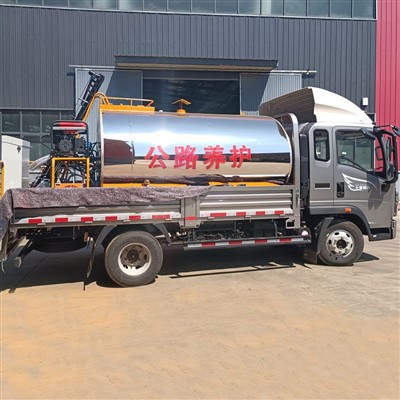
As an asphalt emulsifier supplier, I've seen firsthand how crucial the emulsifying effect is in various applications. Asphalt emulsifiers play a vital role in creating stable emulsions of asphalt and water, which are used in road construction, waterproofing, and other industries. In this blog, I'll discuss the factors that affect the emulsifying effect of asphalt emulsifiers.
Chemical Structure of the Emulsifier
The chemical structure of an asphalt emulsifier is one of the most important factors affecting its emulsifying effect. Different types of emulsifiers have different chemical structures, which determine their ability to reduce the surface tension between asphalt and water. For example, cationic emulsifiers have a positive charge, which allows them to adsorb onto the negatively charged asphalt particles, creating a stable emulsion. On the other hand, anionic emulsifiers have a negative charge and work in a similar way but with different interactions. You can check out our Cationic Emulsifier and Anionic Bitumen Emulsion products to see the differences in action.
The hydrophilic - lipophilic balance (HLB) of the emulsifier also matters. The HLB value indicates the relative affinity of the emulsifier for water and oil. An emulsifier with an appropriate HLB value for the specific asphalt and application will result in a better - emulsifying effect. If the HLB is too high, the emulsifier will be more water - soluble and may not interact well with the asphalt. Conversely, if it's too low, it will have poor solubility in water and won't be able to form a stable emulsion.
Asphalt Properties
The properties of the asphalt itself can significantly impact the emulsifying effect. The type of asphalt, such as penetration grade asphalt or viscosity - graded asphalt, has different chemical compositions and physical properties. Asphalts with higher asphaltene content tend to be more difficult to emulsify because asphaltenes are large, complex molecules that can cause the asphalt to be more viscous and less dispersible in water.
The viscosity of the asphalt is another key factor. Higher - viscosity asphalts require more energy to break them into small droplets during the emulsification process. This means that a more powerful emulsifying system or a more effective emulsifier may be needed. Additionally, the age and oxidation state of the asphalt can affect its emulsifiability. Oxidized asphalt has different chemical properties compared to fresh asphalt, and it may require a different type or concentration of emulsifier to achieve a good emulsifying effect.
Water Quality
The quality of the water used in the emulsification process is often overlooked but is very important. Hard water, which contains high levels of calcium and magnesium ions, can react with the emulsifier and reduce its effectiveness. These ions can form insoluble salts with the emulsifier, causing it to precipitate out of the solution and leading to an unstable emulsion.
The pH of the water also plays a role. Different emulsifiers work best at different pH ranges. Cationic emulsifiers usually work well in an acidic environment, while anionic emulsifiers are more effective in an alkaline environment. So, adjusting the pH of the water to the optimal range for the specific emulsifier can improve the emulsifying effect.
Emulsification Process Conditions
The conditions under which the emulsification process takes place are critical. The temperature is a major factor. Higher temperatures can reduce the viscosity of the asphalt, making it easier to break into small droplets. However, if the temperature is too high, it can cause the emulsifier to degrade or the water to evaporate too quickly, both of which can lead to a poor - quality emulsion.
The mixing speed and time also matter. A higher mixing speed can provide more energy to break the asphalt into smaller droplets, but if it's too high, it can cause the droplets to coalesce. The mixing time should be long enough to ensure that the asphalt is thoroughly dispersed in the water, but not so long that it causes over - mixing and instability.
Concentration of the Emulsifier
The concentration of the emulsifier in the emulsion is a balancing act. If the concentration is too low, there won't be enough emulsifier molecules to coat the asphalt droplets and prevent them from coalescing. This will result in an unstable emulsion that may separate over time. On the other hand, if the concentration is too high, it can lead to increased costs and may also cause foaming or other issues during the application of the Emulsified Asphalt Liquid.
The optimal concentration depends on several factors, including the type of asphalt, the water quality, and the emulsification process conditions. Through a series of tests and trials, we can determine the best concentration for a specific application to achieve the desired emulsifying effect.
Presence of Additives
Additives can either enhance or hinder the emulsifying effect. Some additives, such as stabilizers, can improve the stability of the emulsion by preventing the droplets from coalescing. They work by increasing the viscosity of the continuous phase or by providing a protective layer around the asphalt droplets.
On the other hand, some contaminants or incompatible additives can have a negative impact. For example, if there are traces of oils or solvents in the system that are not compatible with the emulsifier or the asphalt, they can disrupt the emulsification process and lead to an unstable emulsion.
Particle Size Distribution
The particle size distribution of the asphalt droplets in the emulsion is an important indicator of the emulsifying effect. A narrow particle size distribution is generally preferred because it leads to a more stable emulsion. Smaller droplets have a larger surface area per unit volume, which means that more emulsifier molecules can adsorb onto them, providing better stability.
If the particle size distribution is too wide, larger droplets may settle or coalesce more easily, leading to an unstable emulsion. Controlling the particle size distribution requires careful adjustment of the emulsification process conditions, such as the mixing speed, the type of emulsifier, and the use of appropriate equipment.
In conclusion, achieving a good emulsifying effect of asphalt emulsifiers is a complex process that depends on multiple factors. As an asphalt emulsifier supplier, we understand these factors well and are committed to providing high - quality products and technical support to our customers. Whether you're in the road construction industry or involved in waterproofing projects, we can help you select the right emulsifier and optimize the emulsification process for your specific needs.
If you're interested in learning more about our asphalt emulsifiers or have a specific project in mind, don't hesitate to reach out. We're here to assist you in achieving the best emulsifying results and ensuring the success of your projects. Contact us to start a procurement discussion and find the perfect solution for your emulsification needs.
References


- "Asphalt Emulsion Technology and Applications" by the Federal Highway Administration
- "Emulsions: Theory and Practice" by Paul Becher